


















































Your silence becomes the loudest message they can’t interpret.
Breakups are rarely clean.
Whether messy or mutual, the emotional fallout often leads people to seek clarity, closure, or even reconciliation.
This is where the no contact rule frequently enters the picture.
It’s a term you’ll see all over TikTok, Instagram and relationship forums, especially after a painful split.
Promises of personal growth, emotional healing and exes crawling back dominate the narrative. But does it work?
And what happens when you cut someone off cold turkey, especially within South Asian communities where extended relationships often involve families, expectations and deep emotional investment?
The no contact rule isn’t just a game or a manipulative tactic.
It’s a psychological strategy rooted in real behavioural science, but its results can be as varied as the reasons behind each breakup.
Here’s what you can expect when you apply the no contact rule, and whether it’s worth the emotional gamble.
Revenge Glow or Reconciliation?
 Many relationship coaches boldly claim that 70 to 75 per cent of people hear from their exes when they implement the no contact rule correctly.
For heartbroken souls, that statistic offers hope.
But not all data supports those odds.
In one online survey, 64 per cent of participants said their ex never reached out during the no contact period at all, which shows the results can be wildly inconsistent.
For South Asians navigating heartbreak, the stakes can feel higher.
Family involvement, cultural stigma and social circles make ignoring an ex complicated, if not impossible, in certain situations.
Still, some swear by the rule.
From anonymous Reddit confessions to WhatsApp group discussions, stories of unexpected DMs and rekindled love are everywhere.
While some do reunite, the reality is that the no contact rule is not a guaranteed path back to someone. It’s a reset, not a rewind.
Why Ignoring Your Ex Can Make Them Reach Out
 One of the main reasons the no contact rule works is psychological reactance.
When someone feels their access to you has been cut off, they’re more likely to crave what’s now unavailable.
This is even stronger if the breakup wasn’t entirely their decision.
Removing yourself from their life can make them question what you’re doing and who you’re doing it with.
This taps into the “information gap” theory.
When people lack information, they feel a compulsive need to fill it.
Your silence becomes the loudest message they can’t interpret.
Some exes go to extremes. In rare cases, people report dozens of missed calls, desperate texts and even multiple accounts used to stalk online stories and updates.
But don’t rely on this as the outcome.
Most people sit with their curiosity, and whether they act on it depends on their emotional maturity and the relationship’s context.
Healing Takes Time
 The classic version of the no contact rule lasts 30 days, but in practice, it often extends to 60 or even 90.
Healing doesn’t follow a calendar, and many people break the rule before they complete it.
South Asians in particular may find it difficult to stick to the full duration.
Shared community spaces, family friendships and even social pressure to “talk things out” can make it tricky.
But experts agree: the longer you maintain no contact, the more space you create for reflection and genuine emotional recovery.
It allows you to detach with dignity.
Some find that 90 days gives them the clarity to realise the relationship wasn’t right.
Others return to the connection with more confidence and fewer emotional triggers.
Whether or not you reconnect with your ex, the time spent away gives you room to assess what you truly want, without noise from anyone else.
The No Contact Rule Isn’t Just About Getting Them Back
 The most misunderstood part of the no contact rule is thinking it’s solely about making someone miss you.
In reality, the biggest transformation usually happens within yourself.
This strategy forces you to sit with uncomfortable feelings, pain, anger, loneliness, and eventually move through them instead of masking them with false hope or performative behaviour.
Desi individuals often face unique pressure post-breakup.
Expectations around marriage, shame over a “failed” relationship, and fear of gossip can make recovery harder.
No contact offers a form of protection from that chaos.
It’s also an essential tool for those walking away from toxic dynamics.
If a relationship involved emotional manipulation or codependency, no contact breaks those cycles before they become long-term patterns.
In the end, its power lies not in what your ex does, but in how you rebuild your sense of self when no longer defined by someone else.
How Gender and Culture Shape the Aftermath
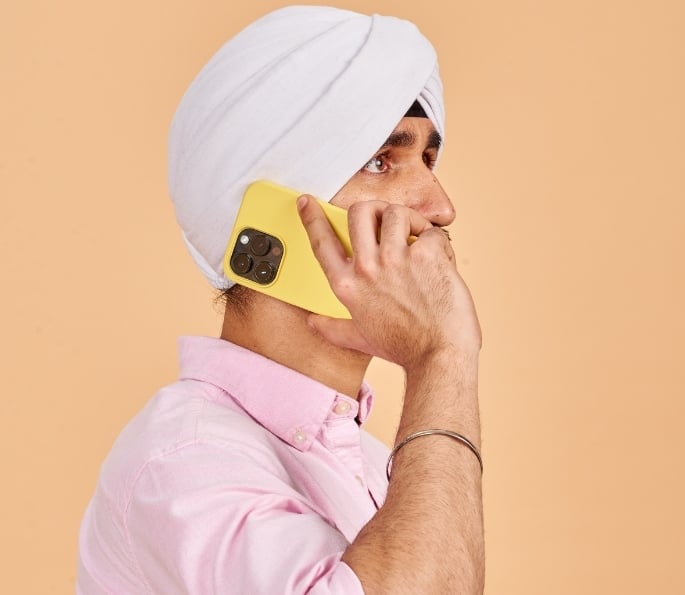 While official studies on gender differences are limited, anecdotal evidence suggests men and women often respond differently to the no contact rule depending on attachment styles and who initiated the breakup.
Men are sometimes more likely to reach out after a delay, especially if the breakup wasn’t their decision.
Women may process emotions sooner, but still struggle with overthinking and guilt.
In South Asian contexts, women often carry more emotional burden due to cultural norms.
They’re expected to forgive, stay quiet or maintain dignity, even in the face of emotional harm.
For Desi men, showing emotional vulnerability post-breakup can be frowned upon.
The no contact rule, then, may be the only space where they can process in private without judgment.
Regardless of gender, the emotional rollercoaster is real.
No contact can offer a rare moment of autonomy in a culture that rarely allows space for messy emotional boundaries.
Using the no contact rule is not a magic formula, but it is a powerful act of self-respect.
It sets boundaries where none existed and gives heartbreak the breathing room it needs.
Whether your ex comes back or not, the rule gives you perspective.
It helps you step back from unhealthy patterns and see the relationship for what it truly was, not just what you miss.
In South Asian communities where romantic struggle is often silenced, this rule gives you back control.
It empowers you to choose healing over hustle, clarity over chaos.
Yes, it’s difficult. You’ll want to reach out, vent or seek closure.
But with time, you’ll realise silence often says what words never could.
And if someone does come back, you’ll know they’re reaching for the real you, not a version that begged for love, but one that chose growth first.