


















































"Sometimes online content speaks to those pressures"
British South Asians are increasingly encountering Red Pill discussions through TikTok, YouTube and podcasts, where influencers debate masculinity, dating and relationships.
For many young people, these conversations connect with existing pressures around marriage, family expectations and what it means to be a successful man.
The Red Pill-Blue Pill debate originally came from The Matrix, but has evolved into a wider online conversation about gender roles and identity.
Supporters describe it as a movement focused on confidence and self-improvement, while critics argue some ideas reinforce harmful stereotypes.
As social media continues to shape discussions around relationships, many British Asians are questioning how these ideas fit within their own cultural experiences.
What is the Red Pill Debate?

The terms ‘Red Pill’ and ‘Blue Pill’ originated from the 1999 film The Matrix.
In the film, the character Neo is offered a choice between two pills. Taking the red pill allows him to discover the hidden reality of the world, while choosing the blue pill means returning to his previous life and continuing to believe an illusion.
The moment became a cultural reference point for questioning accepted beliefs and seeking what supporters describe as “truth”.
Over time, online communities adopted these terms to discuss issues such as masculinity, gender roles, relationships and social expectations.
The ‘Red Pill’ movement is often associated with groups that believe men face disadvantages or unfair expectations in modern society, particularly around dating, family life and workplace pressures.
Many supporters focus on ideas such as building confidence, improving financial stability, developing discipline and taking personal responsibility. Some view these principles as a way for men to improve their lives and become more independent.
However, the movement has also attracted significant criticism.
However, critics argue that some parts of the Red Pill community promote harmful stereotypes about women, distrust between genders and overly negative views of relationships.
Researchers and commentators have also highlighted differences between groups that use Red Pill ideas, with some focusing on self-improvement while others promote more controversial beliefs.
The debate around the Red Pill movement remains complex because the term is used by different communities with varying views.
While some interpret it as a message about personal growth and awareness, others associate it with more extreme discussions about gender and society.
Why is Red Pill Content reaching British South Asians?
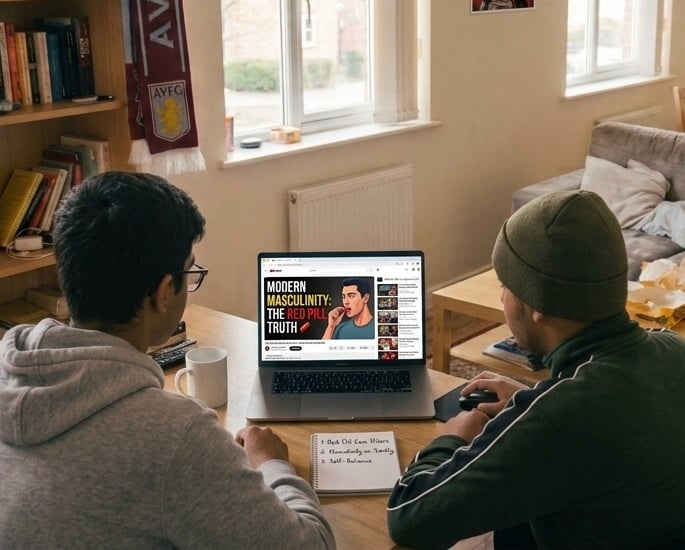
Social media has played a big role in expanding conversations about masculinity, relationships and identity, allowing ideas that were once discussed mainly within smaller communities to reach much wider audiences.
Platforms such as TikTok, YouTube and Instagram allow influencers to share opinions about confidence, dating, gender roles and personal development.
Many creators have built large followings among younger audiences, giving them the ability to shape discussions around how young people view themselves and their relationships with others.
According to Ofcom, around 98% of UK children aged eight to 17 use the internet.
This highlights the powerful role online platforms play in shaping ideas and opinions, raising wider discussions about the influence digital content can have on attitudes, beliefs and social behaviours.
For British South Asians, social media has become a space where younger generations discuss topics that may not always be openly discussed within families or communities.
Conversations around dating, marriage expectations, cultural traditions and balancing different identities are increasingly taking place online.
Online creators now influence conversations alongside family, friends and community figures.
Their content can offer new perspectives and support discussions about experiences shared by many young British Asians.
However, the growth of masculinity-focused content also reflects wider concerns affecting young people, including loneliness, uncertainty about the future and changing expectations around relationships.
As more people turn to online communities for advice and connection, debates continue over whether this content provides positive guidance or reinforces divisive ideas.
How Does the Debate Connect with South Asian Masculinity?
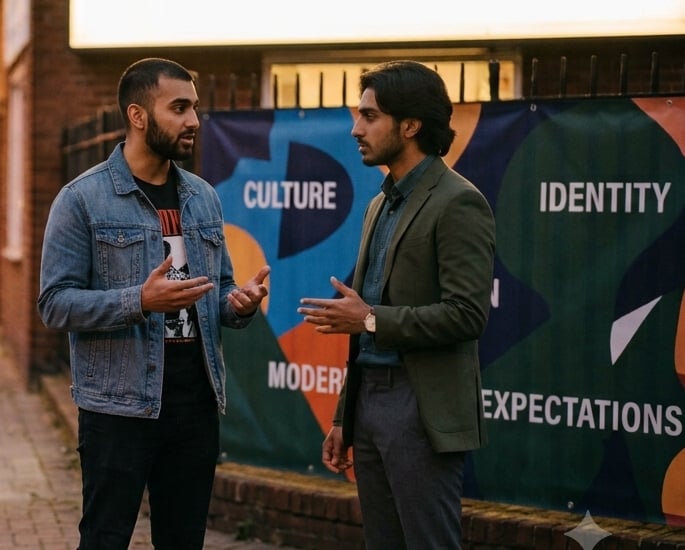
The Red Pill debate can overlap with existing conversations about masculinity, identity and expectations within South Asian communities.
Across many South Asian families, values such as education, career achievement and financial stability are often strongly emphasised.
For some men, these expectations can create pressure to build successful careers, provide for their families and meet traditional ideas of responsibility.
Some Red Pill creators present wealth, status and confidence as key solutions to challenges men face in dating and relationships. These messages can appeal to individuals who feel pressure to achieve success or prove themselves within society.
However, understandings of masculinity within South Asian communities are often broader than financial achievement alone.
Many families also place importance on qualities such as respect, emotional support, kindness and responsibility towards others.
This creates a more complex picture of what masculinity means for many South Asian men.
While ambition and independence may be valued, they often exist alongside expectations around family relationships, cultural values and emotional connection.
Ravi* said: “Growing up in a South Asian family, there can be a lot of focus on having a good career and being financially stable.
“Sometimes online content speaks to those pressures, but it does not always show the full picture.”
For many British South Asians, views on masculinity are shaped by a combination of influences, including family upbringing, cultural traditions, personal experiences and online conversations.
Social media may introduce new ideas, but it is only one part of a much wider discussion about identity and expectations.
How is the Debate affecting Dating and Relationships?

The Red Pill debate has entered wider conversations about modern dating.
For British South Asians, these discussions often intersect with topics such as marriage, family involvement and the balance between cultural traditions and individual choices.
While previous generations may have relied more heavily on family networks and community connections when meeting potential partners, dating apps and social media have transformed how many younger people approach relationships.
Dating apps have created new opportunities to meet people outside traditional social circles. However, cultural values continue to influence how many British South Asians think about compatibility, commitment and long-term relationships.
Factors such as family approval, shared values and future goals can remain important considerations.
Some Red Pill creators frame relationships through ideas of competition between men and women, often focusing on perceived differences in dating experiences and expectations.
Supporters argue these discussions highlight challenges faced by men, while critics say this approach can overlook the importance of communication, emotional connection and mutual respect in healthy relationships.
South Asian women have also challenged aspects of Red Pill content, particularly discussions around labels such as “high-value men” and “high-value women”.
Critics argue these terms can reduce complex relationships to ideas of status, appearance or financial success, rather than recognising the importance of individual personalities and shared experiences.
Hassan* stated:
“South Asian women have always had expectations placed on them around marriage and family.”
“The online conversation around gender roles adds another layer to those discussions.”
For many British South Asians, conversations about masculinity and dating are shaped by multiple influences, including culture, family expectations, personal experiences and online communities.
The Red Pill debate reflects wider questions about how relationships are changing and how younger generations navigate traditional values alongside modern dating culture.
Andrew Tate and the Rise of Online Masculinity Influencers

Andrew Tate has become one of the most recognised figures associated with online discussions about masculinity, relationships and gender roles.
The influencer has gained a large following through content focused on confidence, wealth, discipline and personal success.
His views have been particularly influential among some younger men who engage with online conversations about masculinity.
Supporters argue that his message promotes ambition, self-improvement and personal responsibility.
They often point to his focus on building confidence and financial independence as positive examples of male development.
However, critics have raised concerns about some of his comments regarding women and gender roles.
They argue that parts of his content reinforce harmful stereotypes and present relationships as a conflict between men and women.
His popularity has increased debates about how influencers shape young people’s understanding of dating, relationships and masculinity.
For British Asians, these discussions add another layer to existing conversations around identity, cultural expectations and what it means to be a man in modern society.
Can Masculinity Be Redefined?

The Red Pill debate has created important conversations about what masculinity means today.
Many experts argue that masculinity does not need to be defined by dominance, control or financial success alone.
They suggest that qualities such as confidence, empathy, emotional awareness and respect are equally important in shaping healthy relationships and personal identity.
Across South Asian communities, younger generations are increasingly discussing mental health and relationships.
These conversations challenge the idea that men should avoid vulnerability.
Clinical Psychologist Dr Vasudev Dixit told Psychology Today:
“We are in an interesting time where the assumptions set by an age-old patriarchy are being challenged by the need to acknowledge emotions and embrace vulnerability as the flip side to the courage so often demanded, especially of men.”
For many South Asian men, ideas around masculinity are shaped by a combination of cultural expectations, family values and personal experiences.
Understanding masculinity therefore requires looking beyond online trends and recognising that there is no single experience of being a man.
The Red Pill debate reflects wider conversations about masculinity, relationships and identity in the digital age.
In British South Asian communities, these discussions are shaped by a range of influences, including cultural traditions, family expectations, marriage pressures and changing ideas around gender roles.
While some aspects of the movement focus on self-improvement, confidence and personal responsibility, critics argue that certain messages can oversimplify relationships and create division between men and women.
A broader understanding of masculinity recognises that confidence and ambition can exist alongside empathy, emotional awareness and respect.
As online conversations continue to influence how younger generations view identity and relationships, the future of these discussions will depend on creating spaces where British Asians can explore expectations around masculinity in a more balanced and open way.