

















































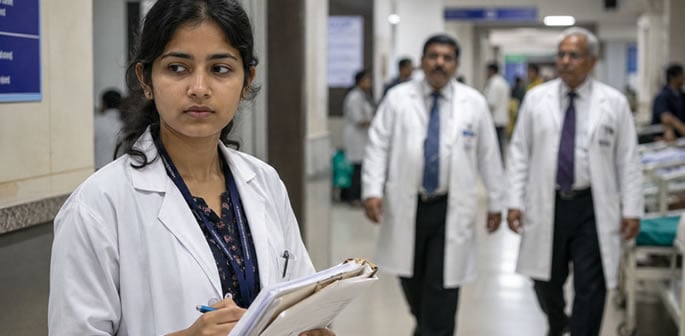
26% of healthcare workers experienced sexual harassment
Sexual harassment in Indian medical colleges is being exposed as a systemic crisis hidden within prestigious institutions.
Medicine is widely regarded as a noble profession, rooted in saving lives and easing suffering. Yet behind the white coats and closed doors of India’s top medical colleges, a toxic reality persists.
A striking new viewpoint published in The Lancet Regional Health – Southeast Asia highlights how clinical training environments can be among the most hierarchical and unsafe professional spaces globally.
The research shows that behaviours ranging from verbal harassment to coercive acts are often normalised and, in some cases, protected by institutional structures.
This leaves some of India’s brightest minds trapped in environments that are psychologically and physically dangerous, demanding an immediate reckoning.
Hierarchy, Power & Vulnerability in Medical Education
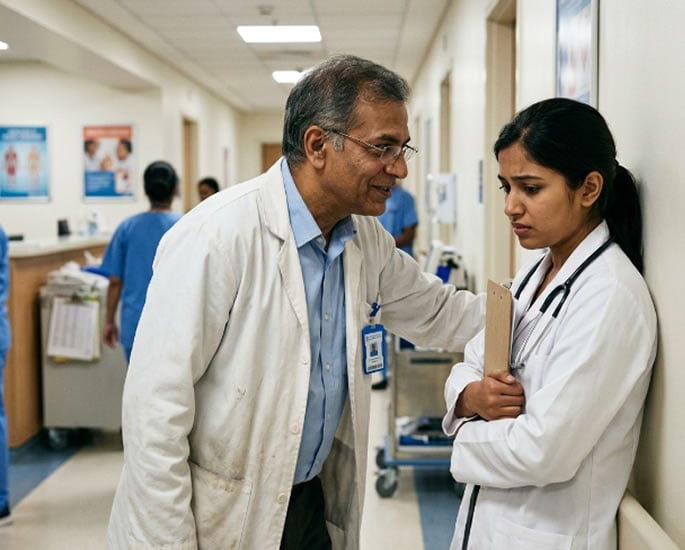
To understand the scale of sexual harassment in India’s medical education system, it is important to recognise it as a structural crisis embedded within medical training itself.
The study highlights that medical students globally face disproportionately high levels of sexual violence compared with other disciplines.
Evidence from multiple countries shows a consistent pattern.
In Belgium, nearly 40% of medical students and registrars reported sexual violence, with women facing double the risk.
In Brazil, more than half of female medical students experience sexual violence during training, while in Finland, three-quarters of students reported mistreatment of a largely sexual nature.
Similar patterns appear across the Global South.
In Nigeria, 32.4% of healthcare workers report sexual harassment. In Ghana, prevalence among nurses ranges from 10 to 15%. In Sri Lanka, an alarming 58.6% of women doctors report experiencing workplace sexual harassment at some point in their careers.
India reflects these international trends with similar severity, despite historically limited and geographically narrow data.
A 2025 Indian study, analysing data from 2021, found that 26% of healthcare workers experienced sexual harassment, with younger women most affected.
In Maharashtra, a mixed-method survey across 28 medical colleges recorded a 14.3% incidence of sexual harassment, alongside 43.2% of respondents reporting sexually offensive behaviours.
Similar findings are reflected in studies from Karnataka, Punjab and Uttar Pradesh.
At the centre of this crisis is the rigid hierarchy that defines medical training.
Power is concentrated among senior students, interns, residents, faculty and consultants, who control clinical postings, assessments and career progression.
In this environment, abusive behaviour is often reframed as “rigour” or “tradition”. This normalisation blurs the line between authority and coercion, leaving junior trainees vulnerable.
The study also highlights a key gap in existing research: the lack of disaggregated data on caste, socioeconomic background and rural-urban status.
Evidence from other higher education settings suggests that intersecting caste and class disadvantage places marginalised women, particularly those from disadvantaged caste groups, at significantly higher risk.
Weak Protections & Institutional Failure

Despite rising awareness of sexual harassment in medical colleges, formal reporting remains extremely low across India.
Cross-sectional studies show disclosure rates ranging from 0% to 21% among those affected.
The Lancet paper focuses on systemic evidence rather than individual testimonies, but the patterns it identifies point to widespread institutional failure.
A study from Banaras Hindu University in Varanasi found that none of the participants who experienced sexual harassment reported it to the police.
This stark gap between lived experience and official reporting highlights severe structural barriers and a strong fear of retaliation.
Internal redress mechanisms are also structurally weakened.
The Prevention of Sexual Harassment at Workplace (POSH) Act requires institutions to establish Internal Complaints Committees (ICCs). However, in medical colleges, these committees often lack independence, as they are created and controlled by the same institutions they are meant to oversee.
Within hospital hierarchies, ICC members are frequently colleagues or junior to the accused, undermining procedural fairness.
The assumption of equal standing between complainant and respondent does not hold in such environments.
Many committee members also lack training in trauma-informed processes, which can lead to hostile questioning and secondary victimisation of complainants during proceedings.
The real-world consequences of these failures have been stark.
The rape and murder of an on-duty doctor at R.G. Kar Medical College in Kolkata brought national attention to the issue.
The Lancet study notes that the case exposed critical failures in workplace safety, institutional accountability and violence prevention systems.
It also underscored the ongoing physical risks faced by healthcare workers and the persistent gaps in protection across the country.
The Hidden Toll on the Healers

The consequences of sexual harassment in medical colleges extend far beyond individual incidents, shaping both mental health and long-term career outcomes.
Medical trainees in these environments often experience severe psychological distress while navigating hostile clinical settings.
Fear of stigma and being labelled “unprofessional” prevents many from seeking support. Reported effects include anxiety, depression, hypervigilance and PTSD-like symptoms.
This sustained emotional strain creates psychologically unsafe environments that undermine effective medical training.
The academic and professional impact is equally significant.
Many trainees adjust their behaviour to avoid perpetrators, including skipping clinical postings or essential training activities.
This avoidance can lead to reduced concentration, absenteeism, lower academic performance and, in some cases, course withdrawal.
Over time, limited access to mentorship and training opportunities reduces workforce diversity, pushing capable individuals away from certain specialities.
The study also highlights wider systemic costs, including reduced productivity, higher attrition and the loss of skilled human capital, all of which place pressure on healthcare systems.
Addressing this requires a shift in how sexual harassment is understood within medical education.
The researchers argue it should be treated as a public health and workforce issue rather than an administrative concern. They propose a centralised confidential reporting system for medical institutions, designed to bypass limitations in local Internal Complaints Committees.
This could be modelled on systems such as the University Grants Commission’s anti-ragging portal or the Ministry of Women and Child Development’s Sexual Harassment electronic Box (SHe-Box).
The SHe-Box platform allows centralised complaint submission and tracking while maintaining confidentiality through restricted access and limited data collection.
The researchers also suggest that regulatory bodies, including the National Medical Commission, should link compliance to accreditation, audits and funding.
Without external oversight, they warn that such reporting systems risk becoming symbolic rather than effective.
Sexual harassment within India’s medical education system remains a deeply embedded structural crisis shaped by silence and entrenched hierarchy.
Across training environments, the intensity of medical education has often been used to deflect scrutiny from coercive and abusive behaviour, recasting it as academic rigour.
The evidence presented throughout this analysis highlights the psychological, professional and economic harm experienced by trainees, with women and marginalised groups disproportionately affected.
Existing internal redress mechanisms continue to struggle within systems defined by steep power imbalances, limiting their ability to provide meaningful protection or accountability.
Taken together, the findings point to a system where vulnerability is structurally produced rather than incidental.
The gap between policy and lived experience remains stark, reinforced by low reporting rates and institutional constraints that shape how complaints are handled or suppressed.
As the data shows, this is an issue that reflects the broader architecture of medical training itself.