


















































“I grew up understanding Punjabi, but I never felt confident speaking it."
For many British South Asians, growing up speaking English alongside a mother tongue was once a defining part of family life.
Today, that is becoming less common.
While older generations often speak Punjabi, Urdu, Bengali, Gujarati or Tamil fluently, many younger people understand these languages better than they speak them.
Language loss is increasingly shaping the experiences of second and third-generation South Asians.
It is raising questions about culture, identity and what it means to stay connected to one’s heritage.
Why Is Language Disappearing?
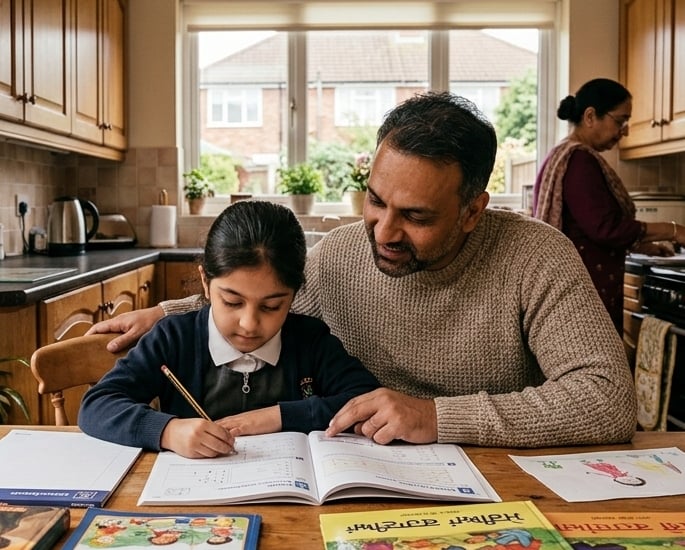
Migration often changes the way families communicate, particularly as each generation adapts to life in a new country.
Many first-generation South Asian parents arrived in Britain speaking little English.
At home, languages such as Punjabi, Urdu, Bengali, Gujarati and Tamil remained central to daily life and cultural traditions.
Their children naturally became bilingual through school, work and friendships, often moving between English and their mother tongue with ease.
By the third generation, however, English has often become the dominant language spoken at home.
Many British South Asian parents encouraged English because they believed it would help their children succeed academically, build careers and integrate into wider British society.
For some families, speaking English also became a practical choice.
As younger generations grew more comfortable using English, conversations at home gradually shifted away from heritage languages.
Modern lifestyles have accelerated this change.
Children spend much of their day in English-speaking schools, with friends, on social media, and consuming English-language entertainment.
This leaves fewer opportunities to practise their mother tongue in everyday life.
Without regular use, confidence can decline even if younger people still understand their family’s language.
Research by Dr Sheena Kalayil, whose work explores multilingualism among second-generation British South Asians, highlights that maintaining a heritage language is closely linked to everyday family interactions and cultural identity.
Rather than disappearing overnight, heritage languages often fade gradually as English becomes the default language across generations.
The Role Of Assimilation
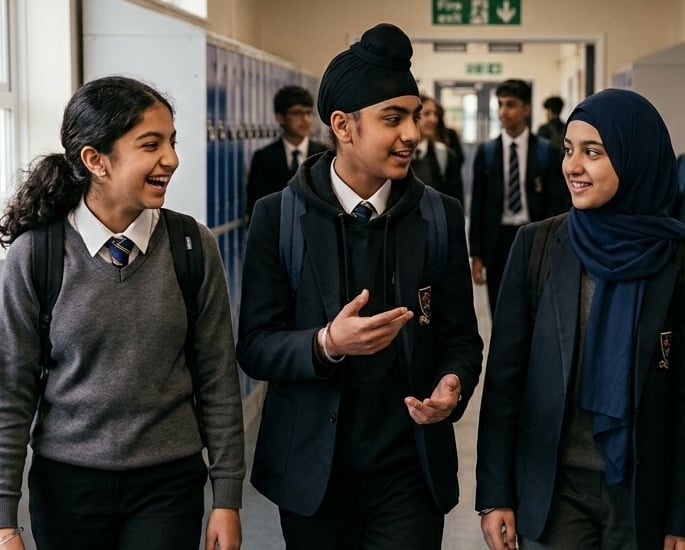
Growing up in Britain often means balancing South Asian heritage with everyday British life.
For many young people, language becomes part of that balancing act.
Some British South Asians have spoken about feeling self-conscious when using their mother tongue in public during childhood.
Others avoided speaking it altogether because they wanted to fit in with classmates or feared being judged.
Student Imran* told DESIblitz: “At primary school, I stopped speaking Urdu outside the house because I didn’t want people asking where I was from.
“It wasn’t until I got older that I realised it was something to be proud of.”
For many families, English gradually became the language of convenience.
It was often the language used in schools and public life, making it the easiest choice at home too.
Although attitudes towards multilingualism have become more positive, English is still widely associated with career opportunities and social integration.
This can unintentionally reduce the use of heritage languages within the home.
Unlike previous generations, younger British South Asians have fewer opportunities to use their mother tongue outside family gatherings or visits to relatives.
Without regular practice, confidence and fluency can decline over time.
Research by psychologists Dr Rusi Jaspal and Dr Adrian Coyle found that many British-born South Asians wanted to “maintain continuity of self-definition as Asian” through preserving their heritage language.
Their findings suggest that language is more than a way of communicating.
It also acts as a powerful expression of identity, belonging and cultural continuity across generations.
More Than Just Words
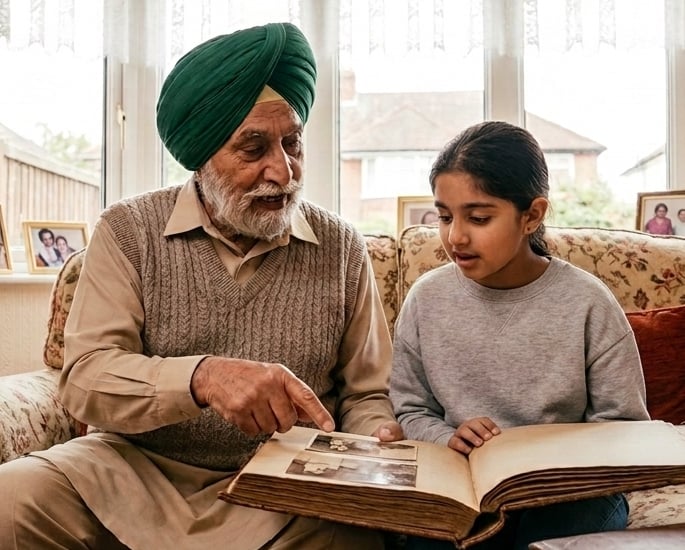
Language carries far more than vocabulary. It preserves family history, humour, traditions and expressions that often cannot be translated directly into English.
Many South Asian languages contain words and phrases that reflect cultural values and shared experiences.
These meanings are often rooted in generations of history and can be difficult to fully express in another language.
When a heritage language is lost, it is not only words that disappear.
Stories and customs can also become harder to pass from one generation to the next.
Communication between generations may become more challenging as a result.
Grandparents may wish to share childhood memories, explain religious customs or tell family stories in Punjabi, Urdu or another heritage language.
However, grandchildren who mainly speak English may struggle to fully understand the meaning behind those conversations.
Over time, this language gap can make it harder to preserve traditions and strengthen family bonds, even within otherwise close relationships.
Social Media Is Changing Attitudes

Despite concerns about language loss, many younger British South Asians are finding new ways to reconnect with their heritage.
Social media has transformed how heritage languages are experienced, making them more visible and accessible than ever before.
Platforms such as TikTok and Instagram have created spaces where younger audiences can hear and use these languages every day.
Creators regularly produce content in Punjabi, Urdu, Hindi, Bengali and Tamil, helping to make these languages feel modern, relatable and relevant rather than something only spoken by older generations.
Punjabi university student Simran* said:
“Watching Punjabi influencers on TikTok made me realise speaking two languages is something to be proud of.”
Music, film and television have also played a significant role.
The global success of Punjabi artists, Bollywood films, Pakistani dramas and Tamil cinema has introduced younger audiences to their heritage languages through entertainment they already enjoy.
South Asian influencers have further encouraged this shift by proudly incorporating heritage languages into their content, demonstrating that bilingualism can be embraced rather than hidden.
Rather than viewing speaking more than one language as something that sets them apart, many young British South Asians now see bilingualism as a strength and an important expression of their cultural identity.
Learning Later in Life

Many British South Asians are choosing to learn or rediscover their heritage language as adults, often after years of speaking mainly English.
Some want to communicate more easily with grandparents or relatives overseas. Others hope to understand religious texts, Bollywood films, Punjabi music or everyday family conversations without relying on translations.
Digital language apps, online tutors and community classes have made learning more accessible than ever, allowing people to practise at their own pace and reconnect with their roots.
Although becoming fluent as an adult can be challenging, even learning basic phrases can strengthen relationships with family members and build confidence in using a heritage language.
For many, the journey is about more than learning new words. It is an opportunity to reconnect with family history, traditions and a part of their identity that may have faded over time.
Birmingham-based Josh Gill, who has been learning Punjabi as an adult, said:
“I grew up understanding Punjabi, but I never felt confident speaking it. Learning more as an adult has helped me feel closer to my culture.”
Community language schools, cultural organisations and family conversations continue to play an important role in helping adults preserve and pass on their linguistic heritage to future generations.
Research by Robert Weekly into heritage language maintenance has found that many British South Asians believe preserving their family language remains important, even if they did not grow up speaking it fluently:
“Some of the participants feel that it is important for heritage languages to be maintained.”
This highlights the value many place on passing their mother tongue to future generations.
Looking Ahead
Language loss is not unique to South Asians.
Many immigrant communities experience similar changes as new generations grow up between different cultures and languages.
However, there is growing interest among younger British South Asians in reconnecting with their linguistic heritage.
Through family conversations, music, social media and formal lessons, many are finding new ways to embrace the languages of previous generations.
Fluency is not the only measure of cultural identity.
Yet every conversation in a heritage language helps preserve stories, traditions and family connections that might otherwise fade over time.
As more people choose to learn, practise and pass on their mother tongue, they are not only preserving a language but also keeping an important part of their heritage alive for future generations.