


















































Suddenly you can’t look away.
Nothing sinks the stomach quite like watching your side lose its ninth wicket. The target feels miles away, the fielders crowd in, and you start thinking about what else you could be doing with your evening.
Then somebody who normally gets picked for his bowling hits a boundary, and then another, and suddenly you can’t look away.
South Asian sides have pulled off plenty of these escapes, though not every one ended happily.
Some stands won matches, some rescued an innings, and one on this list fell just short.
From Karachi to Durban, here are six last-wicket stands that show how hard that final wicket can be to get.
Shadab Khan and Haris Rauf
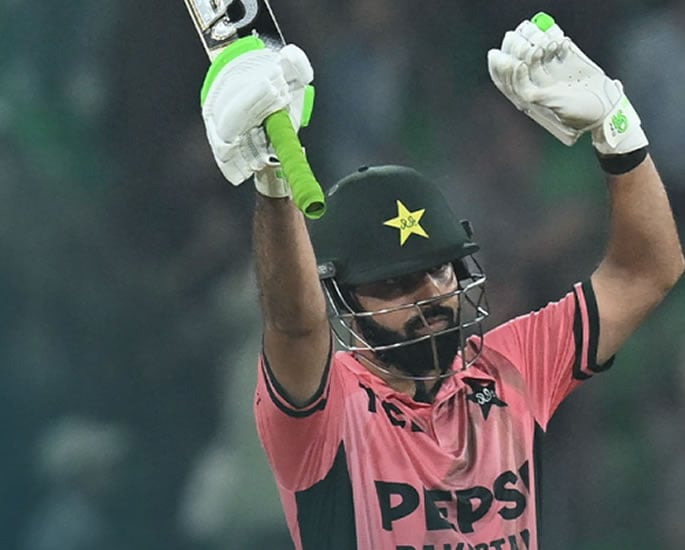
England had Pakistan on 154 for nine in Lahore, chasing 242. One more wicket and they’d have won.
They never got it. Shadab Khan and Haris Rauf added an unbeaten 89, and Pakistan got home on 243 for nine in 47.1 overs.
Shadab hit most of the runs, finishing on 113 not out off 96 balls, with 13 fours and five sixes.
Rauf made seven not out, which won’t catch the eye on the scorecard. His job was to stay put, and he did.
Shadab also had a lucky escape. He was given out LBW on 97, but the review showed an inside edge.
He went on to his hundred, and Rauf finished it by driving Henry Crocombe down the ground for four.
It’s now the biggest last-wicket stand in a successful men’s ODI chase. The old record was 64, set by West Indies’ Deryck Murray and Andy Roberts in 1975.
Kusal Perera and Vishwa Fernando
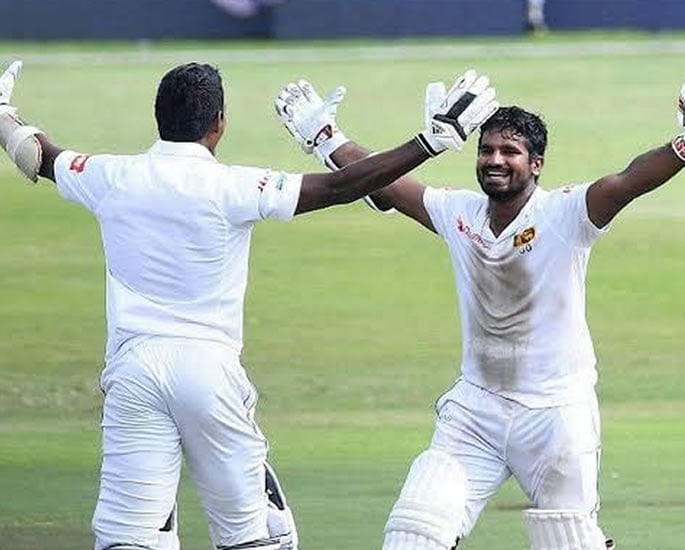
Sri Lanka were chasing 304 against South Africa in Durban in February 2019. At 226 for nine, having Kusal Perera still at the crease didn’t feel like much of a comfort.
Last man Vishwa Fernando came out with 78 still needed. South Africa were one wicket away from winning.
Perera kept swinging and finished on 153 not out. Fernando faced 27 balls for six not out, and Sri Lanka won by one wicket.
Six runs may not sound like much, but every ball Fernando blocked was a ball Perera didn’t have to farm the strike against a new partner.
This was only Fernando’s fourth Test, and he’d already taken four wickets in each of South Africa’s innings. He’d helped keep Sri Lanka in the match with the ball, then helped win it with the bat.
The 78 is still the highest last-wicket stand in a winning Test chase. It overtook Pakistan’s escape against Australia in Karachi in 1994.
Inzamam ul Haq and Mushtaq Ahmed
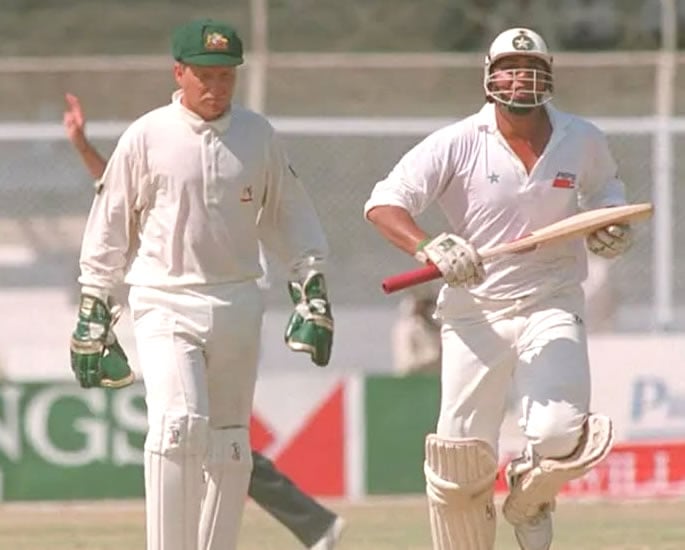
Long before Durban, Karachi had provided its own last-wicket escape. Pakistan were chasing 314 against Australia in the first Test of the 1994 series.
When Waqar Younis went, they were 258 for nine, 56 short. Mushtaq Ahmed walked out to join Inzamam-ul-Haq.
Shane Warne had been giving them a hard time all innings and would finish with five wickets. Now the last pair had to face him.
Inzamam finished on 58 not out and Mushtaq on 20. Their unbroken stand of 57 took Pakistan to 315 for nine.
The ending was messy. Inzamam charged down the pitch at Warne and missed, which gave wicketkeeper Ian Healy a stumping chance. Healy fumbled it, the ball ran away for four byes, and those were the winning runs.
Healy was Australia’s vice-captain as well as their keeper, and he blamed himself for the defeat. Take that one cleanly and the match goes the other way.
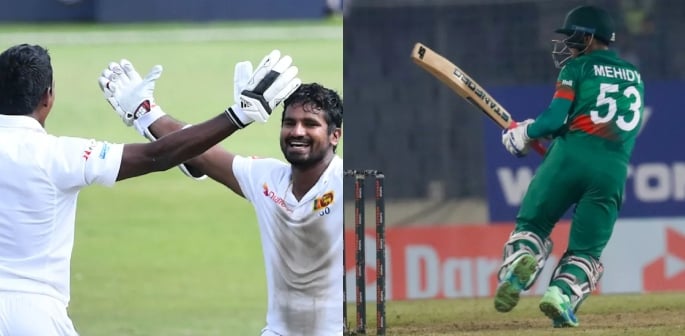
Mehidy Hasan Miraz and Mustafizur Rahman

Bangladesh only needed 187 to beat India in Mirpur on 4 December 2022, after India were bowled out for 186. It looked straightforward.
It wasn’t. Bangladesh slid from 128 for four to 136 for nine, losing five wickets for eight runs, with 51 still needed.
Mehidy Hasan Miraz was still in, but his partner was Mustafizur Rahman, and India were one wicket away.
Mehidy hit Kuldeep Sen for two sixes in an over, then took three fours off Deepak Chahar.
Mustafizur chipped in too, with ten not out off 11 balls, so Mehidy wasn’t doing it all alone.
India helped them along. KL Rahul dropped Mehidy on 15, and Bangladesh took full advantage.
Mehidy ended on 38 not out off 39 balls. The unbeaten 51 got Bangladesh to 187 for nine with four overs left.
Bhuvneshwar Kumar and Mohammed Shami
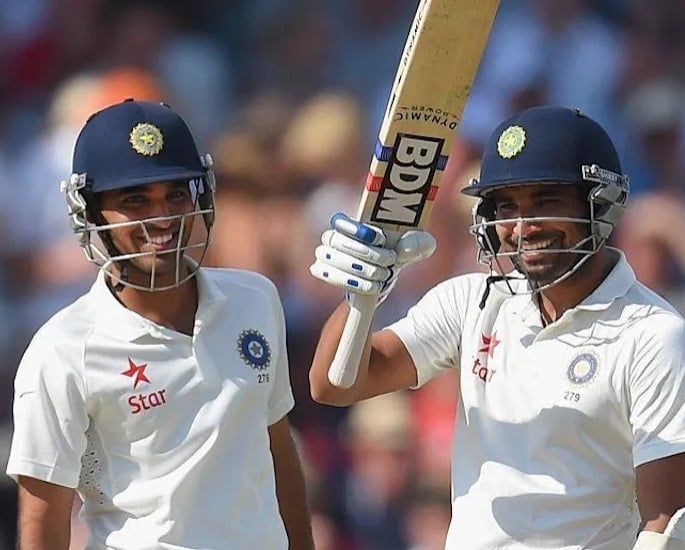
Not every great last-wicket stand finishes with a winning boundary. Sometimes the job is just to stop an innings falling apart.
India found themselves in that spot at Trent Bridge in July 2014. They were 342 for five at lunch, then lost four wickets for a handful of runs after the break.
At 346 for nine, England probably thought they were about to bat. Bhuvneshwar Kumar and Mohammed Shami had other ideas, adding 111 and taking India to 457.
They were out there for 229 balls, over 38 overs, and England had to keep searching for that last wicket long after the collapse.
Bhuvneshwar made 58 and Shami was unbeaten on 51, the first Test fifties for both. It’s India’s highest tenth-wicket stand against England.
Shami then bowled Alastair Cook out for five. The Test ended in a draw, but this is the part people remember: two bowlers mopping up a mess the batting order had made.
Mohammad Amir and Saeed Ajmal
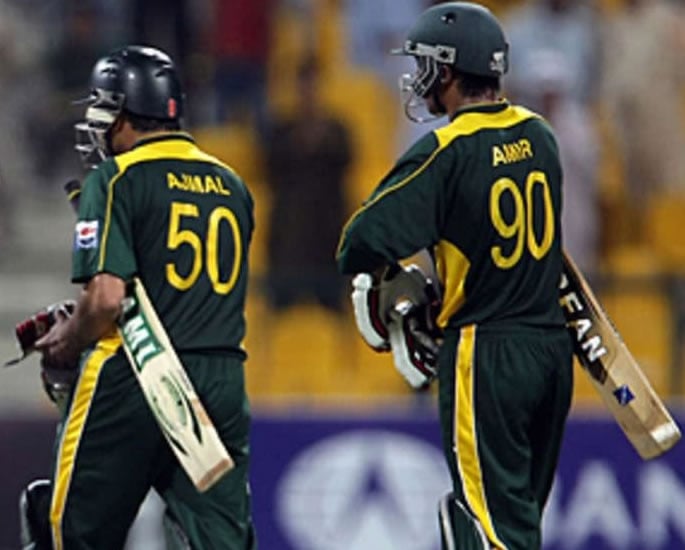
Pakistan needed 212 against New Zealand in Abu Dhabi in November 2009. At 101 for nine, they weren’t even halfway.
The last pair were Mohammad Amir, then 17, and Saeed Ajmal. Nobody would have picked either to take the chase deep.
They added 103. Amir hit Daniel Vettori for three sixes and finished on 73 not out. Ajmal, who’d already taken four wickets with the ball, made 33.
New Zealand still needed only one wicket, and the appeals kept coming, but the stand wouldn’t break. Pakistan had gone from heading for a thrashing to thinking they might win it.
It finally ended on the first ball of the last over, when Ajmal was caught by Kyle Mills at fine leg off Jacob Oram. Pakistan were all out for 204, with Amir stranded at the other end. They’d needed 111 when the pair got together.
New Zealand won by seven runs and took the series 2-1. It’s the odd one out on this list, the escape that didn’t quite happen. But getting that close from 101 for nine deserves better than being remembered as a seven-run defeat.
Last-wicket stands make every ball matter. The man who normally gets a passing mention becomes the one person the whole chase hangs on.
These six ended differently, but each one made the bowling side think again about a job that looked almost done.
And if you’re ever watching your own team at nine down, they’re a good reason to stay until the end.