













































His works are akin to “short stories, if not portraits”
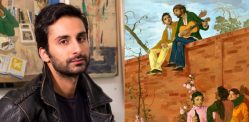
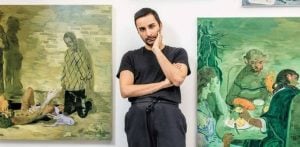
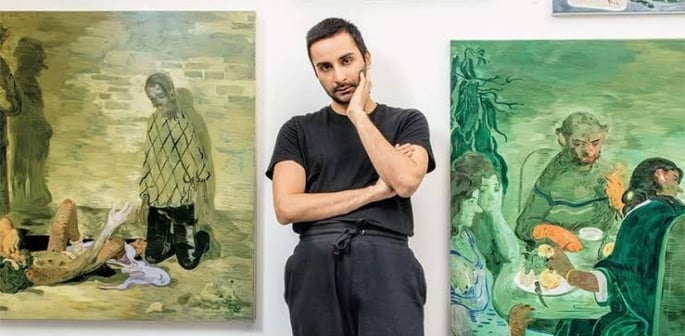
London’s Courtauld Gallery is currently hosting a major new exhibition by artist Salman Toor.
The exhibition, titled Salman Toor: Someone Like You, brings together 19 paintings by the artist.
These paintings were made by Toor from 2019 onward.
The exhibition also includes a separate display featuring several of his drawings.
This marks the first major European solo exhibition held by Toor in his career.
The artist currently lives and works in New York, away from his roots.
The exhibition’s curator, Elena Crippa, interestingly described Toor’s paintings.
She said his works are akin to “short stories, if not portraits” of people.
Crippa explained that viewers encounter people partway through an evening in his paintings.
They often remain unaware of everything that brought these figures to that moment.
The central dancer in his painting ‘Ghost Ball’ wears mismatched footwear in the artwork.
One foot wears a traditional Pakistani khussa, while the other remains completely bare.
This detail suggests the difficulty of inhabiting several cultural realities simultaneously in life.
It also hints at the pleasure of moving between them without needing explanation.
Around the dancer, bodies whirl through an emerald atmosphere filled with musicians and couples.
The dancers share a physical space without necessarily sharing an emotional state.
In another painting, ‘In The Bar on East 13th’, a bartender faces the viewer directly.
The bartender appears both available and withdrawn, with a working expression hiding true feelings.
Toor’s encounter with Édouard Manet’s famous painting during a 2017 Courtauld visit inspired this work.
Returning his bartender to that collection creates a conversation across different time periods.
Crippa also drew attention to how modern technology appears throughout Toor’s paintings.
In ‘Bar Boy’, a phone illuminates a young man’s face within a crowded room.
In ‘Pillow Fight’, two naked figures tumble across bedding with a laptop nearby.
This laptop complicates the sense of intimacy shared between the two figures depicted.
Toor questions in the exhibition’s text whether the scene is being watched or performed.
Domestic pleasure in his work often acquires an audience, whether invited or merely imagined.
In ‘Museum Boys’, a sleeping figure shares space with an object recalling Marcel Duchamp’s work.
This detail turns a moment of intimacy into something resembling a museum exhibit.
Another painting, ‘Fag Puddle with Carriers’, draws inspiration from a much older religious artwork.
This connection highlights the solemnity found within Toor’s depiction of vulnerable figures.
In ‘Wandering Beggars’, ragged companions move together with an unstable, almost dancing rhythm.
Their closeness in the painting transforms dependence into something resembling companionship instead.
Such vulnerability extends well beyond the canvas itself, given the artist’s personal background.
Queer desire remains a sensitive subject in Pakistan, adding weight to these intimate paintings.
In ‘Back Lawn’, lovers embrace among vegetation while a family gathers nearby in the scene.
This reflects affection for home existing alongside the need to escape its supervision.
The longer one views Toor’s work, the more it invites autobiographical interpretation from viewers.
Salman Toor: Someone Like You is on display at the Courtauld Gallery from October 2, 2026, to January 10, 2027.