

















































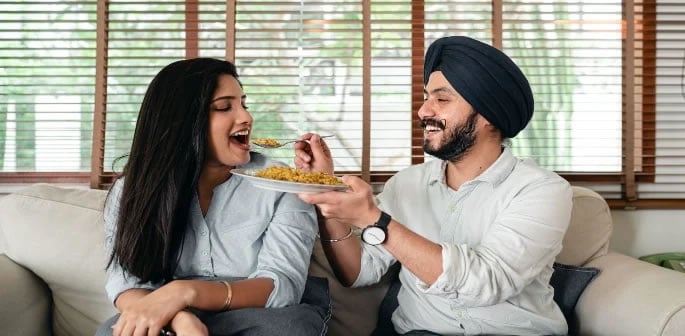
"You all eat, I’ll have mine later."
Sharing food with your partner is one of the most romantic ways to show intimacy in a relationship. But what happens when your partner eats all the meals you’ve spent hours preparing for the week?
For some women, this behaviour is more than an everyday annoyance. It’s a sign of a deeper problem in the relationship.
The issue has sparked debate online, with women discussing a trend known as “food divorce”.
The conversation gained traction after TikTok creator The Professor Bae posted a video titled “Men Weaponise Food”. She argued that some men take women’s cooking for granted and disregard the effort that goes into preparing meals.
The video sparked differing opinions, ranging from it being called a “power play” to some saying they were tired of being asked “what’s for dinner”.
But is eating your partner’s food simply inconsiderate, or could it be a red flag?
The debate raises wider questions about respect, boundaries and the expectations placed on partners when it comes to food and household responsibilities.
The Last Roti
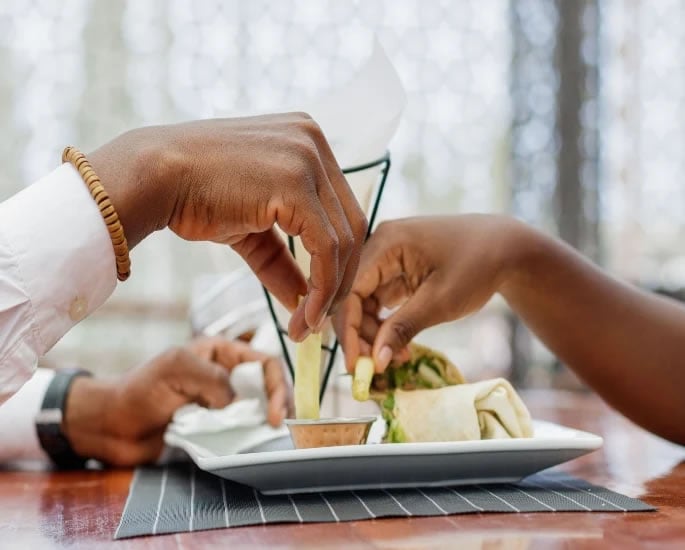
If this sounds familiar, it’s because it’s the grown-up version of how many of us were raised.
The Professor Bae traced it back to childhoods where men were served first and ate the most, and everyone else took whatever remained.
South Asian women could recognise this pattern long before it became a viral talking point.
In plenty of our homes the leg piece went to the men, the first hot roti went to the guests, and mum ate last, quickly, often standing at the stove, saying:
“You all eat, I’ll have mine later.”
Everybody knew “later” meant the cold bits.
Hospitality had its own rules too: the best of everything was set aside for guests, and the women of the house watched it go, then made do with whatever the guests left.
It wasn’t every household, and it was rarely meant unkindly.
In joint families, “tera mera” (yours and mine) was frowned upon and everything was shared, which often meant the women’s share quietly shrank.
Daughters watched all this happen, and a lot of us decided we’d never sit down to an empty plate.
So when a woman says “that’s mine, get your own”, it’s about finally being the person who gets to eat the hot food. It’s also about the husbands, brothers and sons learning that not everything in the fridge belongs to them.
What is a Food Divorce?
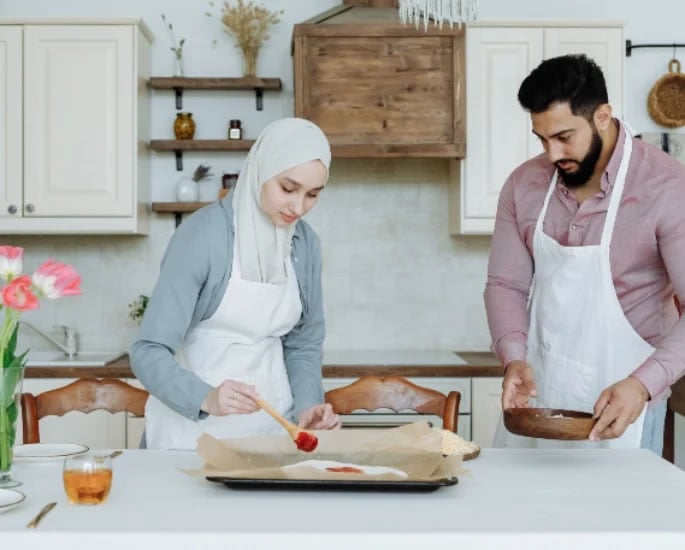
Despite the name, nobody is going to court. A food divorce is when couples shop, cook and eat independently.
It is mostly linked to diaries and diets: one partner on a weight loss drug, the other tracking protein, dairy off the menu, work shifts that never line up.
In its simplest form, one person eats an early dinner while the other eats later.
Supporters say it takes away the pressure to please someone else’s cravings and gives you a little time back, which is a luxury midweek.
It isn’t a ban on eating together. Fans say weekend brunch, Friday date night and special dinners still happen, and feel better for it.
Experts have raised a flag of their own, warning that eating apart can create a “roommate dynamic” and push up grocery and cleaning costs.
Few of those pieces mention stolen leftovers. But it’s easy to see why the idea appeals to anyone tired of guarding her Tupperware.
Think of it less as a breakup and more as a very organised flatshare with better snacks.
Ten ways women are doing it
- Cook once, portion and label. Batch-cook on Sunday, then divide it into containers with your name on the lids. If your lunch has a name on it, “I didn’t know” stops working. Sharing a fridge with in-laws too? Label the lid twice.
- Claim a shelf. One fridge shelf and one cupboard that are yours. The good biscuits, the mithai and the expensive cheese live there, and nobody else has a key.
- Stagger dinner. You eat at seven, he eats whenever. By the time he’s hungry, your plate is empty and the pan is washed.
- Cook two things, share the table. The dietitians’ tip is “modular” meals, like a build-your-own taco night, where everyone assembles their own plate. The Desi version: one dal, two sabzis, and everyone serves themselves.
10bmnews - Shop separately. Your own basket, your own delivery slot. It’s the purest form of food divorce, though it can mean higher grocery costs and more prep. The bonus: nobody comments on what’s in your basket.
10bmnews - Hand back “what’s for dinner”. One of the most-liked replies under The Professor Bae’s video was a plain complaint about that exact question, with over 20,000 likes. Alternate cooking nights, or let him cook his own.
BuzzFeed - Have a girl dinner night. One writer says that when her partner is away she’s happy with cheese, crackers and pickles. The Desi version is achaar, papad and leftover rice, eaten on the sofa with no commentary.
- Say the sentence out loud. Skip the sulk and the hints. Tell him calmly that when he eats what you cooked for tomorrow, it creates extra work for you. It sounds like something from an HR meeting, but it works.
- Eat first, eat hot. Serve yourself before you serve everyone else. Take a proper portion and sit down while the roti is still warm.
- Keep one table for two. A food divorce works best as a part-time arrangement. Keep a regular brunch, a Friday takeaway or a Sunday meal where you share everything and nobody counts bites.
Red flag or Just Hungry?
Sharing food is one of the nicest things a couple can do.
Feeding each other from your plate is a love language in its own right, and nobody is keeping score over a stolen chip.
The red flag is the pattern. Is it always your plate that gets raided? Does “I was saving that” get a laugh?
The best test is what happens next. If he goes and makes you another one, you’re fine. If he doesn’t, you now know what to do: get a label maker and a very good lock for the fridge.
And if you’re the one doing the eating, take note.
Ask before you take a bite of something that was clearly being saved, and replace what you finish. It costs nothing and goes a long way.