

















































"I would say that 'The Maya' creates a powerful nexus"
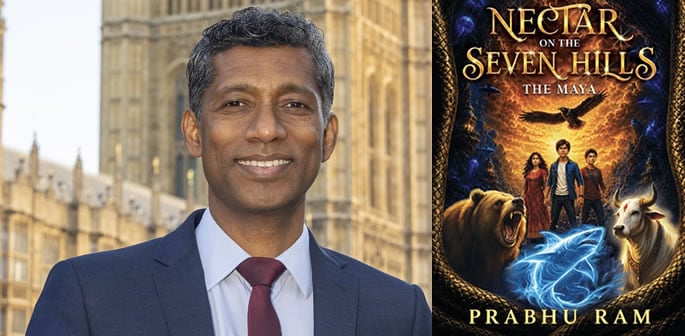
Prabhu Ram is taking Indian mythology to an international audience with Nectar on the Seven Hills – The Maya, the second book in his Nectar trilogy.
Blending ancient scriptures, magical encounters and a contemporary fantasy adventure, the series introduces younger readers to India’s rich mythological heritage through an ambitious fictional world.
‘The Maya’ expands on the first instalment, bringing together characters from different ages of Vedic history as its young protagonists face a darker and more formidable threat.
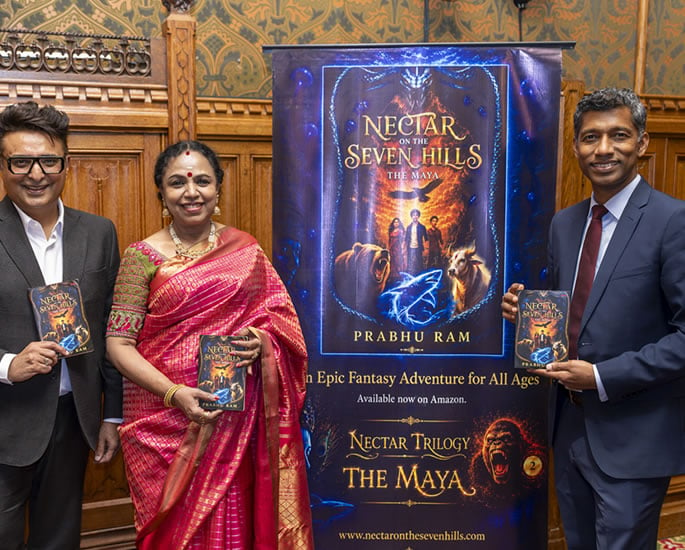
Its UK launch at the Palace of Westminster, Houses of Parliament, London, marked a significant moment for Indian publishing, bringing the trilogy to one of Britain’s most recognisable institutions.
Chaired by MP Bob Blackman CBE, the event welcomed distinguished figures including Padma Bhushan awardee Sudha Ragunathan.
With comparisons to Harry Potter, highlighting the series’ appeal to fantasy readers, Ram is building a distinctly Indian adventure with ambitions beyond its home market.
In an interview with DESIblitz, he discusses the mythology behind ‘The Maya’, the research shaping the trilogy and his hopes for connecting younger generations with India’s ancient wisdom.
Taking ‘The Maya’ into a Darker Mythological World
Prabhu Ram’s Nectar on the Seven Hills – The Maya brings together ancient mythology, supernatural forces and three young protagonists caught up in an extraordinary quest.
The second book builds on Nectar on the Seven Hills – The Pure Seed, taking Magadh, Rudra and Yukti into a world where characters from different ages of Indian history and mythology meet, and the threat they face becomes increasingly sinister.
On what he wants the trilogy to offer, Ram says:
“Imagine a plot where three young adults, lost in a forest during a pandemic-triggered lockdown, encounter the unthinkable, an encounter that binds them together through a certain duty.
“This style of fantasy adventure is my attempt to push the boundaries of traditional storytelling through a narrative that is inventive and innovative, while at the same time drawing deeply from a rich tapestry of historical and mythological elements, all presented to readers with meticulous attention to detail.
“Many Nectar fans compared the first book to India’s answer to Harry Potter, and the second instalment in the trilogy, in many ways, does justice to that unparalleled comparison.
“The Maya is bigger, bolder, and darker. It brings larger-than-life historical and mythological characters vividly to life, and perhaps we can even claim that this is a truly global mythological adventure, with the story navigating across continents.”
The expansion is particularly evident in the characters who enter the story, as Ram continues:
Ram said: “The Maya particularly connects pivotal incidents mentioned in our Vedic scriptures, each belonging to a different time and age.
“For starters, readers will experience the Kingdom of Dvaraka, none other than the kingdom of Lord Krishna, journey through the grandeur and key characters of the Ramayana and witness the magical awakening of modern avatars.
“I would say that ‘The Maya’ creates a powerful nexus between characters drawn from different points in Vedic history, integrating them seamlessly into the plot as the three young protagonists, Magadh, Rudra, and Yukti, race through the adventure alongside them.
“Take Jambavan, the Lord of the Bears, for example, a character well known for his association with both the Ramayana and the Mahabharata.
“The second book in the Nectar trilogy reimagines Jambavan’s arrival in the Kali Yuga, bringing an ancient figure into an entirely new age and context. This is just one example.
“To add to this, the true power of the antagonist is revealed far more forcefully in the second book, exposing just how sinister and formidable a force he can be.
“I can assure you that ‘The Maya’ will be a visual treat and a cinematic saga for readers, bringing together different ages, characters, and mythological worlds in one sweeping adventure.”
Bringing Indian Scriptures into Fantasy
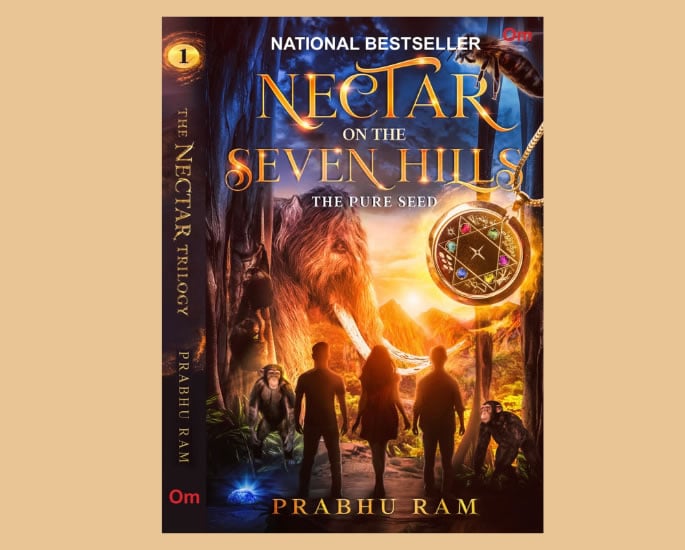
At the heart of the Nectar trilogy is the Samudra Manthan, or Churning of the Ocean, an episode in Indian scriptures in which the Devas (Gods) and Asuras (Demons) seek the Nectar of Immortality.
Its themes of good and evil, divine power and the pursuit of wisdom underpin a story that also asks what humanity should do with the gifts it possesses.
Ram says: “This ancient episode lies at the very heart of the trilogy’s plot, symbolising the eternal struggle between good and evil, while also embodying the timeless quest for divine wisdom, power, and immortality.
“In the Bhagavad Gita, Krishna reveals that He is the eternal seed from which all existence arises, the wisdom of the wise and the strength of the powerful.
“Nectar on the Seven Hills reiterates this timeless truth and foundational philosophy. All life, across millions of species on this planet, is connected by one unseen source.
“Humanity may possess extraordinary intelligence and power, but its true measure lies in how those gifts are used, with compassion, empathy, and respect for all beings.
“Set against the darkening age of Kali Yuga, this current millennium, the story follows Magadh, Rudra, and Yukti as they unite in search of The Pure Seed, a force that may hold the power to confront an ancient evil and restore a fading balance as they navigate many hurdles in the second book in the Nectar trilogy.
“Rooted in scriptural wisdom yet infused with magical and fantasy elements, Nectar on the Seven Hills blends mythology, spirituality, mystery, and action into an epic quest of discovery, conflict, and destiny.”
Translating philosophical ideas into fiction presents a different challenge from explaining them directly. Ram’s approach draws on the Srimad Bhagavatham:
“In the Srimad Bhagavatham, there is a philosophical teaching centred around twenty-four Gurus. It appears in Lord Krishna’s final teachings to His dear friend Uddhava, where He narrates the story of Lord Dattatreya and His twenty-four Gurus.
“These teachings, known as the Uddhava Gita, are considered among the most profound teachings of Lord Krishna after the Bhagavad Gita.
“What makes this particularly fascinating is that the twenty-four Gurus mentioned in the teaching are not conventional spiritual masters.
“They include a python, a wasp, a honeybee, an arrow-smith, an elephant, a spider, a deer, a fish, and many others, each imparting a unique lesson drawn from nature and life itself.
“The Nectar trilogy brings these characters to life, with the twenty-four Gurus guiding the children not only towards the wisdom contained within our scriptures, but also walk along the path of their extraordinary quest.
“Their teachings become part of the adventure itself rather than lessons imposed upon it.”
“That, I believe, is one of the great challenges of mythological fantasy: ensuring that you never lose the reader’s perspective while weaving ancient wisdom organically into the narrative, so that the lessons remain with them long after the adventure has ended.
“That is exactly what I have attempted to do with Nectar. Perhaps that is also why critics and fans alike have drawn comparisons with Harry Potter, Percy Jackson, and other celebrated fantasy narratives.”
Research behind the Trilogy

Adapting scriptural material for a modern fantasy series requires more than familiarity with individual stories.
The events, characters and teachings must work within a consistent narrative, particularly when the story draws on different Yugas in Hindu tradition.
Calling the book trilogy “ambitious”, Prabhu Ram says:
“The amount of time I have invested in researching for the narrative has far exceeded the time spent on the actual writing itself.
“For example, the books draw upon incidents from various scriptures dating back to different Yugas in Hindu tradition, while at the same time bringing those moments into the present and connecting them with the modern world.
“As the trilogy has progressed, my investment in research has only intensified, driven by the desire to further enrich the reader’s experience.
“Readers will begin to experience the depth of that effort as they navigate the second book, ‘The Maya’.”
That work also involves making different strands of mythology and philosophy function together without overwhelming the adventure.
Ram admits: “The biggest challenge in this project has been to identify, align, and blend these messages in a way that feels natural while still appealing to readers of all ages.
“The world-building is extraordinarily rich, and the plot takes the reader from China to India, Italy, and England in a truly global fantasy adventure.
“Having earned the distinction of becoming a National Bestseller is only an interim milestone, a source of motivation along the way.
“The real objective is to complete the narrative exactly as I envisioned it at the outset of this project, more than three years ago.”
The first book’s National Bestseller status gave the series an encouraging start, but Ram’s longer-term ambition extends beyond commercial recognition.
The second book incorporates more than eighty verses from the Srimad Bhagavatham and the Bhagavad Gita, as Ram says:
“In many ways, that is where much of its magic lies.
“India, referred to as Bharath in many Vedic and Puranic texts, carries immense historical, cultural, and spiritual significance.
“Our ancestors achieved extraordinary feats in times without the advantages of modern technology, leaving behind a legacy of thought, knowledge, philosophy, and tradition that continues to inspire generations.
“India’s rich history and deeply rooted Vedic traditions have, for centuries, offered profound ideas to the wider world.
“I deeply respect, admire, and appreciate these connections, and the Nectar trilogy is, in many ways, my attempt to bring those connections into a contemporary narrative.”
For younger readers, the distinction between encountering a philosophical idea through a story and studying it directly can be significant.
The author says: “At the core of my belief is the idea of oneness when it comes to the divine. ‘All for One. One for All’. This has been the defining tagline of Nectar on the Seven Hills.
“The objective has never been simply to craft another conventional story, but to weave important messages from our Vedic scriptures into a modern narrative, one that can resonate with younger generations while also appealing to a wider readership.
“In today’s world, it may not always be easy to encourage every teenager to pick up the Bhagavad Gita and engage with it deeply.
“Of course, I do not mean to generalise. But that reality presents an important creative challenge: how do you carry timeless wisdom into a form that feels accessible, engaging, and relevant to a contemporary audience?
“That has perhaps been the biggest challenge of this project, to identify, align, and blend these messages in a way that flows naturally within the story while remaining meaningful to readers of all ages.
“Based on the reception so far, I hope I have done justice to that vision. Ultimately, only time will tell.”
Bringing ‘The Maya’ to British Readers
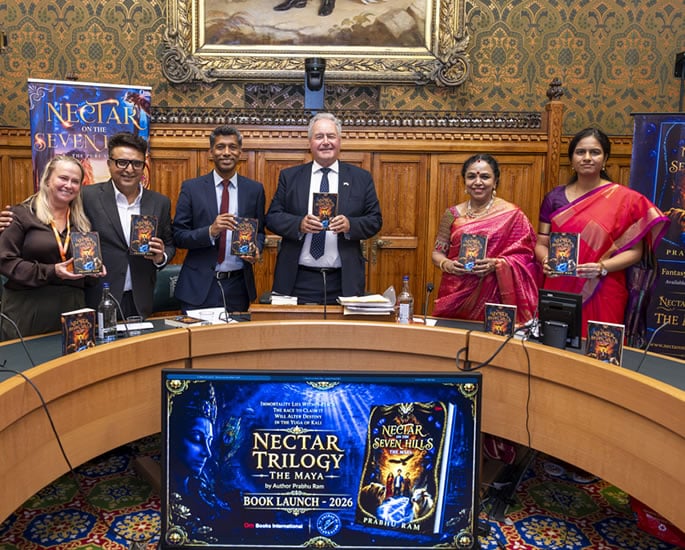
The UK launch of the second book was held at the Palace of Westminster and places the trilogy before a readership that includes British South Asian families looking for ways to engage younger generations with Indian culture.
Looking to Diwali, Prabhu Ram says:
“What better Diwali gift could there be than the second book in the Nectar series?
“For parents, perhaps this is also an opportunity to introduce their children to the abundant wisdom, imagination, and magical elements drawn from our scriptures through an engaging adventure.
“I would strongly encourage young adults to give the book a try and experience that world for themselves.”
The first book’s comparison to Harry Potter gives prospective readers a familiar point of reference, particularly those drawn to stories about young characters navigating extraordinary worlds.
However, Ram sees the comparison as a starting point:
“Some Nectar fans described the first book in the trilogy as a ‘Desi version of Harry Potter‘.”
“While that comparison naturally brings with it a certain amount of expectation, the larger purpose of this project can only be fulfilled if readers are willing to step into the world of Nectar and experience it for themselves.
“So, my key message would be this: if you loved Harry, Ron, and Hermione in Harry Potter, I am confident that Magadh, Rudra, and Yukti will find a place in your hearts as well.
“And yes – Nectar has its own magic to offer.”
With ‘The Maya’, Prabhu Ram continues to explore how Indian mythology and spiritual philosophy can find a place in contemporary fantasy.
The trilogy’s combination of scriptural influences, imaginative world-building and young protagonists offers a different way for readers to encounter these traditions.
Its Westminster launch also provides a prominent platform for an Indian story reaching beyond its domestic audience.
As the trilogy progresses towards its conclusion, Ram’s ambition remains to make ancient wisdom accessible to a new generation without losing the meaning behind it.