













































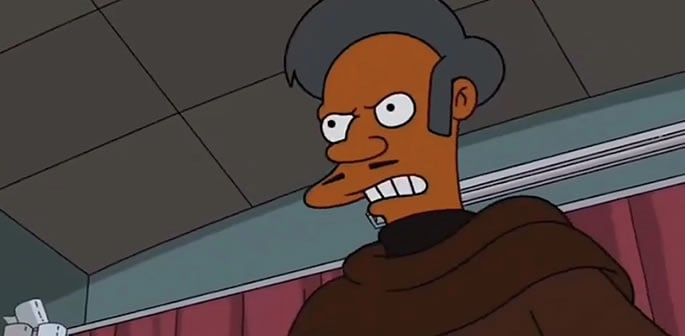
“I am the one you pretended never existed!”
For years, The Simpsons struggled to address criticism of Apu Nahasapeemapetilon, one of the show’s most iconic characters.
Voiced by white actor Hank Azaria since 1990, the Kwik-E-Mart owner faced mounting criticism for a stereotypical portrayal of Indian Americans.
Amid that criticism, a documentary examining his portrayal and Azaria’s eventual departure from the role, Apu became a voiceless character after 2017.
Now in 2026 and during Season 38’s Halloween special, ‘Treehouse of Horror Presents: The Revengening’, Apu returned with new voice actor Sunil Malhotra.
After years of avoiding the issue, The Simpsons has found a way to bring Apu back without ignoring the concerns that led to his initial absence.
Acknowledging the Handling of Apu
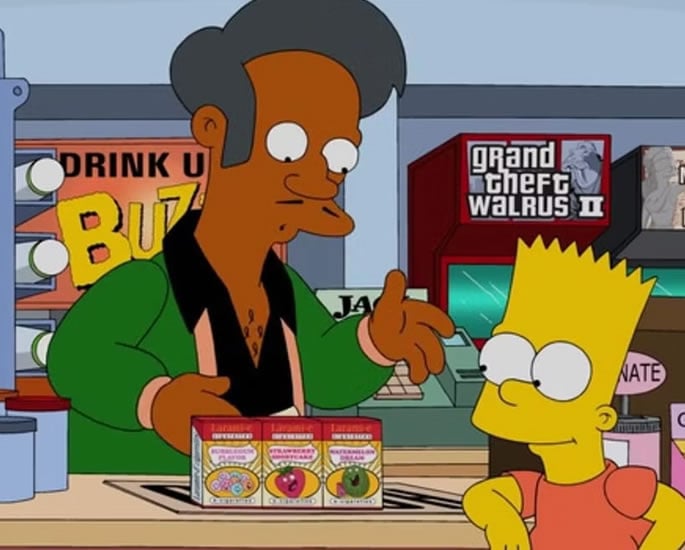
Criticism of Apu’s portrayal intensified in 2017 when comedian Hari Kondabolu released the documentary The Problem With Apu.
The film explored how the character’s exaggerated Indian accent, catchphrases and cultural stereotypes affected South Asian viewers, particularly those who grew up being mocked or compared to him.
Apu was a prominent Indian-American character on a major television show, but his portrayal also reinforced stereotypes that South Asian communities had experienced in their everyday lives.
The fact that a white actor voiced him for decades added to concerns about representation in Hollywood.
Azaria eventually apologised for his role and stepped away from voicing Apu. He said:
“I really do apologise. I apologise for my part in creating that and participating in that.
“Part of me feels like I need to go to every single Indian person in this country and personally apologise. And sometimes I do.”
Although the controversy prompted an acknowledgement of the harm caused, Apu subsequently lost his speaking role and largely receded into the background.
This left a fundamental problem unresolved: the character himself was not necessarily the issue, but the way he had been written and portrayed.
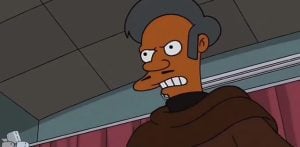
‘The Revengening’ addresses that absence. As a mysterious figure seeks revenge against Springfield, the person is eventually revealed to be Apu, who accuses the town of abandoning him.
He tells the residents: “I am the one you pretended never existed!”
Bart admits that the characters were “too scared” to act, while other jokes refer to “internal conversations that went nowhere”.
The exchanges allow the series to poke fun at its own handling of the controversy rather than pretending Apu simply disappeared without explanation.
By acknowledging that fear and indecision contributed to Apu’s absence, The Simpsons recognises that withdrawing the character was not the same as resolving the concerns surrounding him.
However, making the controversy the subject of a joke does not automatically demonstrate that the show has learned from its mistakes.
The more important test is whether Apu can now exist as a fully developed character without relying on the stereotypes that made his portrayal controversial in the first place.
A Fresh Start with a New Voice
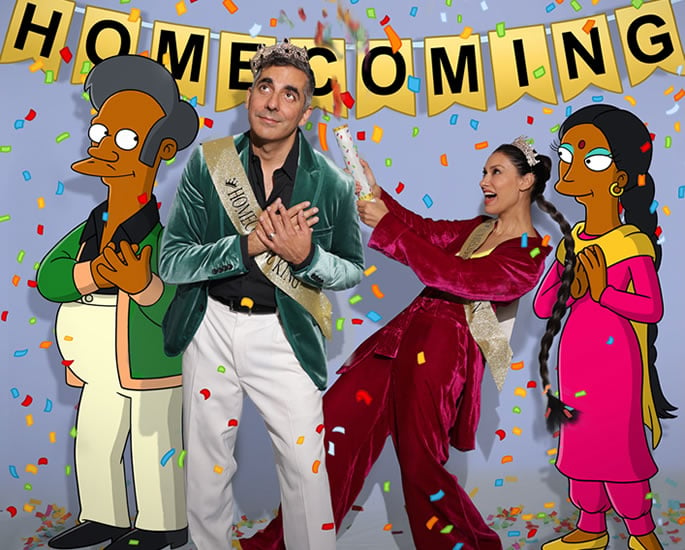
The decision to bring Apu back with Sunil Malhotra taking over the voice role represents a meaningful change in how The Simpsons approaches the character.
Malhotra’s involvement also highlights the responsibility that comes with revisiting a role associated with years of criticism.
Speaking to Variety, the actor explained that accepting the opportunity initially made him uncomfortable because of Apu’s controversial history.
After eight years without a speaking role, he wanted to understand whether the show could acknowledge its past and give the character a different future.
Malhotra asked: “Could they bring him back in a way that acknowledged and apologised for past mistakes?
“Could I make the character my own, and reclaim him in some way? And could they achieve all of that in an unmistakably ‘Simpsons’ way that didn’t disappoint fans?”
Recasting Apu is an important step towards more representative casting, but it cannot, by itself, resolve concerns about the character’s writing, accent or place within the series.
Malhotra has also previously turned down stereotypical Indian roles, making his willingness to take on Apu particularly noteworthy.
He requested a meeting with showrunner Matt Selman to discuss the character and how he could be approached moving forward.
Selman said: “We love this character, and wanted to bring him back in a smart, ‘Simpsons’-y way that allowed him to evolve.
“We’re excited by what Sunil has already brought to the role, and look forward to seeing more of Apu in the future.”
That commitment to developing Apu beyond the controversy will determine whether the return has a lasting impact.
The character has previously been established as Homer’s friend, a devoted husband and father, and a familiar presence in Springfield.
Those qualities offer opportunities for stories that do not depend on exaggerated cultural traits or jokes about his Indian identity.
Janina Gavankar has also joined the cast as Apu’s wife, Manjula, creating further potential for the family to become part of the series again.
Giving both characters meaningful roles would help establish them as more than occasional reminders of the show’s past.
However, there is a distinction between acknowledging a mistake and correcting it.
A new voice actor and a self-aware storyline demonstrate that The Simpsons is willing to revisit Apu, but the character’s long-term treatment will matter more than the circumstances of his return.
Has The Simpsons fixed its Biggest Mistake?
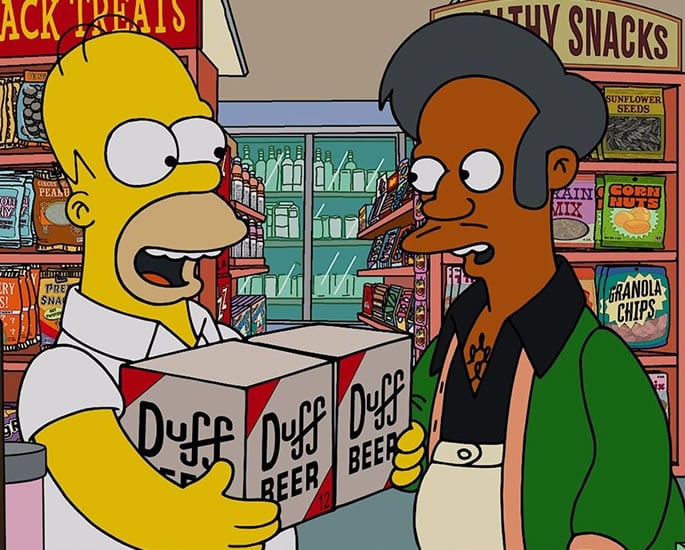
Apu’s return is a positive step, but it is too early to say that The Simpsons has fully corrected its handling of the character.
The episode confronts his absence, while Malhotra’s casting offers the opportunity to move towards a more considered portrayal of an Indian-American character.
The series has also recognised that removing Apu was not a complete solution to the controversy.
His return presents an opportunity to show how representation can improve through thoughtful writing, casting and character development rather than avoidance.
Ultimately, the question is no longer simply whether Apu should appear in The Simpsons, but what the show chooses to do with him now that he is back.
If future episodes allow him to develop beyond the stereotypes that defined his earlier portrayal, this comeback could become a genuine turning point.
If the series relies on the controversy itself for humour without addressing the underlying concerns, the return risks becoming a missed opportunity.
One episode cannot undo decades of representation, but it can establish the direction a show intends to take.
For The Simpsons, the real test will be whether Apu is once again treated as a character worth writing for, rather than a problem the series would rather avoid.