














































"I felt a strong urge to put a story down on paper."
What if the ancient secrets of Indian mythology were more than stories passed down through generations?
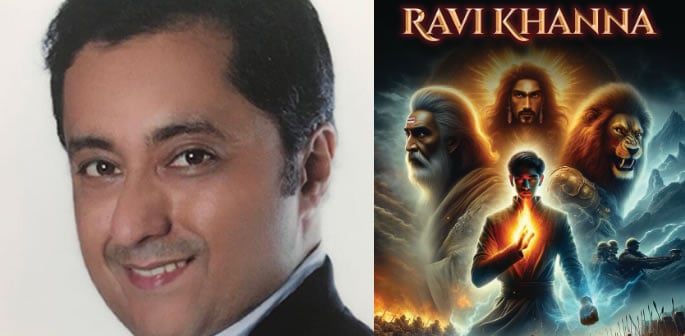
Deepak Buxani explores this possibility in Ravi Khanna: Fire & Light, a young adult (YA) adventure that combines spiritual fantasy, science fiction and the traditions of Sanatana Dharma.
The novel follows 18-year-old Ravi, whose life in Vadodara takes an extraordinary turn when he discovers elemental powers, encounters secret brotherhoods and uncovers mysteries involving ancient technology.
As his journey leads him into unfamiliar worlds, Ravi must also confront questions about his identity, his past life and the sacrifices required to fulfil a greater purpose.
Drawing on Indian philosophy, mythology and his own spiritual experiences, Buxani has created a fictional universe that brings these influences into a contemporary adventure.
In an interview with DESIblitz, the author discusses the inspiration behind Ravi Khanna: Fire & Light, the spiritual traditions that shaped its world and the characters and creative decisions driving Ravi’s journey.
Creating Ravi Khanna: Fire & Light
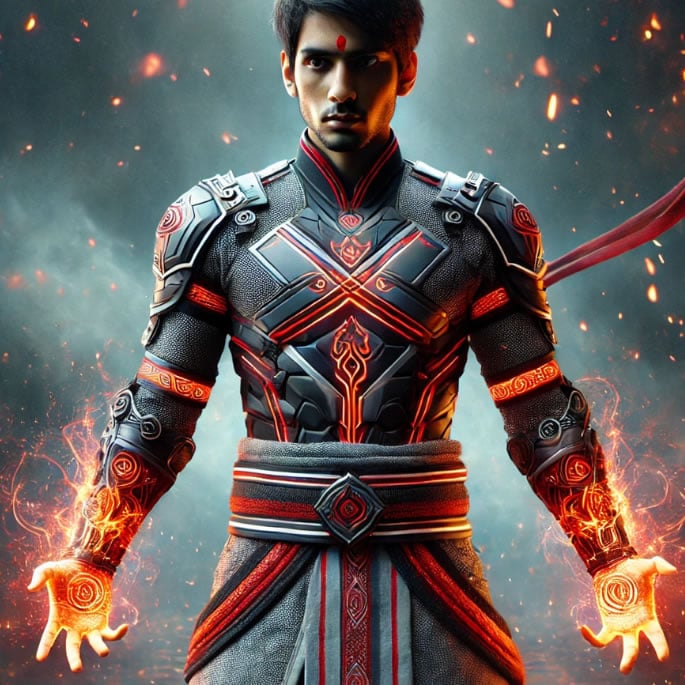
Deepak Buxani’s Ravi Khanna: Fire & Light brings together young adult adventure, Indian mythology, spiritual philosophy and science fiction in a story that moves beyond the familiar boundaries of the fantasy genre.
Its protagonist, Ravi Khanna, begins in an ordinary setting before encountering a world shaped by ancient traditions, extraordinary abilities and questions about human consciousness.
This world began with an unexpected impulse, as Buxani explains:
“It happened quite suddenly. I had never seriously considered writing a book.
“One day, while sitting in my office, I felt a strong urge to put a story down on paper. I explored a few ideas, but none of them felt right, so I eventually put the thought aside.
“A couple of weeks later, the idea for Ravi Khanna simply struck me, and the story began to flow.
“I did not immediately realise that it would become a full young-adult adventure; that became clear as Ravi’s world, journey and characters continued to grow.
“Some days I could write an entire chapter, while on others I struggled to complete even a single sentence.
“From that first idea to publishing the finished book, the whole journey took about a year.”
The spiritual framework is particularly important to the novel because it gives the adventure a philosophical dimension.
Buxani continues: “I have been interested in spirituality from a young age, and several personal, life-changing spiritual experiences helped to shape Ravi’s experiences in the book.
“Sanatana Dharma is one of the world’s oldest living spiritual traditions, and its depth is unfathomable.
“I wanted to condense some of the teachings found in Advaita Vedanta and the Upanishads, particularly those concerning the self, consciousness and our connection with the divine and weave them naturally through Ravi’s journey.”
Buxani also draws on the longstanding relationship between speculative fiction and humanity’s fascination with lost knowledge, extraordinary inventions and the possibility of civilisations whose capabilities exceeded those of their time.
“Science fiction has also fascinated me for a long time. India’s ancient texts speak of vimanas, or flying chariots, and extraordinary weapons such as the Brahmastra.
“Some descriptions of their power and effects can feel eerily similar to those associated with modern nuclear weapons. I personally believe that some form of advanced technology probably existed in the distant past.”
The connections Buxani identifies between Indian thought and modern science fiction also reflect the wider cultural influence of mythology on storytelling.
The author says: “I also believe that stories and concepts from Bharatiya culture have influenced modern fantasy and science fiction, sometimes directly and sometimes through the wider study of comparative mythology.
“Joseph Campbell engaged deeply with Indian philosophy and the Upanishads, and his works later influenced films such as Star Wars.
“The Matrix trilogy also draws upon Hindu and Buddhist thought, with The Matrix Revolutions making that connection explicit using Sanskrit verses from the Upanishads.
“My creative approach was to bring spirituality, mythology and advanced technology together in one epic adventure that celebrates the depth and grandeur of our Bharatiya tradition.”
Building a World between the Familiar & the Mystical
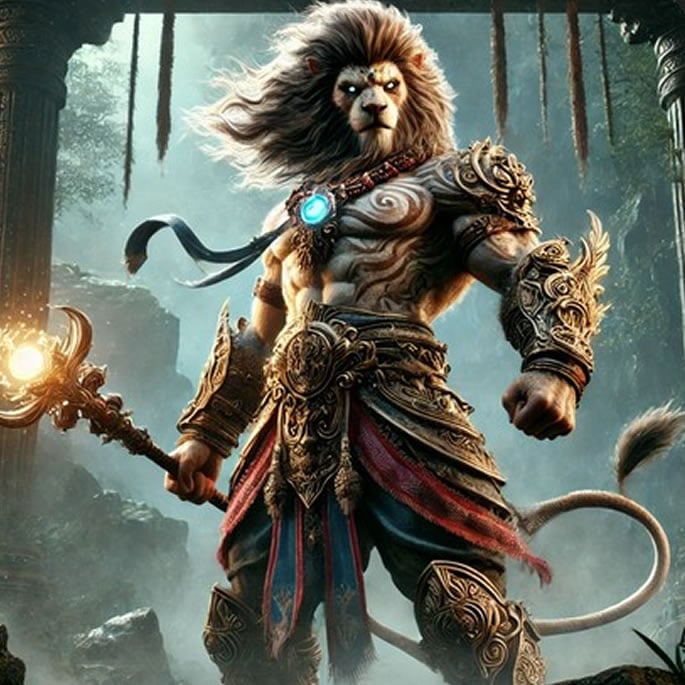
The geographical settings in Ravi Khanna: Fire & Light help establish the transition from everyday life to a reality in which spiritual traditions and supernatural possibilities become central to the story.
Drawing on personal points of connection, Deepak Buxani says:
“Vadodara happens to be very close to my heart, as both my mother and my wife are from the city.
“When I was younger, I had a deep desire to visit Mount Kailash. I would spend a great deal of time planning the journey and dreaming of one day visiting the holy abode of Lord Shiva.
“Then, in 2012, I travelled through South India and visited Arunachala Hill in Tiruvannamalai, about four hours from Chennai. The experience left a lasting impression on me.
“After visiting Arunachala, I somehow no longer felt the need to go anywhere else. I had found Kailash in Arunachala.”
Arunachala occupies a distinctive place in Hindu spirituality, particularly through its association with Shiva and the teachings of Ramana Maharshi.
The mountain is revered by devotees who understand it not merely as a place connected with the deity, but as a manifestation of Shiva himself.
This distinction helps explain why the location had such a lasting effect on Buxani.
Such traditions provide the novel with a framework in which the physical landscape can carry meanings beyond its geographical identity.
Buxani adds: “As for many of the details and experiences woven into the story, they were inspired in part by the life and teachings of my spiritual teacher, Sri M.
“Over the years, I have also been deeply influenced by books such as Autobiography of a Yogi, The Coming Race, and Living with the Himalayan Masters.
“These works helped shape the spiritual and mystical atmosphere that eventually found its way into Ravi’s journey.”
The resulting setting draws on traditions that associate the world with hidden dimensions and forms of existence beyond ordinary perception.
Buxani uses these influences to give his fictional environments a connection to established spiritual ideas, while leaving room for imaginative interpretation.
Mentors and Mythology
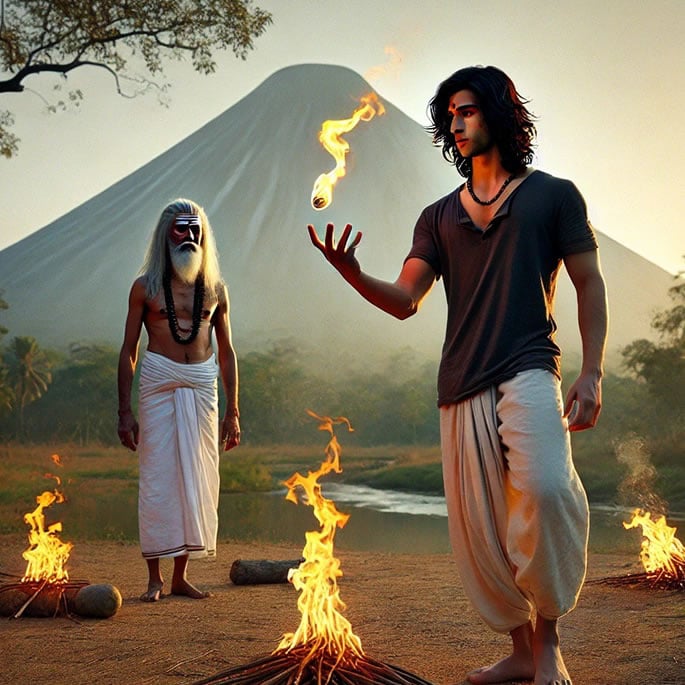
The book’s ancient secret Brotherhood introduces beings whose identities extend beyond conventional human categories and are drawn from wider Indian religious and mythological traditions.
Buxani details: “One of the central premises of the story is that the ancient secret Brotherhood consists of races that are not entirely human, but humanoid beings such as the Nagas, Simhapurushas and Vanaras.
“My own theory is that these ancient races withdrew into the inner world, generally known as Patala in the Sanatana tradition.”
The characters who guide Ravi also serve different narrative purposes, as Buxani says:
“The inspiration behind Vajrasimha was that of a great warrior king who also becomes Ravi’s teacher and mentor. I wanted him to be fierce and regal, but also deeply protective, especially when it comes to Ravi.
“For Batuk Mani, I wanted a character who was almost the complete opposite. He is an ash-covered, shapeshifting Aghori who has undergone intense sadhana.
“I didn’t want him to fall into the usual portrayal of the grim or frightening ascetic. Instead, he developed into this mischievous, playful trickster, someone who is spiritually powerful and deeply knowledgeable, yet also unpredictable and funny.
“That contrast between Vajrasimha and Batuk Mani was important to me.
“Both are powerful spiritual figures and mentors in their own way, but their personalities and the way they guide Ravi could not be more different.”
Their influence becomes especially significant:
“What interested me was the conflict this creates for an 18-year-old who still has a family, friendships and an ordinary life.
“We see him leave his family and step into that unknown, even though, strangely, it also feels natural to him.
“Deep down, some part of him already knows this is the path he is meant to take. Throughout the story, there are moments where Ravi has to reconcile his personal desires and attachments with the larger role he is being asked to fulfil.
“That was how I tried to balance the two sides of his journey.
“The elemental powers and the larger fantasy adventure may drive the scale of the story, but Ravi’s emotional journey is really about a young man coming to terms with who he is, what he may have to sacrifice, surrendering to the Guru and where he fits into a much bigger picture.”
The emphasis on personal development also influences Buxani’s treatment of the spiritual traditions that underpin the novel.
“I tried to draw a clear line between the spiritual ideas I wanted to treat with respect and the fictional elements I wanted to reimagine.
“Concepts from the Upanishads, Advaita Vedanta, Kriya Yoga and Sanatana Dharma formed the spiritual foundation of the story, so I did not want to simply use them as decoration.
“I wanted them to have meaning within Ravi’s journey and his understanding of his true nature.
“So my approach was to preserve the spirit of the tradition while allowing the world around it to become something new.
“I would take an idea that already fascinated me, whether it was Patala, vimanas, yogic powers or the nature of consciousness and then ask myself, ‘What if this were real in Ravi’s world, and how would it exist today?'”
What Comes Next
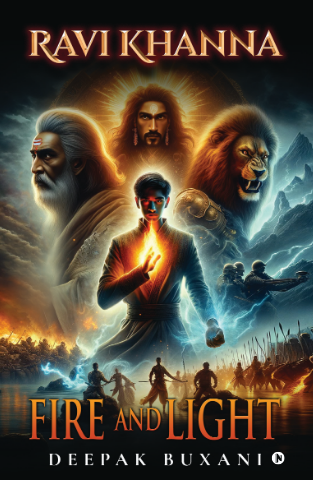
As the story developed, Deepak Buxani discovered that the characters could become more complex than he had initially envisaged.
An evident example is the antagonist Kaliyan Nair:
“One thing I learned about my own creative process is that I tend to discover the characters more deeply as I write them, rather than having every aspect of them fixed from the beginning.
“The character who surprised me the most was actually the antagonist, Kaliyan Nair.
“As his backstory developed, I began to see him as more than simply a force of destruction. There is something quite heartbreaking about what happened to him and how those experiences gradually pushed him down a darker path.”
Kaliyan’s development sits within a story that Buxani conceived on a larger scale, with Fire & Light acting as the first instalment of a three-part story.
The author adds: “At the end of Ravi Khanna: Fire & Light, there is a line: ‘To be continued’.
“The reason is that Ravi’s story, or katha, was always envisioned as a much larger journey told across three parts.”
“I am currently working on the second and third parts, but I am deliberately taking my time with them. I don’t want to rush the story simply for the sake of releasing another book.
“The world is expanding, the characters are evolving, and there are many ideas I still want to explore, so I would rather allow the story to develop naturally and give each part the attention it deserves.”
With Ravi Khanna: Fire & Light, Deepak Buxani draws on Indian spiritual traditions and mythology to build a fantasy adventure that explores both extraordinary possibilities and the personal challenges of growing up.
His approach to character development, particularly Ravi’s relationships with his mentors and the evolving history of antagonist Kaliyan Nair, adds emotional complexity to a world shaped by ancient mysteries and supernatural powers.
With the story planned across three parts, Buxani is continuing to expand the universe he introduced in his debut novel.