

















































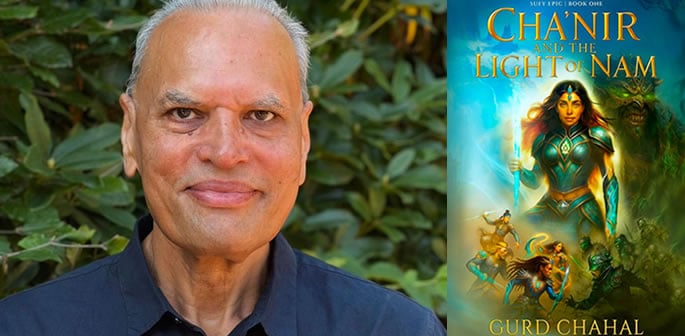
"I wanted to present a new idea of a Super Warrior"
Blending Indian philosophy, mythology and modern fantasy, Gurd Chahal’s Cha’nir and the Light of Nam introduces readers to a vast universe built around spirituality, destiny and the battle between light and darkness.
The first novel in The Sufy Epic series follows Cha’nir, a young girl whose life is transformed after tragedy leads her towards becoming the GuruMentor, a spiritual warrior destined to protect Earth.
Set across mystical realms including Muktiland and the war-torn Tamo-Terra, the book explores a cosmic conflict between forces seeking harmony and those driven by greed, attachment and destruction.
Drawing inspiration from Eastern philosophies while incorporating familiar elements of fantasy storytelling, Chahal creates a world where ancient ideas about consciousness and morality are placed at the centre of an epic adventure.
Through its warriors, gods and villains, Cha’nir and the Light of Nam examines how internal struggles can shape wider battles between good and evil.
With its ambitious world-building and spiritual foundations, the novel establishes the groundwork for a wider fantasy universe spanning future books and other creative forms.
Blending Eastern Philosophy with Western Fantasy Traditions
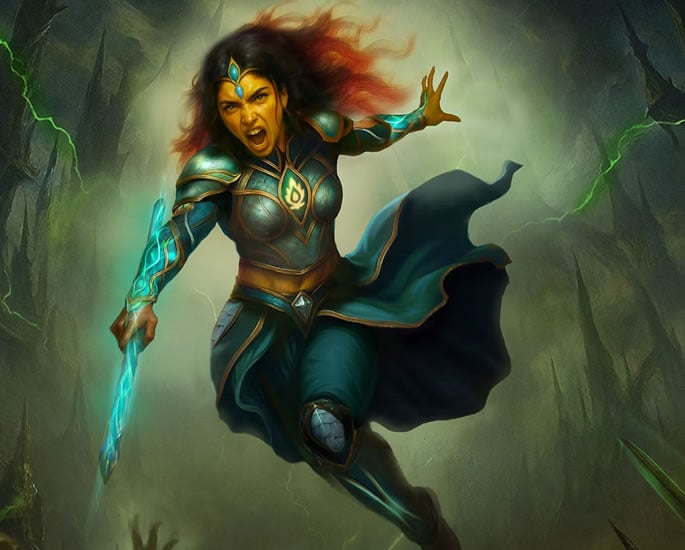
With Cha’nir and the Light of Nam, Gurd Chahal has created a fantasy world that draws from multiple mythological traditions while exploring spiritual ideas around identity, destiny and the nature of good and evil.
The first book in The Sufy Epic introduces readers to a universe shaped by influences from Indian mythology, Eastern philosophies and the foundations of Western fantasy storytelling.
Rather than separating these traditions, Chahal brings them together to create a world where familiar fantasy structures meet deeper questions around consciousness and human behaviour.
He explains: “The foundations of modern fantasy literature are deeply rooted in European mythological frameworks, medieval imagery, and Western narrative psychology.
“I aimed to weave together the rich tapestry of Indian and other Eastern mythologies and philosophies with the established framework of Western storytelling, which largely originates from ancient Greek tradition, especially Aristotle’s concept of the three-act structure.”
A key difference Chahal explores is how Eastern and Western traditions approach personal transformation, as he adds:
“Western narratives often centre on a single protagonist’s journey, their struggles against obstacles, and their ultimate victory or discovery of their individuality, often marked by external transformation.
“Many Eastern philosophical traditions are profoundly focused on examining illusion, the nature of the ego, universal interconnectedness, the practice of detachment, and the pursuit of internal alignment.”
Through this combination, Chahal introduces a different type of fantasy hero, one who reflects Asian cultural influences while remaining accessible to a global audience.
“The notion of sacrifice is very different in the two traditions, as is the concept of destiny.
“I wanted to present a new idea of a Super Warrior, an Asian warrior who can be recognisable globally within an existing tradition.”
Exploring the Klesh
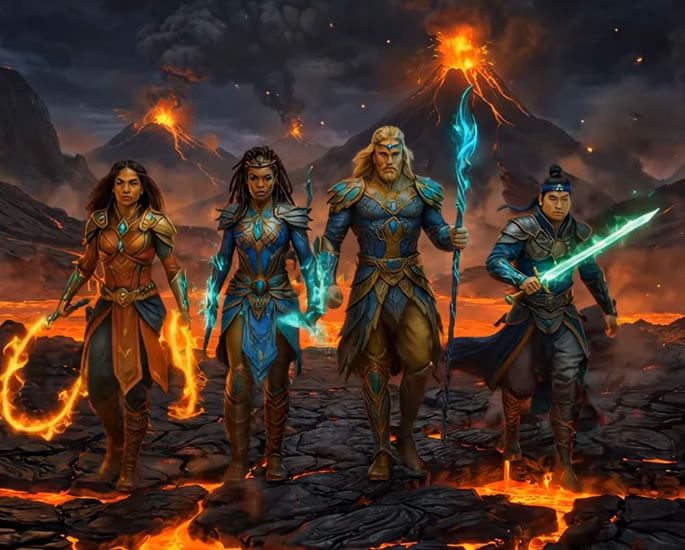
One of the most prominent forces in Cha’nir and the Light of Nam is the Klesh, a group representing destructive aspects of human nature.
The first book places particular focus on Moho, the self-appointed leader of the Klesh Nine, whose connection to attachment reflects one of the central conflicts within the story.
Gurd Chahal explained that Moho’s role was deliberately chosen because attachment has become increasingly visible in modern society, particularly through people’s relationships with technology, consumerism and personal identities.
He explains: “Moho became the lead Klesh character in Book One as his specific sin identification – Attachment – is so prevalent in today’s society, with its attachments to social media, brands, and identities.”
Within the world of The Sufy Epic, Moho’s ambition extends beyond personal power. His desire is to influence humanity itself, using attachment as a way to control the thoughts and behaviours of others.
Chahal says:
“He is the King of Attachment, and his ambition is to capture the minds of the world’s population.”
However, Moho is only one part of the wider Klesh mythology.
The nine monarchs each represent different forms of corruption, allowing future instalments to explore the broader consequences of greed, violence and materialism.
The origins of the Klesh are also connected to the wider mythology of the Maya World, as Chahal elaborates:
“The backstory to the Klesh monarchs is that they were originally appointed by the corrupt Demi-God, Kalokaya, many thousands of years ago when he first broke away from Nam’s Light to create his own vision of life on Earth which was dominated by his love of disconnection and disruption.”
On future books, Chahal says: “There will be future books which look both forwards and backwards in timelines, in which we will see the realms of Tamo-Terra and others in much more detail, and we will explore the characters and creatures that inhabit them.”
Expanding the Mythology of the Cosmos

Beyond the conflicts of the Maya World, Cha’nir and the Light of Nam also introduces MuktiLand, a realm connected to the wider cosmic order of the story.
The world-building around this area explores themes of balance, nature and the forces that maintain harmony.
Chahal explained that MuktiLand is governed by powerful figures known as the MuktiLords, who are responsible for protecting the order created by Nam’s Light.
“There are many MuktiLords, but seven who preside over MuktiLand. They’re Gods of Nature, and their task is to maintain the Cosmic Li’la, the calm order of the cosmos ruled over by Nam’s beneficent Light.”
While the first book establishes the foundations of these beings and their purpose, later works will provide greater insight into their beliefs, responsibilities and personal journeys.
Chahal detailed: “We do indeed see more into the thinking of the MuktiLords, and also, we find out more about how other gods such as the MuktiLord of Force, Lord Kum’mit, accept their own destinies within the Cosmic Li’la.
“MuktiLand as a realm becomes increasingly familiar as the books progress.”
Alongside these wider cosmic ideas, the book also explores the complex relationships between the forces driving conflict.
Among the most intriguing characters is Priestess Papina, who operates behind the scenes within the Maya World.
While Moho positions himself as a leader of the Klesh, Papina’s intelligence and influence make her a crucial figure in advancing Kalokaya’s ambitions.
“Priestess Papina is to a large extent the mastermind of the story, although only within the context of her absolute loyalty to Kalokaya.”
Bringing Mythology into the Modern World
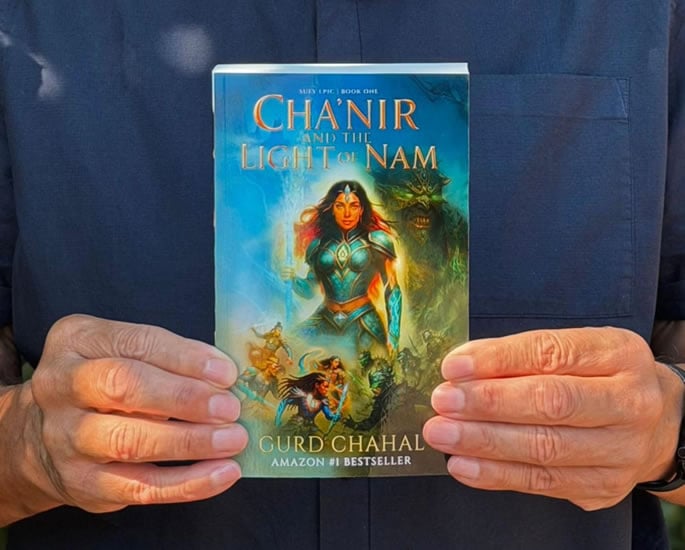
Papina’s role highlights one of the central ideas within Cha’nir and the Light of Nam: that power does not always come from those who appear to hold authority.
Although she serves Moho, her loyalty is ultimately directed towards Kalokaya, whose status as a Demi-God places him above the human Klesh leader.
The author says: “When Kalokaya appointed his Klesh monarchs all those thousands of years ago, he also appointed a cadre of Priests and Priestesses whose task was to maintain the ancient records and apply enchantments where necessary.”
Her understanding of Moho’s limitations creates a more complicated dynamic between the characters, particularly as she recognises the difference between human ambition and the power of a Demi-God.
Chahal continues: “Papina’s role is to serve her master, Moho, but the reader can see that she sees his limitations.
“He is, after all, only human, unlike Kalokaya, who is a Demi-God.”
The book also connects its fantasy world with real-world organisations and issues, using familiar names and fictional counterparts to encourage readers to reflect on modern society.
Chahal described The Sufy Epic as a “modern mythology” that reflects “our current world mythologised through a spiritual lens”.
By blending reality with fantasy, Chahal aims to create a sense that the conflicts within the story are not completely separate from the world readers know.
He says: “I wanted to ground the essential conflicts within the novel in real-life situations, to enable the reader to reflect upon their own perspective of the world: is it possible that some of the fictional constructs, such as the Klesh, could in fact have a real-world existence somehow, maybe as corrupted societal elites?”
At the heart of this mythology is Nam, the mysterious force that represents light, goodness and peace.
While initially appearing as a spiritual presence rather than a traditional character, Nam’s significance becomes increasingly connected to the wider conflict involving Kalokaya.
Explaining the parallels with other religious narratives, Chahal says:
“In some senses, there is a parallel here with the Christian story of Satan being a Fallen Angel who sets himself up in opposition to God.
“In the Sufy Epic, Kalokaya is a fallen Demi-God and so it is he, in his ambitions and avarice, who personalises his antagonism to Nam.”
For those following the wider journey of The Sufy Epic, the mystery surrounding Nam will continue to develop as the series progresses.
Chahal adds: “To that extent, Nam remains a character really only in Kalokaya’s corrupt vision – for everyone else who believes in the Light, Nam will forever be a mysterious ultimate force for good and peace in the cosmos.
“As the reader travels with us on the Sufy Epic journey, the question – who is Nam – is asked in book three and mostly answered.”
Cha’nir and the Light of Nam presents a distinctive approach to fantasy by combining mythology, philosophy and contemporary reflections on humanity’s challenges.
Through its exploration of characters such as Cha’nir, Moho, Papina and Kalokaya, the novel builds a universe where personal choices, spiritual growth and cosmic conflicts are deeply connected.
As the opening chapter of The Sufy Epic, the book lays the foundation for a much larger mythology while inviting readers to reflect on themes that extend beyond its fantasy setting.
Gurd Chahal’s creation offers a story rooted in ancient influences but shaped around modern questions of identity, power and the search for balance.