


















































he had displayed a "casual arrogant disregard to any woman’s right"
Russell Brand has been sentenced to 10 years and six months in prison for rape and sexual assault.
The TV personality was sentenced at Southwark Crown Court on November 9, 2026, after being convicted of one count of rape and three counts of sexual assault involving four women between 2004 and 2009.
Brand was acquitted of two further rape charges and one count of attempted indecent assault.
During sentencing, Mr Justice Bennathan described Brand as a “sexual predator” who had shown “staggering arrogance” towards women.
The judge said his growing celebrity status had protected him until allegations emerged publicly in 2023.
He told Brand that he had displayed a “casual arrogant disregard to any woman’s right to say no to you”.
David Roberts, Senior Crown Prosecutor in the London Rape and Serious Sexual Assault Unit, said:
“Russell Brand was predatory and used his celebrity status to commit sexual crimes. He was a manipulator with an insatiable desire to get what he wanted regardless of whether consent was given or not.
“As his career took off, he seized opportunities to assault the women around him. Although his tactics varied, at the centre of every assault was an abuse of power and sexual greed, with a complete disregard for the impact of his actions.
“I would like to thank all the women in this case for their courage in coming forward and seeing this sexual abuser brought to justice.”
The case raises important questions about male entitlement, sexual boundaries and the misconceptions surrounding consent.
These are particularly important conversations within South Asian communities, where traditional expectations around masculinity, relationships and family reputation can sometimes make discussions about sexual boundaries difficult.
Abusing Fame and Power

The four offences resulting in convictions involved different forms of unwanted sexual contact.
In 2004, Russell Brand sexually assaulted an MTV employee after meeting her at a London bar, grabbing her breasts without permission. In 2005, he assaulted a Capital Radio employee, forcibly kissing and groping her in a corridor.
A Channel 4 worker was sexually assaulted in 2009 after Brand pressured her into giving him a massage during a recording session.
The rape conviction involved a 21-year-old woman who met Brand after a stand-up performance at London’s Hammersmith Apollo in 2009. She later visited his Hampstead home, where they initially engaged in consensual sexual activity.
However, the encounter became rape when Brand subjected her to anal intercourse without her consent.
The judge also identified aggravating circumstances, including Brand removing a condom without her agreement and ejaculating inside her, leaving the woman fearful that she might have contracted HIV.
Her experience highlights a fundamental principle: consent to one sexual act does not mean consent to another.
The Metropolitan Police investigation involved more than 100 witnesses and thousands of documents.
The victims came forward independently following a television investigation into Brand in September 2023, rather than reporting the offences when they happened.
Their experiences challenge the misconception that survivors of sexual violence must immediately report what happened. Fear, shame, shock and uncertainty can prevent people from speaking out, while some may take years to process their experiences.
There is no single way to respond to sexual violence. Some people resist, others freeze, and some struggle to react at all.
What South Asian Men must understand about Consent
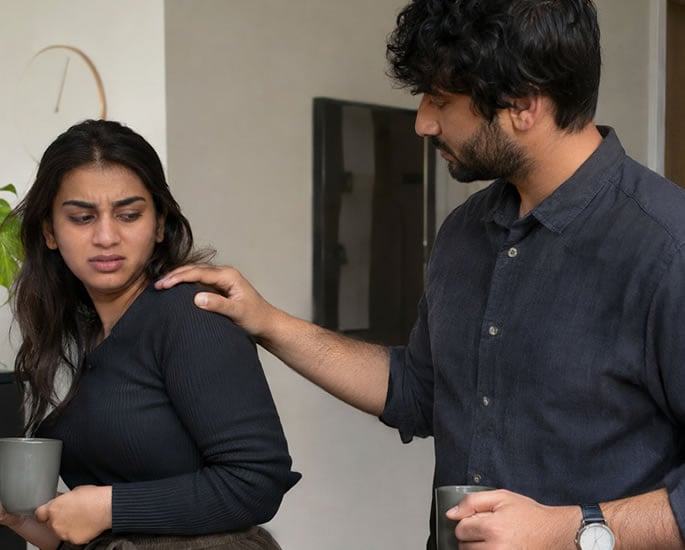
Under the Sexual Offences Act 2003, a person consents to sexual activity when they agree to it by choice and have the freedom and capacity to make that choice.
Consent must apply to the specific activity taking place and can be withdrawn at any time. Silence or a lack of physical resistance should never be interpreted as permission.
A woman smiling at a man, flirting, exchanging messages or agreeing to meet him does not mean she wants to have sex. Neither does accepting dinner, visiting his home or being in a relationship with him.
Friendliness is not consent. Attraction is not consent. Previous intimacy is not consent to future sexual activity.
These distinctions are important when challenging harmful attitudes about masculinity and relationships.
In some South Asian households and social environments, traditional gender expectations can encourage men to be persistent or dominant when pursuing women, while placing greater expectations of modesty on women.
Such attitudes are not universal, but they must be challenged wherever they exist.
A woman’s rejection is not an invitation to keep persuading her, repeatedly contacting her or making her feel guilty until she changes her mind. Nor does spending money on a woman, buying gifts or paying for dates create an obligation to reciprocate sexually.
The same applies to marriage.
A husband does not have an automatic right to sex because he is married, and a wife retains the right to refuse sexual activity. Marital rape is a criminal offence in England and Wales.
These conversations need to begin at home. Parents and families should teach boys about consent, rejection and personal boundaries, rather than reinforcing the idea that persistence or sexual conquest defines masculinity.
Respect means accepting another person’s decisions, even when they do not match your expectations.
Nobody is Above the Law

Russell Brand’s conviction also highlights the importance of holding influential men accountable for their actions.
During sentencing, Mr Justice Bennathan criticised members of Brand’s entourage for indulging his behaviour, noting that some might have viewed his actions as outrageous, laddish conduct. However, such behaviour was also criminal.
The same attitudes can exist within South Asian communities, where wealthy businessmen, respected elders, religious figures and prominent professionals may be afforded considerable authority because of their social standing.
Reputation should never become a reason to overlook sexual misconduct, although allegations must always be investigated fairly and determined on the evidence.
Concerns about izzat (family honour) can also make it difficult for South Asian women to disclose sexual violence.
Fear of being blamed, damaging their family’s reputation or affecting their marriage prospects can discourage survivors from speaking out.
Russell Brand’s case demonstrates why delayed reporting should not automatically be treated as evidence that an allegation is untrue.
The four women gave evidence years after the offences, contributing to convictions that resulted in his imprisonment.
Following sentencing, Detective Superintendent Andy Furphy praised their courage and expressed hope that the outcome would encourage other survivors to seek help.
Brand will also be placed on the sex offenders’ register for life.
Ultimately, the responsibility for preventing sexual violence lies with those who might commit it, supported by education, accountability and a willingness to challenge harmful attitudes.
Brand’s conviction should serve as a reminder that a woman’s friendliness, attraction or relationship status never gives a man entitlement to her body.
Her silence is not permission, previous consent is not permanent, and rejection does not require justification. No means no, but the absence of no does not automatically mean yes.
If you want more information, there are websites and helplines that give you advice on how to cope after assault.
- Horizon, 0800 168 5698
- Safeline, 0808 800 5008
- Women’s Aid, 0117 944 4411