


















































“Behave yourself, people are watching.”
For many children growing up in South Asian households, phrases like “why can’t you just behave?” are familiar.
Parents may mistake struggling to sit still, feeling overwhelmed by loud environments, or difficulty regulating emotions for disobedience.
But what if the child isn’t being difficult? What if their brain simply experiences the world differently?
Growing up neurodivergent comes with challenges that reach beyond school or friendships.
In British Asian homes, there are strong expectations around respect for elders, academic achievement and family reputation.
These cultural expectations can make those challenges harder to recognise. As a result, families may label traits of ADHD or autism as rude, lazy, dramatic or “hard work”.
As conversations around neurodiversity grow across Britain, the question remains: are we learning to support neurodivergent children, or simply asking them to fit in?
The Cultural Stigma of “Being Difficult”
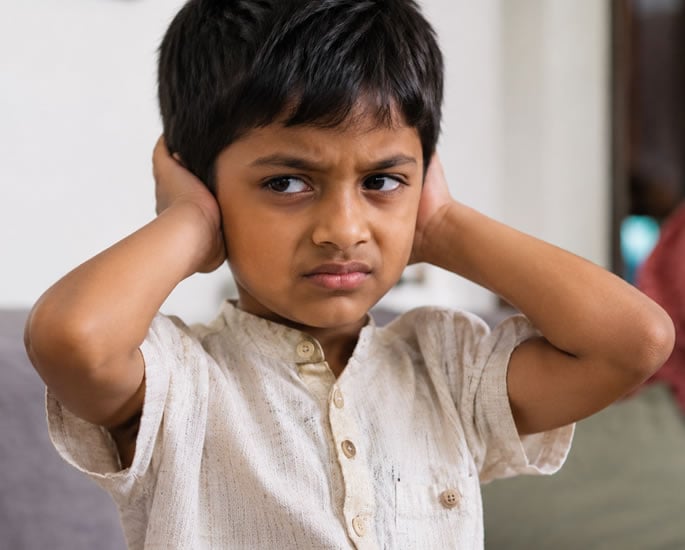
People can easily misunderstand many behaviours associated with neurodivergence.
A child who retreats from a loud family gathering may be experiencing sensory overload, which is when the brain becomes overwhelmed by sounds, lights, smells, or other sensory input.
Therefore, what looks like antisocial behaviour may be a child trying to regulate themselves.
Executive dysfunction can create another disconnect.
Families may mistake difficulties with organising tasks, remembering instructions or getting started for laziness. So a child staring at an unfinished piece of homework may not be refusing to work. They may be struggling to begin.
Then there is hyperfocus: the ability to become intensely absorbed in a particular interest. A child might spend hours drawing, coding, or reading, yet struggle to concentrate on schoolwork.
This can lead to the familiar question: “If you can concentrate on that, why can’t you focus on your work?”
When families strongly expect obedience and immediate respect for elders, they may see a delayed response as disrespect and an unfinished chore as laziness.
However, understanding the behaviour does not mean removing boundaries. It means considering what is happening underneath it before passing judgement.
Log Kya Kahenge? The Fear of Diagnosis

In many South Asian families, log kya kahenge? (what will people say?) can influence how families respond to difference.
An autism or ADHD diagnosis may feel uncomfortable because parents fear judgement from relatives, neighbours, or the wider community.
Extended family comparisons can add to this pressure. Families may compare children with cousins who appear more academically successful, sociable, or well-behaved.
But avoiding a diagnosis does not make the struggle disappear.
Without the language to understand themselves, children may internalise the criticism that families and others direct towards them, believing they are broken, rude or simply not trying hard enough. A diagnosis does not have to define a child’s future.
For many, it can provide an explanation for their experiences and help them access appropriate support.
The question needs to shift from “What will people say?” to “What does my child need?”
Behind the Labels: A Real-World Reality

Imagine a nine-year-old girl at a large family gathering.
With overlapping conversations, clattering plates and loud laughter filling the room, she retreats to a bedroom, covers her ears and refuses to come back out.
Her relatives may see disrespect or poor manners. Her parents apologise for her behaviour and encourage her to return.
But what they do not initially understand is that the child is autistic and experiencing sensory overload. Her retreat is not deliberate defiance.
It is a way of protecting herself from an environment that has become overwhelming.
After seeking a formal assessment, her parents begin to understand her behaviour differently.
Rather than forcing her through chaotic gatherings, they create a quiet space where she can decompress and allow her to greet relatives when she feels ready.
The situation does not change overnight, but the focus shifts from punishment to understanding.
The Pressure to “Fit In”

For many neurodivergent children, growing up can mean learning how to make themselves easier for others to understand.
Adults may tell them to sit still, stop fidgeting, keep eye contact or “act their age”.
This pressure can become particularly difficult during weddings,
Eid gatherings and large family events, where noise, crowds and unpredictable environments can quickly become overwhelming.
Instead of asking whether a child needs support, adults may focus on how their behaviour appears to others: “Behave yourself, people are watching.”
Over time, some children begin masking, consciously or unconsciously hiding traits to appear neurotypical. They may force eye contact, copy other people’s behaviour, suppress stimming, or hide when they are distressed.
There is a difference between teaching a child respect and teaching them to be ashamed of how their brain works.
Neurodivergent children can learn boundaries and communication without adults making them feel that their natural way of experiencing the world is wrong.
Fitting in should never mean disappearing.
The Impact in Adulthood

The impact of growing up neurodivergent can continue into adulthood.
Years of family members comparing them with cousins, criticising them for being “lazy” or telling them to stop being “too sensitive” can become an internal voice: “I should be able to do this”.
Adults may continue masking, avoid asking for support or push themselves to appear “normal”.
Some may struggle to recognise that they deserve support at all.
Unlearning that shame does not mean rejecting South Asian culture or blaming family. It means recognising that love and misunderstanding can exist at the same time.
Sometimes healing begins with a simple question: “What if I was never difficult?”
For many neurodivergent people growing up in Desi families, the hardest part is not always understanding themselves, but convincing the people closest to them to understand them too.
What might be dismissed as stubbornness, laziness or bad behaviour can be an expression of needs that have gone unrecognised for years.
Challenging these assumptions does not mean rejecting Desi culture or family values; it means making room for a better understanding of how people think, feel and experience the world.
Sometimes, the most meaningful change begins when families stop asking why someone is being difficult and start asking what they might be struggling with.