




















































examine which other benefits you actually use.
On October 28, 2026, Sony Interactive Entertainment revealed its monthly PlayStation Plus lineup for November.
Starting November 3, 2026, subscribers across all tiers gain access to Dead Island 2, Tomb Raider IV–VI Remastered, and Monster Train 2.
On paper, downloading an open-world zombie action RPG, a three-game classic remaster collection, and a brand-new indie deckbuilding sequel for a single recurring fee feels like an unquestionable bargain.
However, behind the impressive monthly headlines is a price tag worth debating over.
Subscription services across entertainment have steadily increased in price over recent years, and gaming services are no exception.
As monthly outlays stack up, players are beginning to scrutinise their actual usage patterns against their recurring bills.
What was once sold as an essential money-saving hack now faces serious questions about value, library overlap, and digital burnout.
For students, occasional casual players, and multi-generational families sharing household entertainment budgets, the math behind gaming passes is changing rapidly.
Start With the Annual Bill
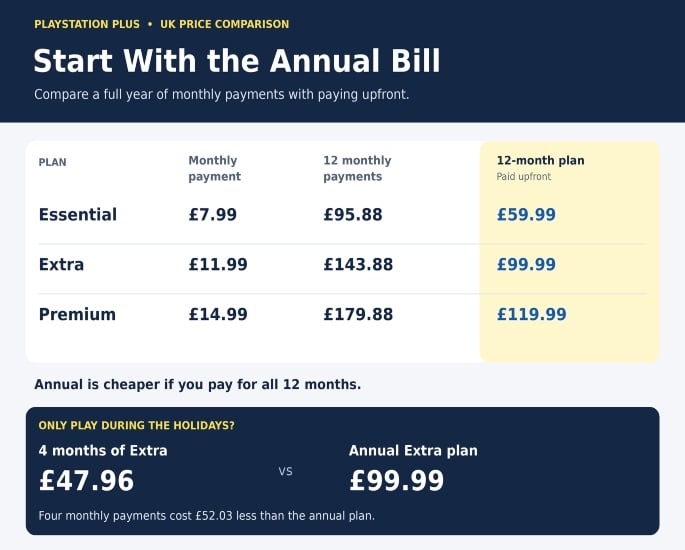
Monthly prices can make subscriptions feel like minor purchases. Annual spending provides a clearer comparison.
An annual plan costs less than maintaining the equivalent monthly plan throughout the year. But that does not make it the cheapest choice for everybody.
Four separate months of Extra would cost £47.96 at the listed monthly rate. For someone who genuinely plays only during holidays, that is less than a £99.99 annual commitment.
The upfront discount rewards sustained use. It cannot compensate for months when the console stays untouched.
For students facing uneven workloads, flexibility may be worth more than the lowest advertised monthly equivalent.
Count the Games You Enjoy

There is no requirement to finish every game.
You can enjoy experimenting with a strategy game or spending several evenings in co-op without seeing credits. Completion alone is an imperfect measure of value.
Nevertheless, looking at what was actually played is more useful than counting downloads.
Consider a hypothetical £99.99 annual subscription. If six games provide satisfying experiences, the membership costs approximately £16.67 per game enjoyed. If only two do, the figure becomes approximately £50.
Neither calculation includes multiplayer, cloud storage or other benefits, but it makes the spending easier to examine.
Compare that figure with what those particular games would have cost when you wanted to play them, not their original launch prices.
Buying three games for £20 each would cost £60. A £99.99 subscription would need to deliver additional value to beat that alternative.
Conversely, several games that would otherwise have been expensive purchases could make a membership worthwhile.
The comparison needs a realistic shopping list. Games you would never have bought cannot all be counted as money saved.
Monthly Games and Catalogues Work Differently
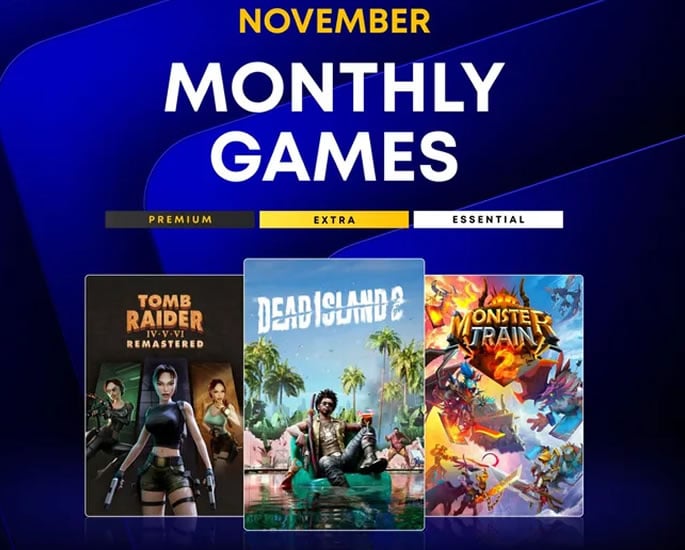
PlayStation Plus’s monthly selection should not be confused with its larger Game Catalogue.
Monthly games need to be claimed during their availability window. They can then be played through the membership, subject to the subscription remaining active.
Extra adds the Game Catalogue, while Premium includes additional features such as the Classics Catalogue and trials.
However, Catalogue access has a different limitation: games can leave.
PlayStation says some Game Catalogue and Classics Catalogue titles have departure dates, announced ahead of time. Keeping a subscription active does not guarantee permanent access to those games.
Xbox describes a similar condition for Game Pass: access continues while the subscription remains active and the game remains in the library.
For an occasional player, this matters as much as price. A long game might take several months to complete around work or childcare.
Before starting, check departure notices. If a particular title is the main reason for subscribing, compare its purchase price with the likely cost of maintaining access.
Are You a Repeat Player?

Subscriptions are particularly attractive when curiosity drives your gaming.
They are less obviously economical when you repeatedly return to the same small selection.
Someone who plays one favourite adventure every winter may prefer buying it. A player exploring unfamiliar genres might get far more from temporary access to a broad catalogue.
Purchased add-ons also deserve attention.
Buying an expansion does not necessarily buy the underlying game. Developer Dovetail’s Game Pass guidance explains that players who purchase add-ons may still need to purchase the base game after it leaves the service.
That makes the total commitment worth checking before purchasing downloadable content for a subscription title.
Where compatible physical editions and disc-capable hardware are available, second-hand buying and resale offer another comparison.
Those options require effort and have their own limitations. Still, they belong in the calculation alongside the convenience of a subscription.
Do you have More than One Membership?
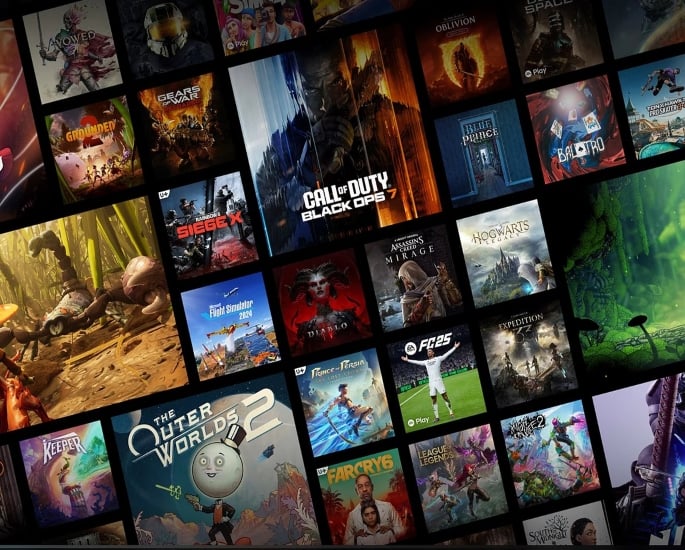
The individual membership may look reasonable. The combined bill is different.
Microsoft’s UK listings show Game Pass Premium at £10.99 monthly and Ultimate at £16.99. PC Game Pass is listed at £10.99 monthly.
Maintaining Ultimate for twelve months at that rate would cost £203.88.
Add an annual PlayStation Plus Extra subscription at £99.99 and the combined illustrative total reaches £303.87, before separately purchased games or add-ons.
That could be worthwhile for someone regularly using both platforms. It is harder to justify if one membership mainly provides reassurance that something interesting might arrive.
Check bundled benefits before paying separately, too. Microsoft lists EA Play and Ubisoft+ Classics among Ultimate’s inclusions.
Compare the exact catalogues and membership levels: services sharing a publisher’s name do not necessarily provide identical access.
The goal is to identify genuine duplication rather than assume every overlapping logo means the same product.
Are You Sharing with Your Family?

A subscription used by several people can offer better household value than one used by a single occasional player.
PlayStation allows selected benefits to be shared on one PS5 with Console Sharing and Offline Play enabled, and one primary PS4.
Shared benefits include online multiplayer and downloaded monthly games. Others, including cloud storage and redeeming monthly games on another account, cannot be shared in the same way.
Before buying separate memberships for siblings, check what the existing setup permits.
For British Asian families sharing a console, different tastes could make a broad library useful. One person may enjoy racing while another prefers adventure or strategy.
Those are individual preferences, however, rather than a distinct community-wide pattern.
Parents should also assess age suitability and spending controls. A large catalogue has limited household value if most of its appealing games are inappropriate for the children using it.
Are You Paying Mainly to Play Online?

Not every subscriber is buying access to a catalogue.
For someone who regularly plays purchased games online with friends, multiplayer access may justify a lower-tier membership even when monthly additions go untouched.
PlayStation says most purchased PS4 and PS5 games require Plus for online multiplayer. Most free-to-play titles, including Fortnite, Apex Legends and Call of Duty: Warzone, do not.
That distinction can change the answer immediately.
If those free-to-play games account for nearly all your gaming, examine which other benefits you actually use.
If multiplayer is essential, compare the lowest suitable tier with your current plan. A bigger library offers little extra value when you rarely open it.
Accumulated games can make cancellation feel wasteful.
PlayStation confirms that cancelling stops future renewal while benefits continue until the paid period ends. Once membership expires, subscription-provided monthly games become unavailable.
That makes reviewing the next payment worthwhile before it happens.
Ask what you expect to play over the coming month, whether you already own it and which membership benefits you need.
November’s lineup may justify another month for someone eager to explore its games. Another player may get more enjoyment from buying one discounted favourite and leaving subscriptions paused.
Gaming subscriptions still can save money. The strongest evidence is the time and enjoyment they provide, not the size of the library on the screen.