

















































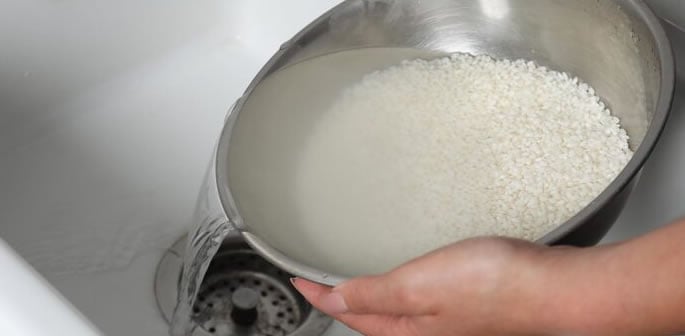
"is it really necessary to wash rice so many times?"
Asian and Muslim communities have been told to wash their rice and feet less in a water-saving push, prompting criticism.
The guidance was produced through a £270,000 research initiative funded by water industry regulator Ofwat.
It has faced criticism from politicians, with the scheme described as “bizarre” and questions raised over whether it was an appropriate use of billpayers’ money.
The project was led by South Staffordshire Water and examined “water-saving behavioural change campaigns within faith and diverse communities”.
Researchers looked at water use among Southeast Asian households, including the amount used to wash rice before cooking.
They found households used an average of seven litres of water to wash rice, while suggesting that one litre was sufficient.
Celebrity chef Ping Coombes, who won MasterChef in 2014, was brought in to front a campaign video released in 2024.
Coombes said: “It is common practice to wash your rice five to seven times till the water runs clear. It made me think, is it really necessary to wash rice so many times? I actually wash my rice only twice.”
The guidance also suggested reusing rice-washing water to grow plants.
The project also examined water use during wudu, the ritual ablution performed by Muslims before prayer.
The research found: “Muslims would typically use six to 12 litres of water per wudu session if using water under a full flowing running tap.”
Muslim households around Cambridge Central Mosque were advised to use one litre of water for wudu.
Researchers said this could reduce water consumption by around 10 times compared with the upper end of typical usage.
They estimated that adopting the practice could save as much as 55 litres of water per person each day.
The guidance was trialled with Muslim households in Cambridge. Researchers suggested “mass dissemination” could be achieved by promoting water-saving messages through Islamic television channels.
However, the research warned that water companies should not appear to “blame” a specific religion for being more wasteful with water than others.
The project forms part of Ofwat’s £600 million Water Innovation Fund, which was launched in 2020 to research ways of tackling the climate crisis.
The fund is financed by household water customers in England and Wales.
Critics have questioned the spending as water companies face continued scrutiny over leakage.
More than a billion litres of water are wasted through leaks every day, according to figures cited in criticism of the project.
Mike Wood, the shadow Cabinet Office minister, said “cutting down on water waste is a noble aim”, but said the “bigger issue” was the use of billpayers’ money.
He said: “Families are already facing huge bill increases; they will not be best pleased that their money is being spent on bizarre schemes centred on trying to change longstanding religious and cultural practices.”
The criticism comes after a prolonged dry summer, which has resulted in hosepipe bans in parts of the country.
Ofwat has also faced scrutiny over plans to allow water companies to introduce “surge pricing” during periods of water scarcity.
Downing Street said: “Customers cannot be treated as a blank cheque”.
South Staffs Water defended the project and said water efficiency was an important part of managing water resources.
A spokesman said: “Water efficiency is an important part of managing water resources and we educate our customers on how they can support with this, as well as the actions South Staffs Water and Cambridge Water are doing.
“Our engagement reflects the demographic we serve across both regions.”
Ofwat said the pilot had worked with water companies, charities and multiple faith groups.
An Ofwat spokesperson said: “This summer’s prolonged dry weather reminds us of the need for all of us to use water more efficiently and to be stewards of this finite, precious resource.
“This pilot worked in collaboration with water companies, charities and with multiple faith groups to provide different communities with relevant and practical suggestions to save water and finished in April 2025.
“It did not tell people what they can or can’t do, or impinge on religious worship or custom.”