















































“hyper-masculinity is still treated as a guarantor of agency"
For some South Asian men, navigating their sexuality can mean facing difficult decisions about whether to come out or keep their identity hidden.
Within communities where family expectations, cultural reputation and traditional ideas of masculinity carry significant weight, being open about one’s sexuality can feel particularly challenging.
For some queer South Asian men, the fear of rejection or judgment can lead them to conceal their sexuality and feel pressured to conform to masculine norms.
However, when sexuality remains hidden within a relationship, the consequences can extend beyond the person concealing it, particularly when partners are unaware of their experiences or identity.
As conversations around “DL” South Asian men become increasingly visible on social media, questions around secrecy, cultural pressure, and the experiences of women involved in these relationships are also becoming harder to ignore.
At the same time, queer South Asian creators are creating spaces where people can explore their identities openly and find community beyond the expectations that may have shaped them.
What Does It Mean to Be DL?
DL, short for “down-low”, describes someone who conceals their sexuality in everyday life, often presenting as heterosexual while keeping same-sex attraction or relationships private.
An anonymous Oxford student describes this as “purposefully masking their sexuality in all settings except sexual ones”, often due to the stigma associated with being perceived as homosexual or feminine.
For some queer South Asian men, concealing their sexuality can stem from fears of rejection, judgement and exclusion from their families or wider communities.
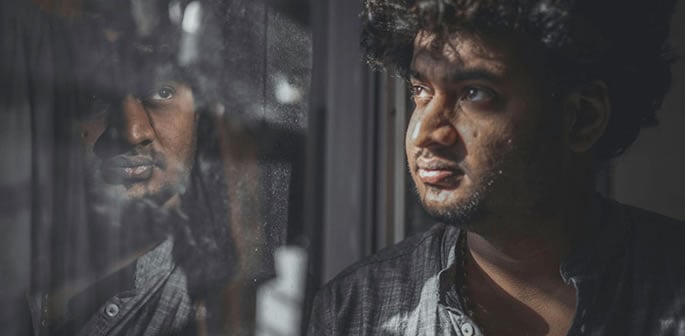
Usman*, who is currently closeted, described experiencing some of these pressures from a young age.
Reflecting on his teenage years, he said he felt he was “straddling this weird zone between trying to appeal to the kind of man people wanted me to be”, while also trying to maintain his own sense of identity.
He describes this experience as contributing to what he now regards as a “stunted self-development”.
Even in young adulthood, he says he is still working towards forms of self-expression that he feels some of his peers have already achieved, including being able to dress in ways that were previously repressed.
Usman’s experiences have also affected his relationship with religion.
While his “worldviews, philosophy and sense of justice remain coloured by religion”, he feels that few spaces exist where queer people can practise their faith without encountering the hyper-masculinity he associates with some religious environments.
For him, queer spaces should ideally provide an opportunity to move away from these expectations.
However, he argues that “hyper-masculinity is still treated as a guarantor of agency, prestige and even desirability” within spaces that are otherwise intended to be accepting.
His experience highlights how the pressures surrounding sexuality can extend beyond the decision to come out.
For some queer South Asian men, these pressures can influence their confidence, self-expression, relationship with faith and sense of belonging over many years.
When Secrecy affects Relationships
Understanding the pressures surrounding sexuality does not mean removing individual responsibility. A person can experience genuine fear or pressure around their sexuality, while their actions can still have consequences for someone else.
For women who enter relationships without knowing that their partner is concealing aspects of their sexuality, questions around honesty, trust and informed consent can become particularly important.
South Asian queer creator @i_r_t_e_z_a1 has spoken openly about this issue, arguing that women can become caught up in a wider system where queer men are pressured towards heterosexual relationships.
For Irteza, simply telling men not to enter these relationships does not address the wider circumstances that can contribute to them.
He says:
“Yes, of course, individual responsibility always needs to be upheld.”
However, he argues that focusing solely on individual behaviour can overlook the cultural and religious pressures surrounding sexuality:
“If we don’t address the cultural and even religious issues when it comes to sexuality, then you are going to continue to see men conceal their identities to basically conform to what the status quo is.”
Irteza has also argued that cultural expectations around sexuality can contribute to situations where women become involved without knowing the full circumstances of the relationship.
At the same time, understanding those pressures does not mean excusing dishonesty.
For a woman in a relationship, discovering that her partner has hidden a significant part of his sexuality can fundamentally change how she understands that relationship.
This creates a difficult tension within the conversation: how can communities address the pressures that contribute to concealment while also recognising the rights and experiences of the people affected by it?
The Emotional Cost of Concealment
The consequences of stigma surrounding sexuality can extend beyond relationships and into a person’s wider sense of identity and wellbeing.
The Muslim Maverick has spoken about the experiences of LGBTQ people he has encountered and the emotional consequences of rejection and abuse:
“Over the past few years, I have seen the deep emotional scars.”
Speaking about people within the LGBTQ community, AK describes seeing the effects of bullying, rejection and being made to feel that there is something fundamentally wrong with them.
For queer South Asians considering coming out, the decision can therefore involve much more than simply telling their family the truth.
AK adds:
“The fear is real. Culture. The parents, society. It’s like the whole world is against you.”
His advice focuses on the importance of finding supportive communities, giving families time to process the news and allowing space for education and understanding.
For some people, however, the decision to come out may not feel straightforward or safe. This can make the distinction between understanding someone’s fear and accepting the consequences of secrecy particularly important.
The conversation also raises wider questions about what happens when someone remains closeted for years and how that experience can shape their relationship with masculinity, religion, identity and self-expression.
The DL Debate on Social Media
As conversations around DL South Asian men have moved onto TikTok, experiences that may once have remained private have become part of a much wider public discussion.
Social media can give people language to describe experiences they may previously have struggled to understand. However, greater visibility does not necessarily mean greater understanding.
South Asian queer creator @indhimusic has questioned the way viral creator @mattfilms repeatedly discusses DL South Asian men, suggesting that his commentary risks crossing into fetishisation.
He states: “The way you talk about brown men constantly is giving fetishisation.”
His criticism raises a wider question about representation: who gets to tell stories about South Asian sexuality, and what happens when an issue affecting a community becomes content for an audience outside of it?
Elsewhere, social media discussions have included sweeping claims about the prevalence of homosexuality among South Asian men.
In one viral exchange, creators @amir&amir claimed that “most” Pakistani men in cities including Bradford and Birmingham are gay.
Such comments show how quickly complex conversations about identity can become exaggerated online.
There is also a question around whether social media discussions about DL men genuinely help women.
Greater awareness may give women language for experiences they previously struggled to understand, but there is a risk that sexuality becomes reduced to a list of “signs” that women are encouraged to look for in their partners.
The conversation can therefore become caught between two extremes: raising awareness of genuine experiences while potentially reinforcing stereotypes about South Asian men and sexuality.
From Concealment to Community
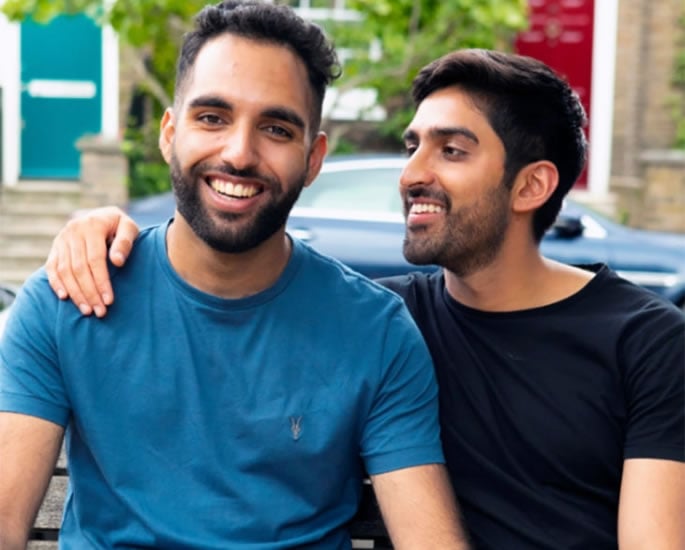
The conversation around queer South Asian identity does not have to centre entirely on secrecy and marriage.
Alongside the debate surrounding DL men, queer South Asian creators are also creating spaces where people can meet others who understand their experiences.
One example is Krish, who runs the TikTok account @queerbrownmeetups, where he shares events and meetups for queer South Asians.
One of his meetups brought queer South Asians together in Uxbridge for an informal evening involving chai, food and conversation.
Promoting the event, Krish asked: “Are you gay, South Asian and based in or near Uxbridge?”
He later promoted another event aimed at queer South Asians looking to meet others within the community.
Describing it as a “sober queer brown meetup”, Krish encouraged people to meet at the Barbican before heading towards Lakeside Terrace for a picnic and conversation:
“If you’re queer South Asian and you’re looking to date other queer South Asian friends, then this is the perfect video for you.”
For people who have spent years feeling that their sexuality has to remain separate from their cultural identity, spaces like these can offer something that online conversations cannot always provide: community in person.
The existence of these spaces raises another possibility within the wider conversation.
Rather than focusing only on what happens when sexuality is hidden, what happens when people have somewhere to go when they no longer want to hide?
For some queer South Asians, creating community may be part of making it possible to live more openly without feeling that embracing one part of their identity means losing another.
Ultimately, the conversation around DL South Asian men cannot easily be reduced to one side being entirely right and the other entirely wrong.
There is a need to understand the cultural and familial pressures that can make sexuality difficult to express, while also recognising the impact secrecy can have on women who enter relationships without knowing the full circumstances.
At the same time, queer South Asian creators are showing that conversations about sexuality do not have to end with shame.
For women, the conversation must include the right to make informed decisions about their relationships. For queer South Asians, it must also include the freedom to explore who they are without being reduced to stereotypes or forced into a single narrative.
For a generation increasingly willing to talk openly about sexuality, identity and culture, perhaps the next step is not simply encouraging people to come out, but making sure they have communities waiting for them when they do.