











































"So here it is a queer brown story from a brown lens.”
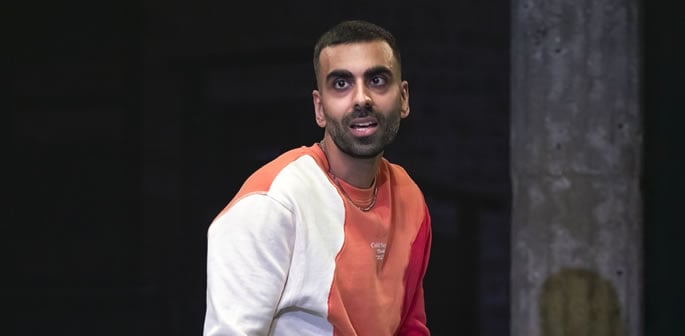
The Olivier Award-winning The P Word returns to the Bush Theatre for a strictly limited run in London, bringing Waleed Akhtar’s story of queer Pakistani identity back to the stage after its record-breaking 2022 debut.
The play also stars Akhtar alongside Esh Alladi.
It follows Zafar and Bilal (Billy), two gay Pakistani men whose lives collide across asylum, Grindr culture and the realities of Britain’s hostile environment, where love and survival often sit in uneasy tension.
Akhtar’s writing moves between sharp humour and emotional rupture, tracing intimacy, faith and migration through a lens rarely given space in UK theatre.
It arrives again with its original cast and creative team, with Emmy-winner Tan France and ITV’s Dr Ranj Singh attached as producers, expanding its reach beyond its initial audience.
In an interview with DESIblitz, Waleed Akhtar reflects on why he wrote the play and why its themes still feel uncomfortably current in 2026.
Writing a Queer Brown Lens into UK Theatre
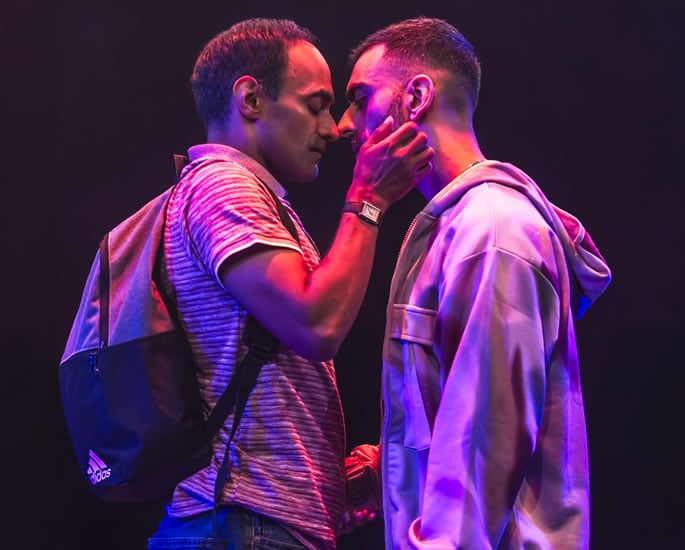
The starting point for The P Word came from a frustration with how stories were being told about people like Waleed Akhtar.
In UK theatre, he felt the perspective was consistently external, shaped by voices that did not reflect lived reality. That gap became the creative push behind the play.
Akhtar explains: “I got bored of being written about. As an actor, I was waiting for that script that would reflect the world I saw and realised it would only be on stage if I wrote it.
“So here it is a queer brown story from a brown lens.”
The play centres two gay Pakistani men navigating love, identity and hostility, but its foundation is rooted in authorship and ownership.
Akhtar does not frame the work as an autobiography, even though personal truth runs through it. That distinction is deliberate in how he approaches character and narrative.
“All my plays have bits of me in them, as do all of my characters. But it’s not autobiographical work. My job is to reflect the truth.
“So sorry to all the boys who were hoping to get a date with the character Billy – he’s not me!”
That approach allows the writing to sit between lived experience and broader observation, shaping a story that feels specific without being confined to one personal account.
Finding Light in Difficult Stories
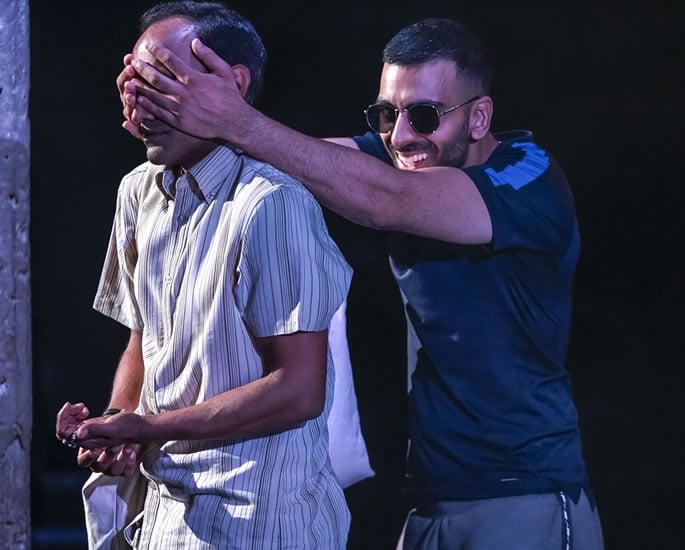
A defining feature of The P Word is how it moves between humour and emotional weight without losing balance.
Waleed Akhtar’s writing style deliberately draws audiences in before shifting tone, as he says:
“My style is to lure you in with humour and then smack you with some politics – maybe it’s the frustrated stand-up in me!
“But that’s the job of good writing to take the audience on a real journey, also maybe it’s being a Punjabi, we always find the light in the darkness.”
That tonal shift reflects a wider instinct in his work to make politically charged narratives accessible without diluting their impact.
The humour acts as an entry point, while the emotional weight lands more sharply because of it.
Across his wider writing, that instinct remains consistent.
“I just go by what my instinct is and what stories I become possessed by. Who knows, tomorrow it might be a play about IKEA.”
That unpredictability sits alongside a clear commitment to character-led storytelling, where tone is shaped by people rather than structure alone.
Visibility, Urgency and Storytelling as Resistance
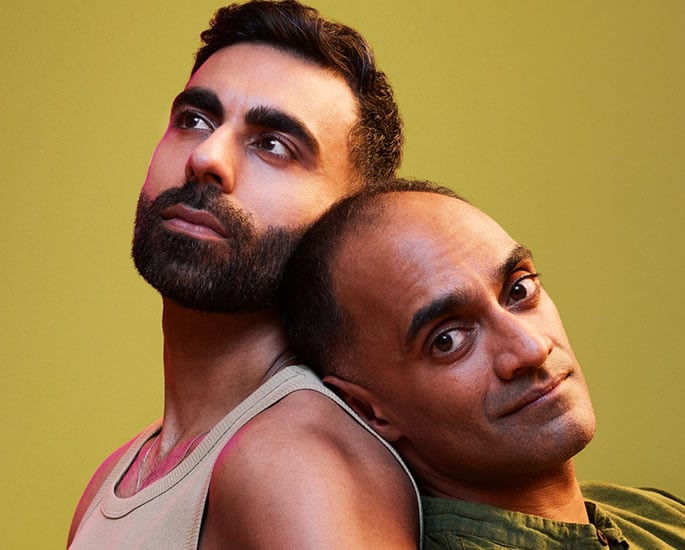
The revival of The P Word arrives in a cultural moment where questions around representation, migration and faith remain highly charged.
For Waleed Akhtar, the context has not softened since the play first premiered, and in some ways has become more intense.
“Unfortunately, the issues the play deals with haven’t gone away, immigrants are still front and centre.
“If anything, the demonisation has become worse. While I’d say it’s become harder being a Muslim in 2026, too.”
That shift informs why the play continues to feel necessary. The environment it responds to is still active, shaping how queer South Asian stories are received and understood in public discourse.
Akhtar places storytelling within that wider political landscape, where neutrality is not an option.
He elaborates: “In this moment in time, being non-political isn’t an option, our hard-won freedoms as queer people, as people of colour are under attack.
“This is the only way I know of combating that, getting people to think differently. Storytelling is empathy building.”
The emphasis is not on theatre as commentary alone, but as a mechanism for shifting perception. Empathy, in his framing, becomes the practical outcome of narrative rather than an abstract aim.
What Audiences Carry with Them
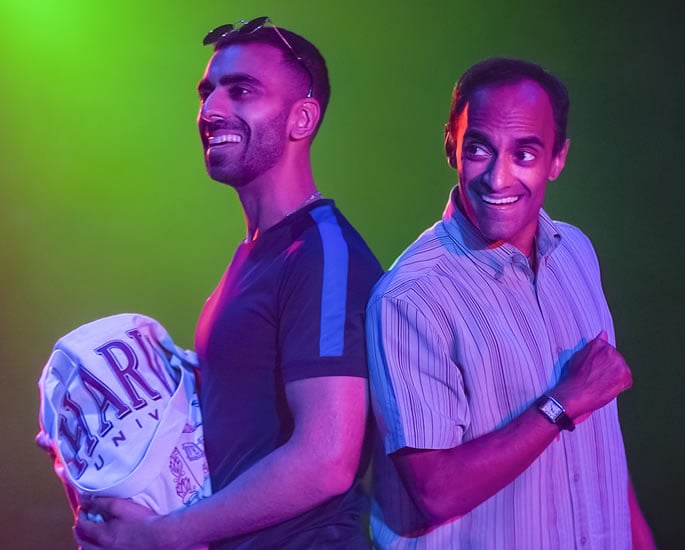
The involvement of Tan France and Dr Ranj Singh as producers has expanded the reach of The P Word, connecting the work to audiences beyond traditional theatre spaces.
That extension of visibility directly supports the play’s intent, as Akhtar says:
“Immediately, we’re reaching audiences we never would, and that’s so important.
“It’s a play that I want to change hearts and minds, so getting a wide audience is so important. Also, it’s just brilliant to have these awesome humans back the play and shine a spotlight on its issues.”
That broader reach intersects with Akhtar’s dual role as both writer and performer.
Being on stage each night creates a different relationship with the material, shaped by immediate audience response and post-show engagement.
“On a literal level, I’m with the audience every night with this one. That means I witness first-hand the effect it has on people. And then there are the conversations afterwards, I see the community that comes to support and how engaged they are.
“The support we’ve had for this play has been beautiful, selling out and how it’s touched people.”
That proximity to audience reaction informs how the work is understood in real time, not just in development or review.
As for what he hopes lingers after audiences leave the theatre, the focus sits on perspective rather than resolution.
Akhtar concludes: “That it isn’t something to be taken for granted and we’re not free till we’re all free.”
Running at the Bush Theatre from May 28 to June 27, The P Word‘s London return conveys concerns that remain sharply intact.
The production continues to resonate through its unflinching portrayal of queer South Asian lives negotiating love, safety and belonging in contemporary Britain.
Its impact has already been marked by critical acclaim and a strong audience response since its original debut, reinforcing its place within recent UK theatre.
As it reaches the end of its run, the play leaves a quiet but persistent question hanging over the audience about how secure those ideas of freedom and belonging really are, and who gets to take them for granted.