















































"I decided to use my camera to record these differences"
For 35 years, photographer Hermann Rodrigues has been documenting the people, traditions and stories that define Scotland’s South Asian communities.
His exhibition Broon Scots: Snapshots of Scotland’s South Asian Diaspora brings together a selection of his extensive archive, offering an intimate insight into the lives of Bangladeshi, Indian and Pakistani communities across the country.
Since arriving in Scotland from India in 1990, Rodrigues has built a collection of more than 40,000 photographs capturing everything from family celebrations and religious traditions to everyday experiences and historic links between Scotland and South Asia.
Rather than simply recording moments in time, his work explores how migration, culture and identity have shaped modern Scottish society.
Through carefully documented stories of communities, landmarks and shared histories, Broon Scots challenges simplified perceptions of South Asians in Scotland while highlighting their contribution to the nation’s cultural identity.
The exhibition reflects Rodrigues’ long-standing commitment to preserving memories that may otherwise go unseen, creating an important visual archive for future generations.
In an interview with DESIblitz, Hermann Rodrigues discusses the inspiration behind Broon Scots, the importance of building trust with the communities he photographs and the stories behind his 35-year archive.
Documenting Scotland’s South Asian Communities
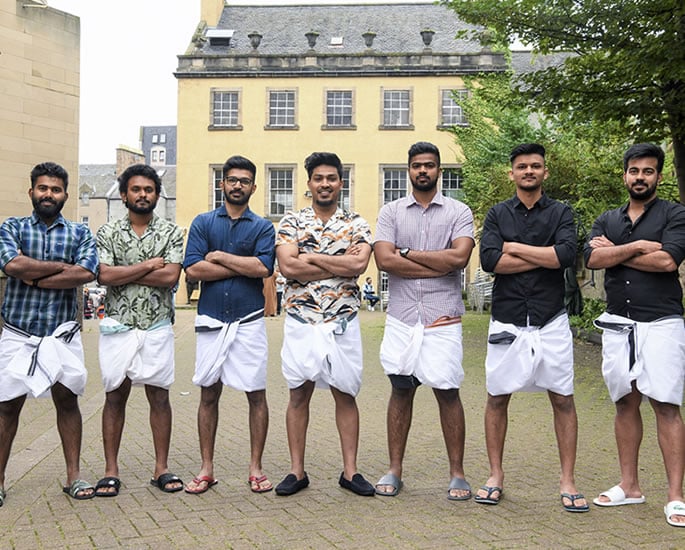
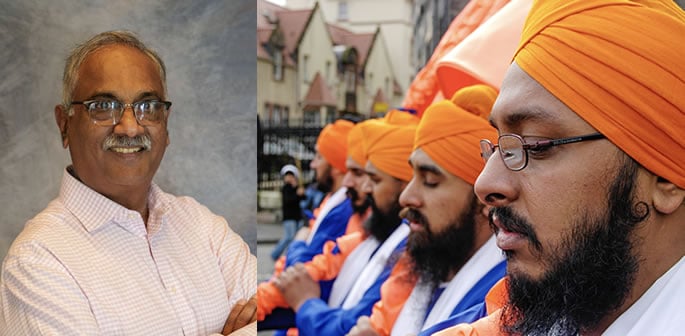
When Hermann Rodrigues arrived in Scotland in the 1990s, he noticed that many people viewed South Asians as one homogenous group, overlooking the different cultures, languages, religions and traditions within these communities.
He says: “When I arrived in the 90s I was amazed to see that an average Scot viewed everyone as Asians.
“They had no idea that the Asians came from 3 or 4 countries, spoke several languages, practised a variety of different religions and had diverse customs and traditions.
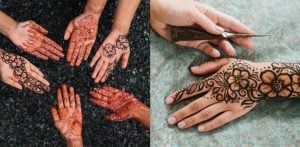
“I decided to use my camera to record these differences and exhibited my work in places like the libraries and community centres.”
Over the years, Rodrigues has organised his extensive archive around recurring themes, which form the foundation of Broon Scots.
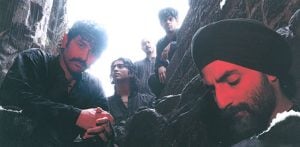
These include portraits capturing individual experiences, gatherings showcasing collective celebrations, and monumental connections exploring links between Scotland and South Asia.
“This is a selection of 24 of my best pictures. Throughout these years I have categorised all my photos into recurring themes which are Portraits, Gatherings and Monumental Connections.
“I am offering visitors images with colour and vibrancy of the South Asians along with some images that will dispel some myths.”
The exhibition aims to present South Asian communities as an established part of Scotland’s cultural landscape, while showing the everyday moments that shape community life.
Building Trust through Photography
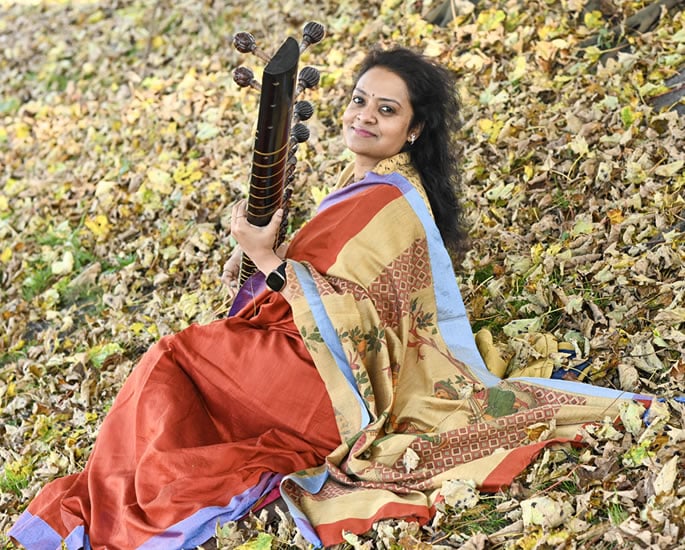
For Rodrigues, documenting communities has always involved more than simply taking photographs.
Establishing trust and creating respectful relationships has been central to ensuring his work reflects people’s lives authentically.
The photographer explains: “I have worked very hard to build trust. I didn’t just randomly go and start taking pictures.
“It was hard work specially in the early days. People did not understand why another Asian wanted to come and take pictures.”
At the time, photography within many South Asian communities was often associated mainly with weddings and family events.
“As such, pictures were only taken at weddings in those early days.”
“I would spend plenty of time gaining trust and ensuring I only showed positivity in all my stories. Of course, the selfie has made my life much easier now.”
That approach has allowed Rodrigues to maintain long-standing relationships with many of the people he has photographed.
He says: “What is exciting about my photography project is that it is ever evolving.
“The community is changing constantly and newer communities have different ways of adapting in their new homeland. I remain active in all the communities to record their stories and their celebrations.”
Revealing Overlooked Connections
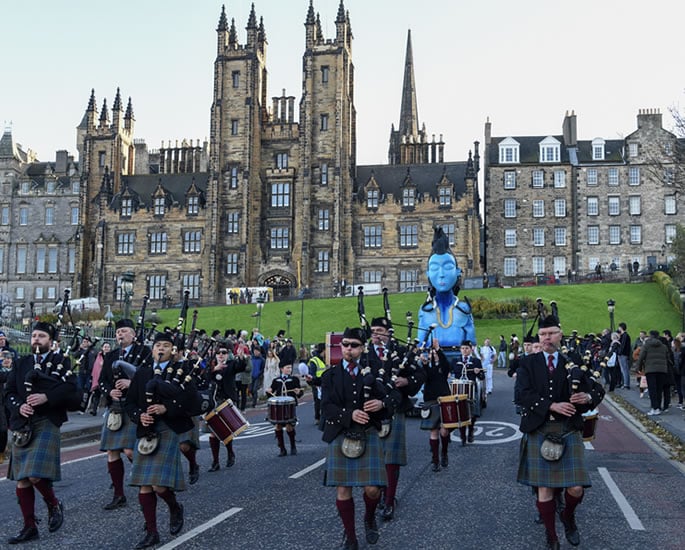
Alongside documenting people and celebrations, Hermann Rodrigues’ work also explores the historical relationship between Scotland and South Asia.
His photographs highlight buildings, monuments and locations that reveal how migration, trade and cultural exchange have shaped both countries over generations.
One of the most memorable discoveries during his research was Patna in Ayrshire, a Scottish town named after the Indian city of Patna.
Rodrigues said uncovering these links required extensive investigation at a time when digital tools were not widely available:
“Photographing Patna in Ayrshire, a whole town built and named after a North Eastern Indian city, was exciting.
“To put it in perspective, there was no internet and no sat nav, so all this information I dug out only because of my passion.”
He also discovered stories of Pakistani families who had settled in remote Scottish islands from the 1950s, as he continues:
“Scots living in Patna, Ayrshire did not know their town was named after an Indian town.
“Similarly, families of Pakistani origin living in remote Islands of Scotland from the 50s was a big revelation.”
Hermann Rodrigues focuses on celebrating these shared histories and the connections created through migration and trade:
“As a policy, I just focus on the positive connection.
“Over hundreds of years of shared history, undivided India too left a big mark in Scotland not just through monuments but also trade.
“A huge Jute industry in Dundee that processed all the jute from India and present Bangladesh, a town called Paisley made famous because of an Indian textile design, Madras College in St. Andrews, Vellore Road in Falkirk are a few examples.”
Preserving a Living Archive
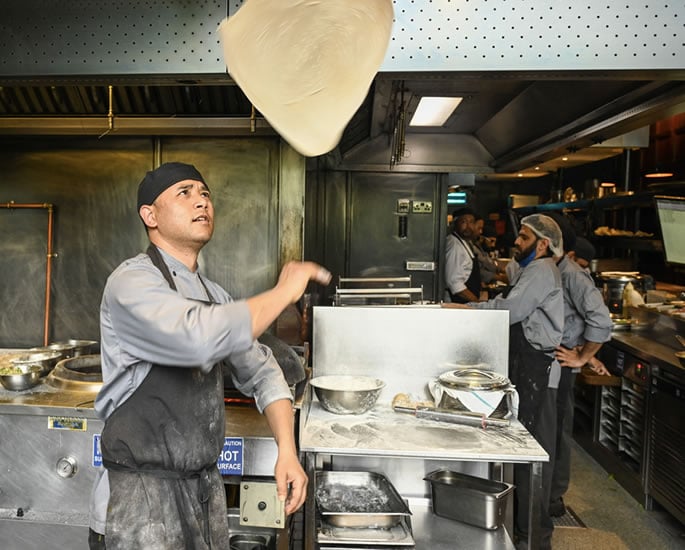
After 35 years of photography, Hermann Rodrigues views his work as a record of Scotland’s evolving South Asian identity.
He says: “What I realised is that Scotland too has very colourful and vibrant traditions.
“Those traditions do rub off on the South Asian community through time. Scotland’s Asians have developed their own distinct cultural identity.”
His continued enthusiasm for documenting these communities has remained unchanged since beginning the project, with photography becoming a lifelong commitment.
“It has been 35 years but till date I am excited to listen, photograph and share stories. I am an anthropologist with a Nikon.
“To me, this project is my love of a lifetime. My level of enthusiasm has remained constant over these 35 years.”
“I have maintained great relationships with almost everyone I have photographed. This has made my life richer and purposeful.”
Having produced thousands of images, held exhibitions and published two books, Rodrigues hopes his archive will continue to provide insight into migration and community histories.
He adds: “I think my work will be a good resource for future generations and people interested in migration studies.
“I am presently working on a website that will be a resource in the future.”
Through Broon Scots, Hermann Rodrigues has created more than a collection of photographs; he has preserved a visual record of Scotland’s changing cultural landscape.
His decades-long documentation of South Asian communities highlights the diversity, traditions and personal stories that have become an integral part of the country’s identity.
By capturing both everyday experiences and historic connections between Scotland and South Asia, Rodrigues’ archive offers future generations an opportunity to understand how migration, culture and community have shaped modern Scotland.
As the exhibition continues to share these stories, Broon Scots stands as a lasting testament to the people and places that have inspired his lifelong photographic journey.