

















































Given the option of surgery straight away or playing on, he chose to play.
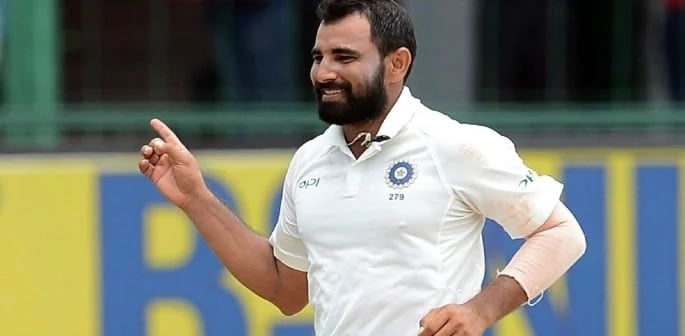
Mohammed Shami has retired from Test cricket, announcing his decision in an emotional Instagram video on November 6.
The date was deliberate, as it marked exactly 13 years since his Test debut against the West Indies at Eden Gardens.
The 36-year-old finishes with 229 wickets in 64 Tests, and he will continue to play white-ball cricket, including the IPL and domestic tournaments.
In his own words, he is saying goodbye to the whites but not to the memories attached to them.
Yet the numbers only tell part of his story.
Shami’s career was shaped by two fights that had nothing to do with batters: one against injury and the other against online abuse.
A Test career built on seam and stubbornness
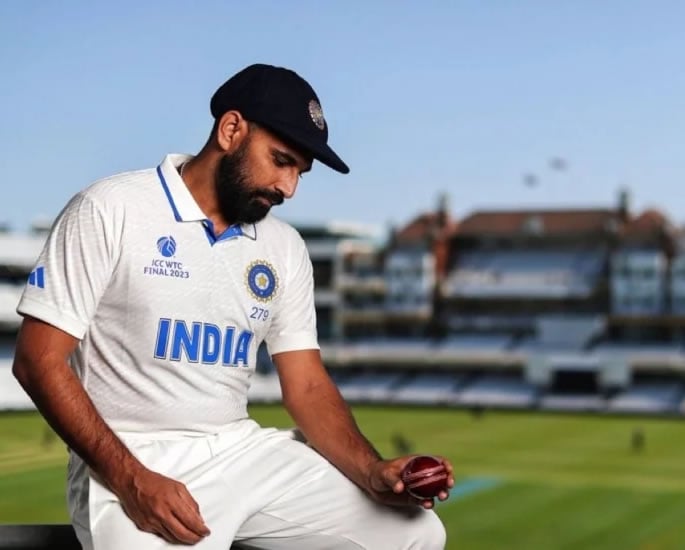
Shami made his Test debut in November 2013 and went on to become one of India’s most dependable fast bowlers across conditions and on the biggest stages.
He ends his career as India’s sixth-highest wicket-taking fast bowler in the format.
His final Test appearance came in the World Test Championship final against Australia at The Oval in June 2023. That means he leaves the format more than three years after he last bowled in whites for India.
The BCCI thanked him for defining an era of Indian fast bowling and noted that he was Test cap number 279.
Tributes also poured in from Irfan Pathan, Munaf Patel and commentator Harsha Bhogle.
Former captain Mohammed Azharuddin said Shami could have played the format for longer.
He also urged the BCCI to use Shami’s knowledge to coach the next generation of Indian pacers.
World Cups were where Shami truly lit up the stage. He took 17 wickets at the 2015 tournament in Australia, and in 2019 he collected 14 wickets in only four matches, including a hat-trick against Afghanistan.
His 2015 performances earned him a place in the World ODI XI, even though India’s campaign ended with a semi-final defeat to Australia in Sydney.
It was the start of a long relationship with global tournaments that would peak eight years later.
Then came 2023, when he was left out of India’s first four games yet finished as the leading wicket-taker with 24 wickets in seven matches. His 7 for 57 in the semi-final against New Zealand remains the best figures by an Indian bowler at an ODI World Cup.
Those 24 wickets came at an average of 10.70, a figure that underlines just how dominant he was.
It was a dazzling return for a bowler whose body had been sending warning signals for years.
Bounce-back one: refusing to be written off by injury
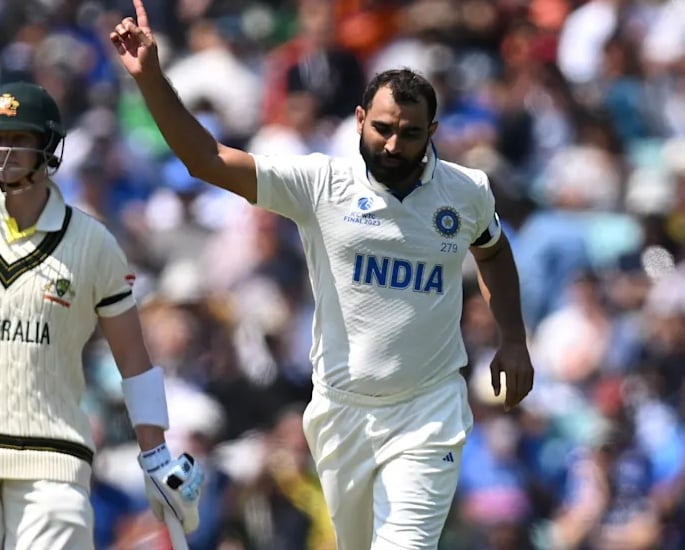
Shami’s first major physical test arrived at the 2015 World Cup in Australia.
He had swelling in his knee before the tournament and was given the option of surgery straight away or playing on, and he chose to play.
He has since explained that he struggled to walk after matches, with fluid drained from his knee and painkillers needed to keep going.
Despite that, he claimed 17 wickets in seven games, with a best of 4 for 35.
He credited MS Dhoni with motivating him to keep going, especially around the semi-final in Sydney.
Before that match, he told the team he could not take any more pain, an admission of how close he came to breaking point.
The price was a knee operation after the tournament, which kept him out of the limited-overs tour of Australia, the Asia Cup and the World T20.
Shami later said some people believed his career was finished, but India still picked him for the 2019 World Cup.
The bigger battle came after the 2023 World Cup. Shami had been bowling through ankle pain and taking injections to get through the tournament, and the full toll only became clear once India lost the final to Australia on November 19.
In February 2024, he underwent surgery on his right Achilles tendon in London.
The operation ruled him out of IPL 2024 and that year’s T20 World Cup, and he had already missed the home T20I series against Australia and the South Africa tour.
In his absence, Mukesh Kumar and Akash Deep were handed Test caps during that World Test Championship cycle.
Shami did not feature in a single game of it, which made the road back even harder to see.
He made his return through the Ranji Trophy in November 2024, but it was far from smooth. Swelling in his left knee, linked to the heavier bowling workload, delayed his push for an India recall before the Border-Gavaskar Trophy.
Persistence eventually paid off, and Shami was part of the India side that won the Champions Trophy in March 2025.
It completed one of the most remarkable comebacks of his career, coming after more than a year of rehabilitation.
Even now, at 36, he is still turning out for Bengal. He has taken 14 wickets in three Ranji Trophy matches this season and is part of their squad for the Syed Mushtaq Ali Trophy.
Bounce-back two: answering the abuse with performances
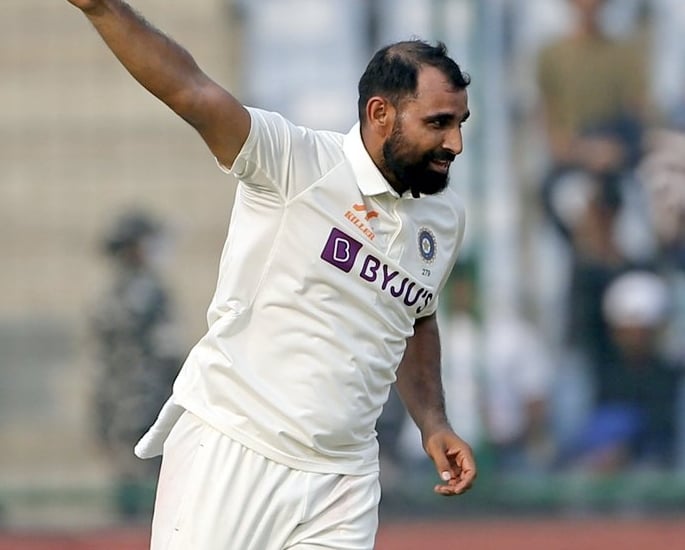
The second fight played out in public. On 24 October 2021, India lost their T20 World Cup opener to Pakistan by ten wickets in Dubai, the first time they had lost to Pakistan at that tournament.
Shami finished with figures of 0 for 43 from 3.5 overs, although the entire Indian attack went wicketless that night. Even so, he became the main target of a wave of abuse on social media, particularly on Instagram.
Much of it was Islamophobic, and he was singled out as the only Muslim player in India’s squad. Some messages even told him to leave India and go to Pakistan.
Even I was part of #IndvsPak battles on the field where we have lost but never been told to go to Pakistan! I’m talking about ?? of few years back. THIS CRAP NEEDS TO STOP. #Shami
— Irfan Pathan (@IrfanPathan) October 25, 2021
Captain Virat Kohli responded forcefully at his pre-match press conference.
He called the trolls spineless and said attacking someone over their religion was among the most pathetic things a person could do.
Kohli also made clear that the dressing room stood firmly behind Shami and would not be shaken by outside noise.
Sachin Tendulkar and a host of politicians and celebrities posted messages of support.
Telegraph India noted that it was the first time a current India player had come out in support of a teammate after online abuse. The stance helped show that the squad would not tolerate such hatred.
The online attack on Mohammad Shami is shocking and we stand by him. He is a champion and Anyone who wears the India cap has India in their hearts far more than any online mob. With you Shami. Agle match mein dikado jalwa.
— Virrender Sehwag (@virendersehwag) October 25, 2021
Shami himself refused to be dragged into arguments. A year later, he said that those who abuse a player over religion are not true fans, and that players representing the country have nothing to prove to trolls.
His reply came with the ball in his hand.
He was the leading wicket-taker as Gujarat Titans won the IPL in their debut season, and he followed that with 28 wickets in 2023.
Later that year came his World Cup masterclass on home soil, with those 24 wickets making him the competition’s leading wicket-taker. For fans who had watched him endure hatred two years earlier, it felt like the most eloquent reply imaginable.
For British Asian cricket fans, Shami’s story resonates beyond the boundary rope. It is a reminder of how quickly a player’s faith and identity can be used against him, and how he refused to let that define him.
Shami says he is leaving Test cricket but not the memories it gave him, and his white-ball career carries on. Some already argue he deserves a place in India’s squad for the 2027 ODI World Cup.
Whatever happens next, his Test legacy is secure, built on 229 wickets and an ability to rise every time he was knocked down. Few bowlers have faced such a mix of physical and public battles, and fewer still have emerged from them with so much dignity.