



































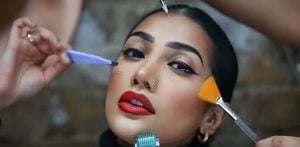





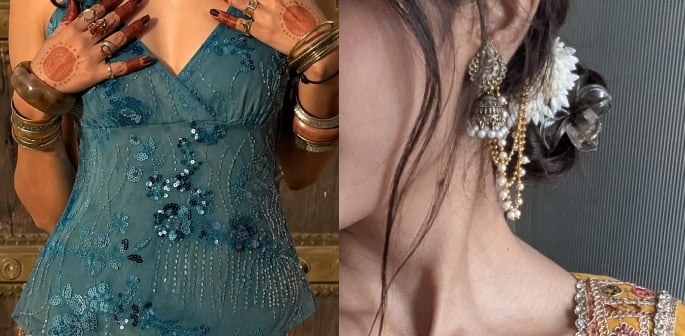
What once felt old-fashioned can now feel like something worth embracing.
Your mum might not know what a “TikTok beauty trend” is, but chances are, she started one before TikTok even existed.
The hair oil she insisted you massage into your scalp. The kajal she never left the house without. The jhumkas she wore to every family gathering. The traditional clothes you once begged her to let you swap for something “less Desi”.
Now, they are everywhere.
Across TikTok and Instagram, South Asian beauty rituals, jewellery, fashion, and skincare are being rediscovered by millions, repackaged as aesthetic routines, beauty hacks, and must-try trends.
These practices once felt completely ordinary in a Desi household.
Now they are suddenly being presented as something new.
And for young South Asians, watching it happen can feel strangely familiar. Because while the internet is discovering these “trends”, many of us grew up watching our mums, aunties and grandmothers do them.
They did these things without ever calling them a trend.
So, when did something that once felt old-fashioned become fashionable?
Hair Oiling
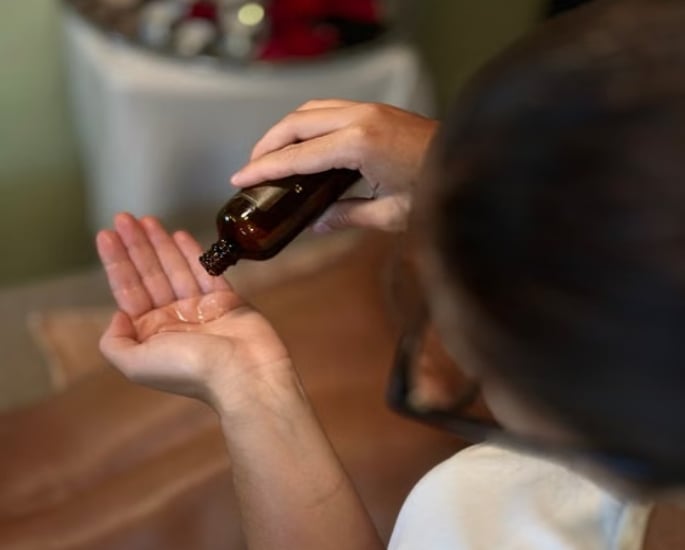
Before hair oiling became a carefully filmed TikTok routine, it was simply something your mum told you to do.
For many South Asian children, the ritual was familiar: sitting down while Mum parted your hair, warmed the oil between her hands, and massaged it into your scalp.
Coconut, amla, mustard or whatever happened to be in the cupboard, it was less about aesthetics and more about a practice passed down through generations.
Back then, it was not something you rushed to post online. You might even have spent years avoiding the greasy hair and Mum’s inevitable, “Have you oiled your hair?”
Now, TikTok has turned that same routine into a full-blown self-care ritual. Suddenly, the oil Mum used to pour into your hair is sitting neatly on a bathroom shelf.
It is filmed alongside scalp massages, neatly displayed oils, and step-by-step tutorials.
For young South Asians, there is something almost amusing about watching a routine they grew up with being presented as a new beauty discovery.
But why did something we once considered old-fashioned suddenly become desirable when social media gave it a new name?
The oil has not necessarily changed; the way we see it has. What Mum called simple hair care can now be labelled a “scalp treatment” or “hair oiling ritual,” complete with its own aesthetic and online community.
That is the strange power of TikTok: it can take something ordinary, outdated or even embarrassing and make it desirable simply by giving it a new audience.
For many Desi families, hair oiling was never a trend. It was simply part of everyday life.
Kajal
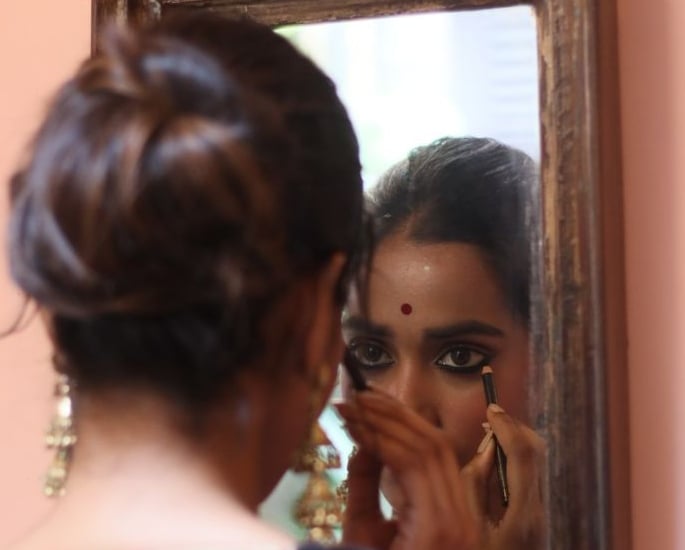
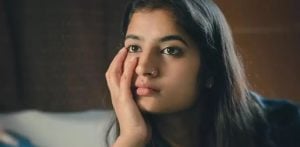
Then there was kajal, the little black pencil that had a permanent place in Mum’s makeup bag.
For many South Asian girls, kajal was simply part of growing up. Mum would line her eyes before a family gathering, a wedding or even a day out.
It was familiar, traditional and, for some of us, something we associated more with our mums and aunties than with our own beauty routines.
Now, that same bold, kohl-lined look is everywhere on TikTok, appearing in makeup tutorials and modern beauty trends.
But if Mum had been doing it for years, why does it suddenly feel fashionable when TikTok puts it on our screens?
The look itself has not necessarily changed; what has changed is how it is being presented. And kajal is not the only thing from Mum’s makeup bag that is having a comeback.
Her jewellery box might have something to say about that too.
Jhumkas
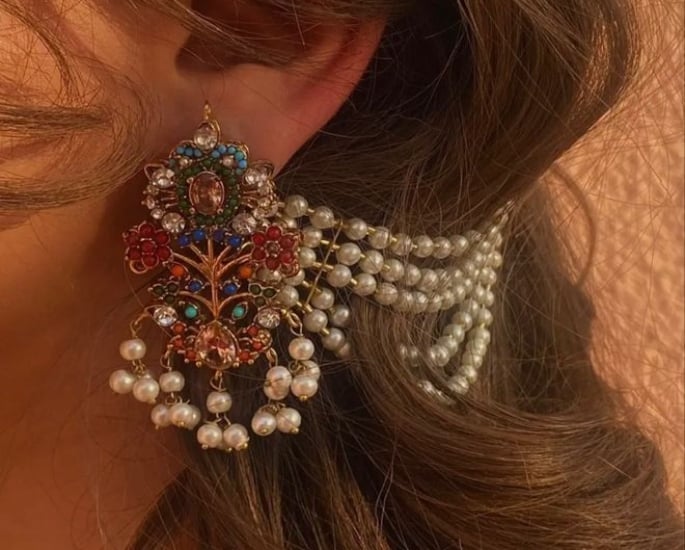
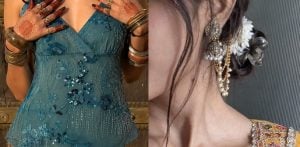
And then there are the jhumkas, the earrings that somehow appeared at every wedding, Eid gathering and family occasion.
Once associated with Mum’s jewellery box, they are now being styled with everything from traditional outfits to jeans and oversized shirts, making their way onto TikTok feeds as the latest statement accessory.
For many young South Asians, seeing jhumkas suddenly labelled as “trendy” feels familiar. How can something we once thought was old-fashioned suddenly become a must-have? It comes down to styling.
The earrings themselves have not changed, but the way they are being worn has.
A piece that once belonged to family occasions can now be paired with everyday outfits. It can also be presented as a statement accessory.
And the same shift can be seen beyond the jewellery box, particularly in the clothes many of us once tried to avoid wearing outside family occasions.
Traditional Clothes
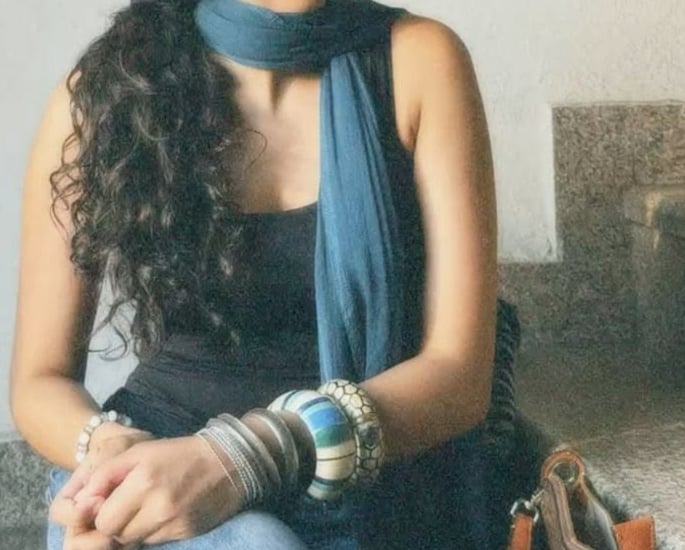
For many young British South Asians, traditional clothing wasn’t always something we wanted to stand out in.
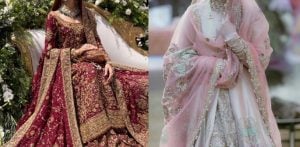
The shalwar kameez, embroidered suits and dupattas that Mum dressed us in for Eid, weddings and family gatherings could sometimes feel more like something to grow out of than something to be proud of.
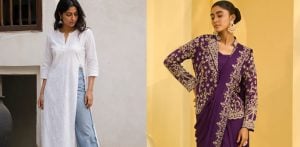
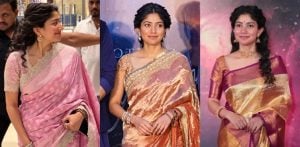
Now, those same styles are being reimagined across TikTok and Instagram, paired with trainers, denim and modern accessories. What was previously “too Desi” is suddenly an aesthetic.
Why did we ever feel the need to hide the parts of our culture that social media is now celebrating?
That is the irony of the trend. The clothes have not changed; our perception of them has. And as traditional styles continue to appear online, they are becoming more than just outfits for special occasions.
They are becoming a way for younger generations to reconnect with where they come from.
For some of us, these trends bring back memories of trying to blend in rather than stand out.
Before, these things could feel embarrassing.
Now, seeing those same traditions celebrated across TikTok and Instagram has changed how many young South Asians view them. What once felt old-fashioned can now feel like something worth embracing.
That is what makes these trends so interesting. The hair oil, kajal, jhumkas and traditional clothes were never new; they were simply part of everyday life for generations of South Asian families.
These were things our mums, aunties and grandmothers grew up with and passed down. They did this without ever needing a hashtag or a viral tutorial.
Social media has given these traditions a new audience, a new aesthetic and, in some cases, a whole new generation willing to embrace them.
For those of us who once saw these things as old-fashioned or even embarrassing, watching them become celebrated can change the way we see our own culture.