















































Birmingham’s housing market has become increasingly difficult for many residents
Birmingham has long been defined by growth.
It is Britain’s second city, home to one of the country’s largest and most diverse populations, and a place where South Asian communities have shaped everything from food and faith to music, business and local politics.
Yet the latest official figures suggest that the city’s population is now moving in the opposite direction.
New estimates from the Office for National Statistics show that Birmingham’s population fell by around 0.5% between mid-2024 and mid-2025, making it one of several major English cities to see a decline.
For a city that has spent decades welcoming new communities and expanding outwards, the shift raises important questions.
Why are people leaving, what does it mean for housing, schools and public services, and how will Birmingham’s large British Asian population be affected?
The answers matter because Birmingham is not just any city.
It is home to one of the largest South Asian populations in Britain, with communities whose history is deeply tied to the city’s industrial past and its modern identity.
A City That Grew for Decades
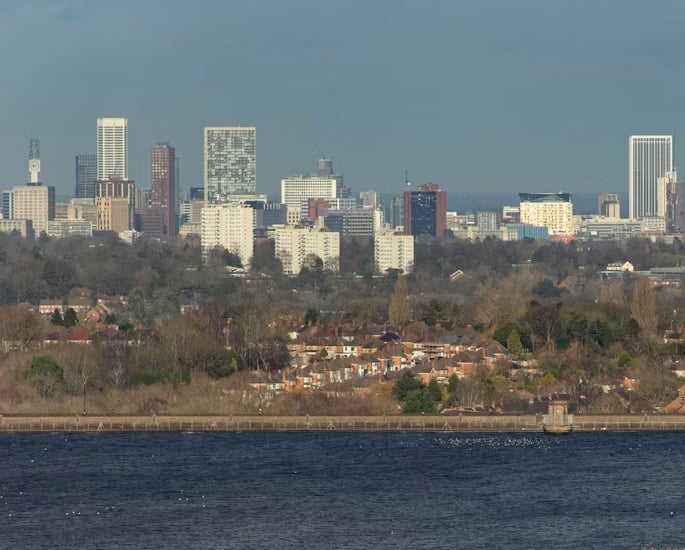
Birmingham’s story over the last 15 years has been one of expansion. At the 2021 Census, the city had a population of around 1,144,900, an increase of 6.7% from just over 1,073,000 in 2011.
That growth reflected a combination of natural population change, international migration and movement from other parts of the UK.
Birmingham’s relatively younger population, its universities and its role as a regional economic centre all helped attract new residents.
The city also became increasingly diverse over that period. The 2021 Census found that 51.4% of Birmingham residents identified as Black, Asian, minority ethnic or from another non-White group, up from 42.1% in 2011.
Asian, Asian British and Asian Welsh residents made up 31% of the population in 2021, amounting to 355,384 people. That was an increase from 26.6%, or 285,640 people, in 2011.
Those figures underline how central South Asian communities have become to Birmingham’s identity. They are not simply part of the city’s diversity.
In many neighbourhoods, they are central to its social and economic life.
The Recent Turnaround
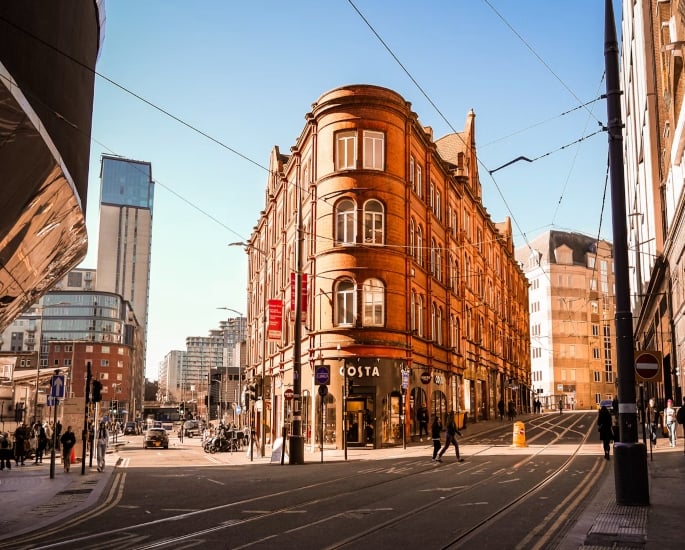
Despite that long-term growth, the latest mid-year estimates point to a reversal. The ONS estimates that Birmingham’s population stood at 1,176,960 in mid-2025, down from an estimated 1,183,600 in mid-2024.
That represents a fall of around 6,600 people, or roughly 0.5%, in a single year.
Birmingham was not alone: Leeds, Swansea, Leicester and Nottingham also recorded population declines over the same period.
The change is significant because it comes after years in which Birmingham was widely expected to keep growing. Earlier official projections had suggested the city could reach around 1.2 million people by the middle of this decade.
Population estimates can be revised, and a one-year fall does not necessarily signal a permanent decline. But it does suggest that the forces driving Birmingham’s growth may be weakening, at least for now.
Why People May Be Leaving
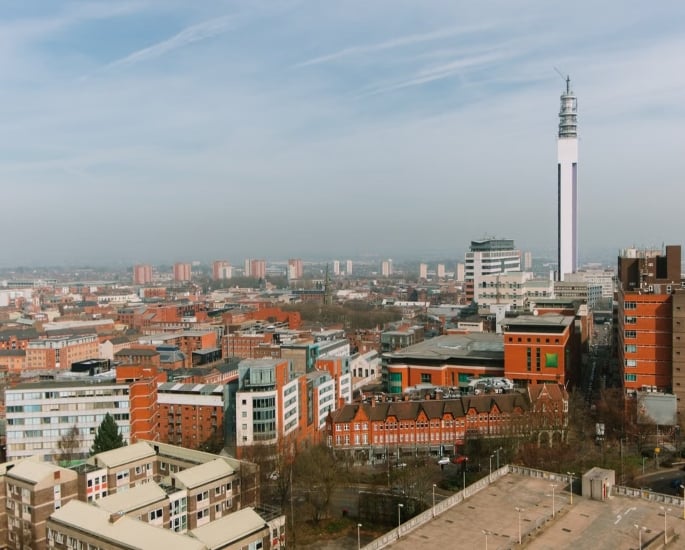
There is rarely one simple reason why a city’s population falls. Housing costs, job opportunities, university enrolment, international migration and families moving to surrounding areas can all play a part.
Birmingham’s housing market has become increasingly difficult for many residents. The city has long faced shortages of larger family homes and affordable housing, issues that were highlighted in the council’s own long-term strategy.
For young families, particularly those who need more space, moving to nearby areas such as Solihull, Sandwell, Walsall or Worcestershire can feel more realistic than staying in the city.
That pattern can reduce Birmingham’s official population even when people remain connected to the city through work, family and community life.
The cost of living has added further pressure. Rising rents, energy bills and childcare costs can make city living harder to sustain, especially for households already balancing multiple financial commitments.
Employment patterns also contribute to these factors.
While Birmingham remains a major economic hub, changes in retail, manufacturing and public services have affected the kinds of jobs available in different parts of the city.
What It Means for British Asian Birmingham
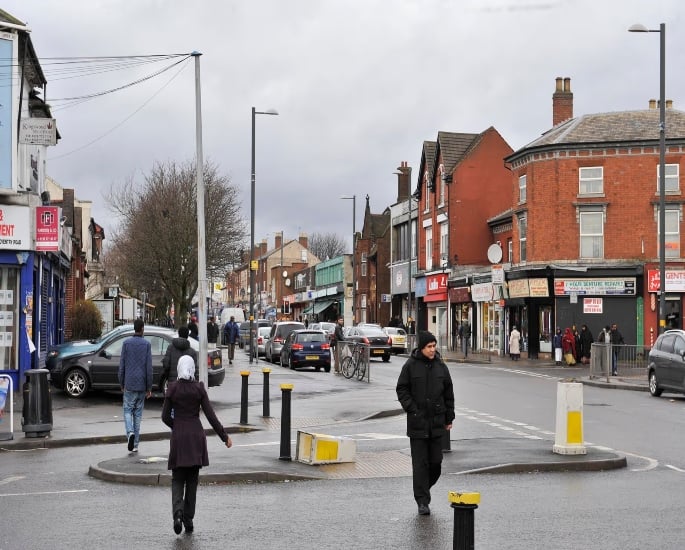
Any population change in Birmingham carries particular significance for its British Asian communities. The city is home to large Pakistani, Indian and Bangladeshi populations, alongside smaller but established Afghan, Sri Lankan, Chinese and other Asian communities.
At the 2021 Census, Birmingham had around 195,103 Pakistani residents, 66,519 Indian residents and 48,232 Bangladeshi residents.
These communities are concentrated in areas such as Sparkhill, Small Heath, Alum Rock, Handsworth, Lozells and Ward End, where mosques, temples, gurdwaras, shops and restaurants form familiar local landmarks.
A shrinking population can affect these neighbourhoods in very practical ways. Fewer residents can mean less footfall for independent businesses, reduced demand for local schools and greater pressure on community organisations that rely on volunteers and donations.
At the same time, British Asian families may be among those most affected by housing pressure.
Multigenerational households, which are common in many South Asian families, often need larger homes, but such properties are in short supply and can be expensive to buy or rent.
There is also a risk that population decline is discussed only in abstract economic terms.
For communities with deep roots in particular neighbourhoods, the issue is not simply a statistic; it is about whether children can afford to live near parents, whether family businesses can survive and whether local institutions remain viable.
The Role of Younger Generations
Younger British Asians are increasingly mobile. Many leave Birmingham for university, work in London, Manchester or abroad, and do not always return immediately.
That is not necessarily a sign of rejection.
Birmingham remains an important base for many young people, but better job opportunities, higher salaries and different lifestyles elsewhere can pull them away during key stages of their lives.
At the same time, some young professionals are choosing to remain in or return to Birmingham because it offers a more affordable alternative to London.
The city’s cultural life, family networks and South Asian infrastructure continue to make it attractive for those who want career opportunities without losing community ties.
The challenge for Birmingham is to make staying a realistic choice. That means more affordable homes, better transport, stronger local employment and neighbourhoods that feel safe and well supported.
Why the City Still Matters
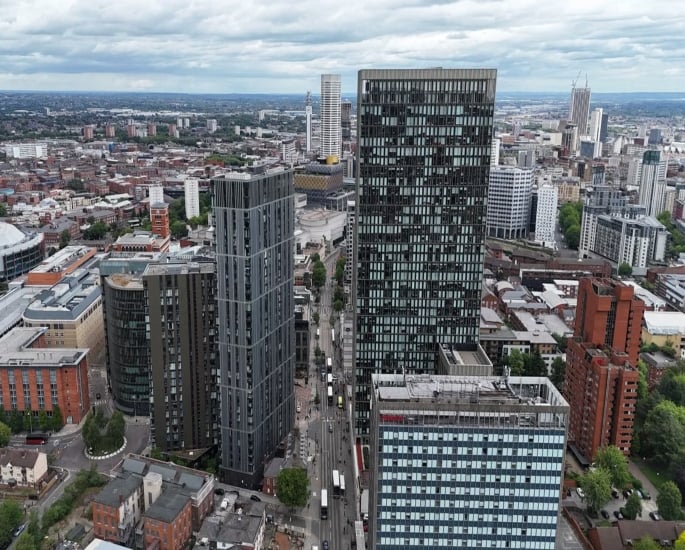
Even with a recent dip, Birmingham remains England’s largest local authority by population. Its mid-2025 estimate of nearly 1.18 million people is still far higher than the 2021 Census figure.
The city’s diversity remains one of its greatest strengths. More than half of residents identify as Black, Asian or from another minority ethnic background, and Asian communities alone account for almost a third of the population.
That diversity shapes Birmingham’s economy as much as its culture.
South Asian-owned businesses, restaurants, wholesalers, textile firms, healthcare workers, teachers and public-sector staff all contribute to the city’s daily functioning.
Birmingham’s British Asian communities have also played a major role in its political and civic life. From local councillors and community campaigners to entrepreneurs and cultural organisations, they have helped ensure that the city reflects the people who live in it.
It would be wrong to describe Birmingham as a city in decline based on one year of data. Its population remains substantial, its communities remain vibrant and its long-term growth story has not disappeared.
But the latest figures are a warning that growth cannot be taken for granted. People stay where they can find homes, opportunity, safety and a sense of belonging.
For Birmingham’s British Asian communities, the stakes are especially high.
Their history is woven into the city, and their future will depend on whether Birmingham can remain a place where families can put down roots rather than simply pass through.
The city’s population may be shrinking for now, but its identity is not.
If Birmingham gets housing, jobs and community investment right, its British Asian neighbourhoods will continue to be at the heart of what makes the second city distinctive.