















































"It's a timeless tale."
Ramayan is a beloved epic of Indian mythology. For centuries, it has been at the heart of Indian culture and storytelling.
The renowned tale of Ram and Ravan has enthralled several generations via books, films, and television shows.
Whether it is Ramanand Sagar’s television series from the late 1980s to Nitesh Tiwari’s Ramayana: Rise of a Legend (2026), starring Ranbir Kapoor and Yash, this story continuously finds new ways of being told.
But there is one adaptation that is not discussed as much, although many people continue to admire it.
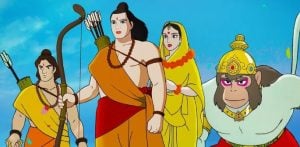
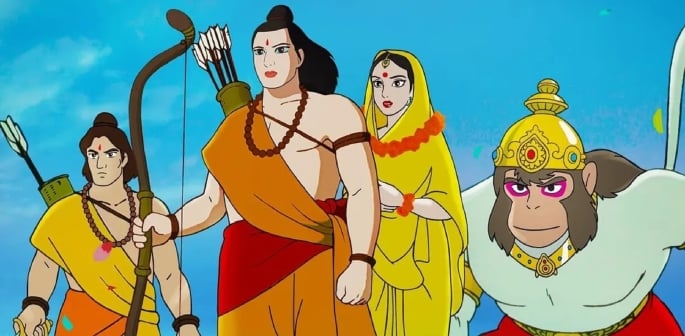
This is none other than the anime take on the epic, Ramayana: The Legend of Prince Rama (1993).
The film was directed by Yugo Sako, with joint efforts by Koichi Sasaki and Ram Mohan.
Produced as a collaboration between India and Japan, the film was a celebration of four decades of ties between the two countries.
Beautifully animated and with an admirable faithfulness to its source material, this version of the epic is not to be missed.
Join us as we take a look a deeper look into this anime.
Development
 Yugo Sako was a famous Japanese filmmaker and screenwriter. The Ramayan caught his interest in 1993, while Sako was in Uttar Pradesh, India.
The story captivated Sako so much that he read ten Japanese versions of it.
He ultimately decided to produce his version as an anime as he felt he would be able to do better justice to it.
Sako commented: “I felt it was best to depict Ram in animation, rather than by an actor.”
However, the project ran into some hurdles as Indian authorities were not keen on the idea of filmmakers from other countries developing Ramayan.
Sako tried his best to assure India that his intentions were pure and that producing an anime would bring the story to a wider audience.
Despite this, fundamentalist groups were opposed to the idea of cartooning revered figures and the film therefore was completed in Japan, and it initially did not see an Indian release.
Interestingly, India still collaborated with Japan on the project. Visions from both nations strengthened the authenticity of the film.
A Mesmeric Storyline
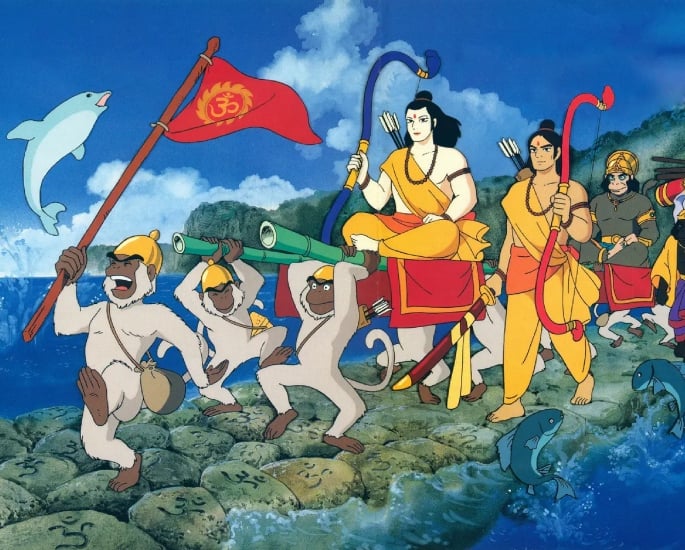 Ramayana: The Legend of Prince Rama offers a fresh take through its use of animation.
It begins with Ram slaying the demoness Tadaka and proving his worth as a warrior.
He then marries Sita, the princess of Mithila. But back in his hometown of Ayodhya, a dark path awaits him.
At the instigation of her maid, Manthara, Rama’s stepmother, Kaikeyi, banishes Rama to forest exile for 14 years.
Ram’s devoted brother, Lakshman, accompanies him and Sita.
A run-in with the demoness, Shurpanakha, leads to Sita’s abduction at the hands of the demon king, Ravan.
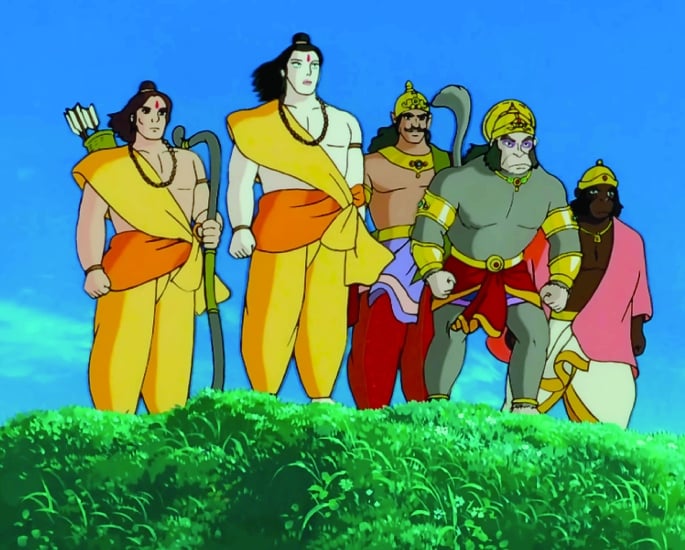
After this, with the help of the army of monkeys and bears, including the powerful Hanuman, it is up to Ram to rescue Sita and slay Ravan.
Admittedly, Ramayana: The Legend of Prince Rama omits key details, including the salvation of Ahilya and the killing of Khar and Dhushan.
However, its heart and conviction is so rousing that one forgets these liberties.
Through stories like these, we can learn what it truly means to be a good king, a brave warrior, a dutiful son, a loving husband, a loyal brother, and a caring wife.
Each frame is meticulously crafted.
The animation of the characters and the dialogues are so powerful and authentic that fans of Ramayan will smile throughout the film.
Music
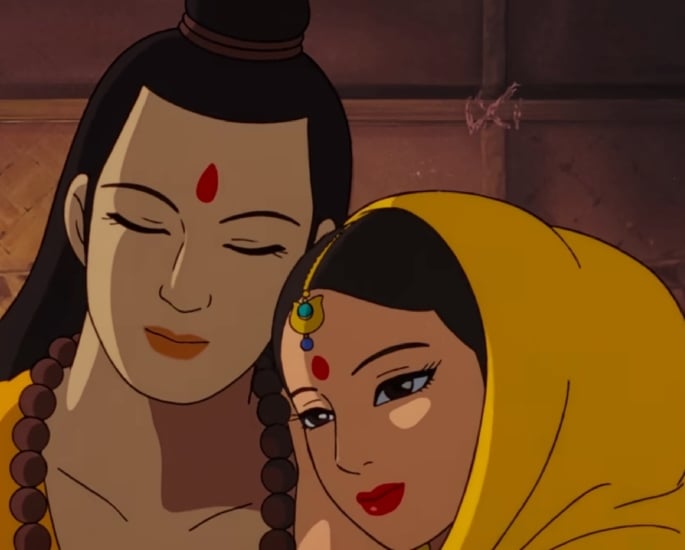 In anime, songs are a rarity. But not only is Yugo Sako faithful to the story, but he is also truthful to Indian values of melody and rhythm.
In the Hindi-dubbed version of the film, which starred the voices of Arun Govil (Ram) and Amrish Puri (Ravan), each song is a winner.
For example, ‘Janani Main Ram Doot Hanuman‘ showcases Hanuman introducing himself to a reticent Sita after finding her in the kingdom of Lanka.
The tempo and beats are so mellifluous that the audience is captured by the mood and situation instantly.
Elsewhere, the song of the demon army march, ‘Jai Lankeshwar’, and the romantic number capturing Ram and Sita’s moments in the forest, ‘Panchvati Man Bhavan Upwan‘, are unforgettable.
The English-dubbed version of the film translated these songs into Sanskrit, but they hold an equal amount of euphony and tunefulness.
The tracks carry the story forward, which is a huge victory.
Composer Vanraj Bhatia and lyricist Vasant Dev are at their finest, especially with the anthem, ‘Milkar Ram Bolo‘, rendered beautifully by Channi Singh.
Re-release & Legacy
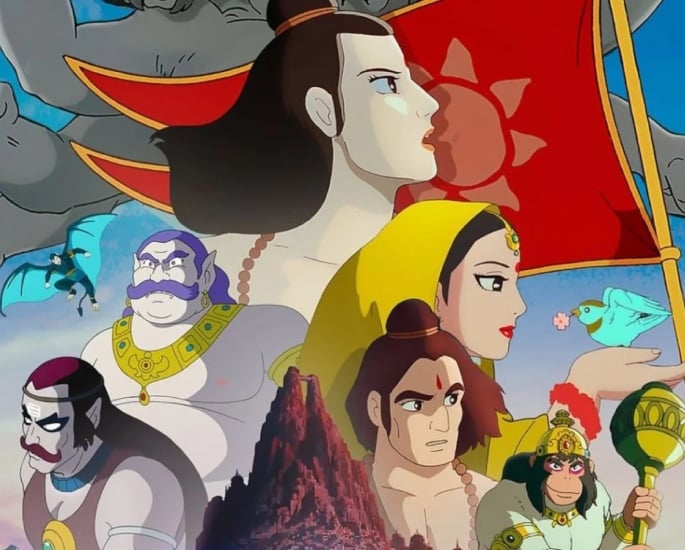 As the film was controversial in its time, it’s only fitting that its legacy is respected later down the line.
In January 2025, over three decades after its initial release, the film was restored in 4K.
It was released to adulation and applause in visual splendour. All its dubbed versions, including the Hindi and English editions, were massively enjoyed on the big screen.
Commenting on the occasion, producers said:
“Ramayana: The Legend of Prince Rama is more than just a film.”
“It’s a timeless tale that celebrates relationships, the triumph of good over evil, harmony between nature and living beings, and above all, friendship and trust.
“It is our humble offering to the youth and children of India, and we are honoured to present this cultural artefact from Japan to its spiritual home.”
In producing this anime, much more than rejuvenating the ties between Japan and India was achieved.
Audiences got to witness Ramayan in an animated format, but despite having no live-action, the soul and purity of the story remained intact.
This is an adaption that will continue to inspire and enthral for years to come.
Watch the trailer for the Hindi-dubbed version: