















































“I enjoy the deep, meditative experience and the spontaneity"
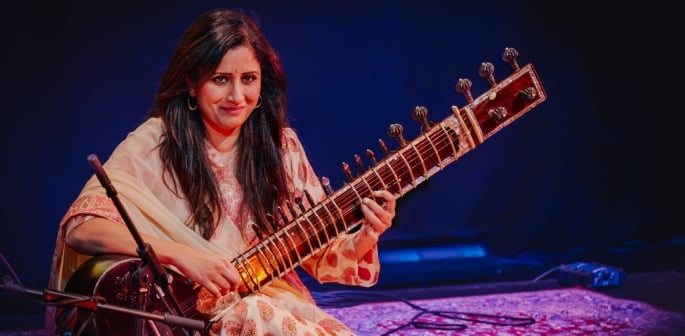
British sitar player Roopa Panesar has spent years sharing the traditional sounds of Indian classical music with audiences across the UK and beyond.
Having started learning the instrument at just seven years old, what began as her parents’ encouragement quickly developed into a lifelong passion.
Trained in the Etawah Gharana tradition, she has built a career centred on the intricate sounds, spontaneity and emotional depth of classical music.
From baithaks to major concert halls and festivals, her performances have allowed her to connect with audiences through traditional music.
In an exclusive interview with DESIblitz, Roopa discusses her musical journey, cultural influences and excitement about returning to Liverpool.
Discovering a Lifelong Passion for the Sitar
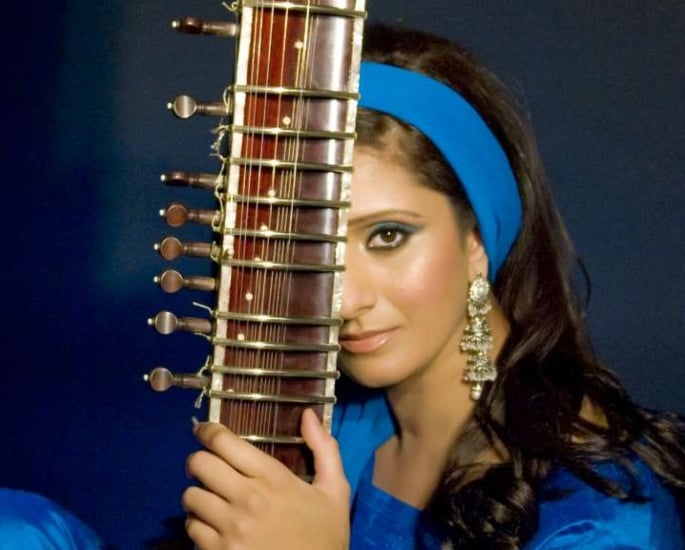
Roopa’s relationship with music began during childhood, when her parents encouraged her to take her musical education seriously.
She started learning the sitar at seven, but quickly discovered that playing was about more than fulfilling her family’s wishes.
Speaking to DESIblitz, she reflects: “I began playing at the age of 7. Initially, my parents wished for me to learn music seriously, but it very quickly became an undying passion for me.”
She was particularly drawn to its distinctive sound, explaining: “I was instantly drawn to the ethereal sound and complexity of the instrument.”
Roopa trained in the Etawah Gharana tradition of sitar playing, developing her understanding of the techniques and traditions behind Indian classical music.
Growing up in Britain also influenced her journey, giving her an opportunity to maintain a connection with her cultural heritage through music.
She credits her supportive family for helping her pursue her ambitions, particularly as someone born and raised in the UK.
Another significant influence was her guru, Ustad Dharambir Singh MBE, who lived in Leicester and taught her from an early age.
“I was blessed to have my guru, Ustad Dharambir Singh MBE, who happened to live in the same city as me (Leicester), and tirelessly taught me and encouraged me to perform from an early age.”
From Gatherings to Major Concert Stages
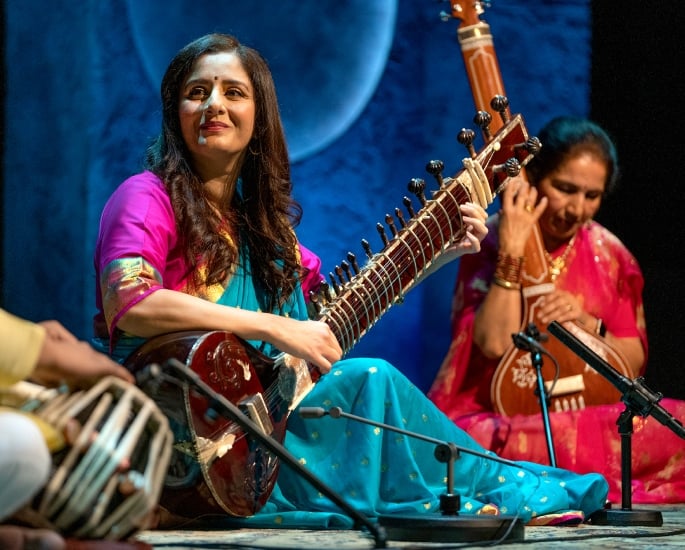
Throughout her career, Roopa has performed in a variety of settings, from small baithaks to concert halls and major festivals.
Baithaks are intimate listening gatherings where audiences can experience classical music in a more personal environment.
Reflecting on her professional development, she tells DESIblitz:
“The journey of playing professionally has included playing in small baithaks (small listening gatherings) and concert halls to major venues and festivals.”
Although each setting offers something different, Roopa believes they all provide unique rewards.
She explains that her experiences as a musician have changed how she views performing.
“Over time, with musical and life experience, I see this work as a really blessed opportunity to present my musical thoughts to audiences and to feel my own depth as a musician and human being,” she says.
One of the aspects she enjoys most is the meditative experience of performing Indian classical music.
She particularly values its spontaneity and how it can transport musicians and listeners into a deep and joyful state of being.
Roopa explains: “I enjoy the deep, meditative experience and the spontaneity of playing this music as it transports the musicians and listeners to a deep and joyful state of being.”
Some of her most memorable performances have taken place in spiritual settings, where audiences gather to experience music together.
Although she finds it difficult to identify one particular highlight, she describes the collective atmosphere at these events as truly uplifting.
Bringing Traditional Indian classical Music to Liverpool
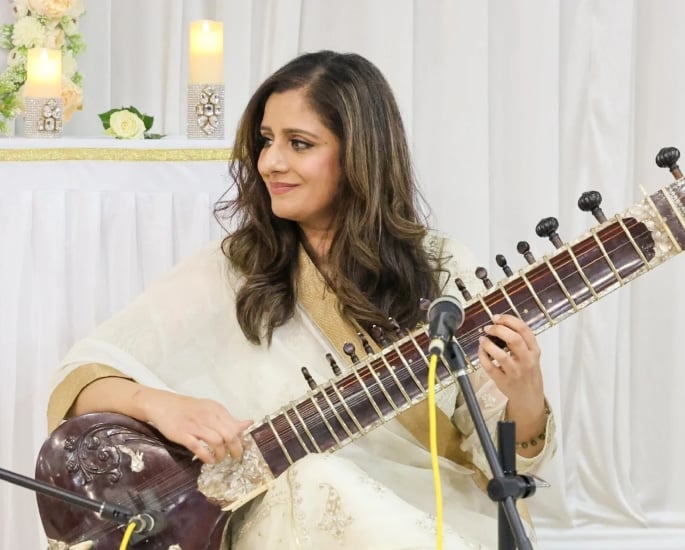
Roopa is looking forward to returning to Liverpool, having not performed in the city for some time.
She describes its audiences positively, telling DESIblitz: “I am excited to play in Liverpool after so long. Listeners are so open and kind in Liverpool.”
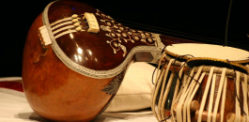
She will perform traditional ragas, accompanied by tabla player Sri Kousic Sen.
Ragas are melodic frameworks within Indian classical music, allowing musicians to explore different emotions, textures, and musical expressions.
The sitar provides the melodic foundation, while the tabla adds intricate rhythms that complement the performance.
Roopa explains:
“I will be playing traditional Ragas (Indian Classical musical forms) and will be accompanied by the illustrious Sri Kousic Sen ji on Tabla.”
She hopes audiences will appreciate the distinctive sounds of both instruments and experience the depth of traditional Indian classical music.
“The different Ragas and textures/complexity of sound evoke a range of emotions,” she adds.
When preparing for performances, Roopa keeps her routine relatively simple.
Asked about her pre-performance preparations, she highlights three essentials: “Practise, stretching and good food!!”
Preserving Traditions and Looking Towards the Future
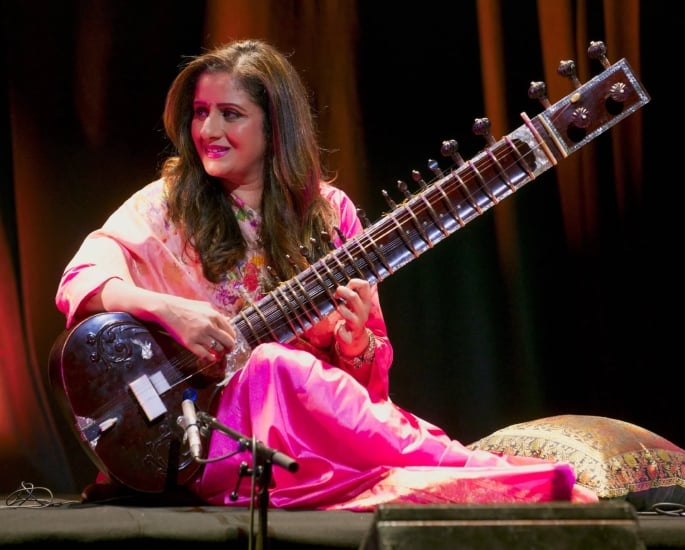
Roopa Panesar hopes audiences will enjoy the exquisite sounds of the sitar and tabla while experiencing the joy and depth of Indian classical music.
“I hope audiences will enjoy the sound of these exquisite, traditional instruments and feel the joy and depths of Indian Classical music presented on Sitar and Tabla.”
For her, performing is an opportunity to introduce audiences to traditional instruments and share an art form that has influenced her throughout her life.
Her journey also demonstrates how cultural heritage can remain an important part of artistic expression for musicians born and raised in Britain.
With the support of her family and guru, she has developed a career that connects traditional Indian music with audiences across different settings.
Looking ahead, Roopa is keen to expand her international presence through further touring and collaborations.
She reveals:
“More international touring and collaborations are on the cards for 2027/28, which I am excited about.”
These plans will allow her to reach new audiences while exploring opportunities to work with other musicians.
However, her commitment to traditional sitar playing remains at the centre of her artistic identity.
As she prepares to perform in Liverpool, Roopa hopes to share the emotional depth, spontaneity and distinctive sounds that have made Indian classical music such an important part of her life.