




















































“These offenders deliberately targeted families in their own homes"
Burglars who deliberately targeted South Asian families across London have received prison sentences following several investigations by the Metropolitan Police.
The cases involved homes being monitored before break-ins, valuable jewellery being stolen and families being left dealing with the consequences.
In one investigation, detectives used CCTV footage, forensic evidence and Oyster card travel records to connect two men to a series of burglaries.
The offences highlighted how criminals targeted households they believed would contain expensive jewellery, gold and other valuables.
Several offenders have now been jailed, with police continuing to pursue those responsible for crimes against families across the capital.
South Asian Households Deliberately Targeted

One investigation centred on Clirim Ferizi, 26, and Oresti Saliaj, 40, who were linked to burglaries involving South Asian households across London.
Ferizi, of Tookey Close in Harrow, was sentenced to two years in prison at Isleworth Crown Court on Tuesday 3 November 2026.
His co-defendant Saliaj, of Wembley Park Drive in Brent, had previously received three years and six months at the same court on Wednesday 22 April 2026.
The investigation began following a burglary in Ruislip in February 2026.
Detectives subsequently examined CCTV footage, collected forensic evidence and analysed mobile phone and Oyster card information.
Their enquiries connected the pair to several incidents involving South Asian families.
According to the Met Police, the men deliberately targeted these households because they believed they would contain valuable jewellery and other expensive possessions.
Stolen items included a Rolex watch worth £7,000, gold earrings valued at £1,500 and an antique gold and diamond ring worth £1,200.
However, the consequences of residential burglaries extend beyond the financial value of stolen possessions.
Having a home broken into can leave families feeling vulnerable in a place where they should feel safest.
Detective Sergeant Ross Smith, who led the investigation, highlighted the emotional consequences of the offences.
He said: “These offenders deliberately targeted families in their own homes, causing emotional distress and fear to their victims.”
For many South Asian families, jewellery can also carry sentimental and cultural significance.
Gold jewellery, family heirlooms and traditional pieces are often passed between generations, giving them importance beyond their monetary value.
The Met Police release did not specify whether any of the stolen jewellery had been recovered or returned to its owners.
How Oyster Card Data Helped Detectives

A significant part of the investigation involved using London’s public transport records to establish the movements of Ferizi and Saliaj.
One incident took place on Friday 30 January 2026, when Saliaj and an unidentified man broke into a property in Oakleigh Park North, Barnet.
They stole a Rolex watch worth £7,000, alongside other jewellery and valuable handbags.
Detectives later discovered through CCTV enquiries that the men had surveyed the address several hours before the burglary, monitoring the victim’s movements.
Another incident occurred on Friday 27 February in Shenley Avenue, Ruislip.
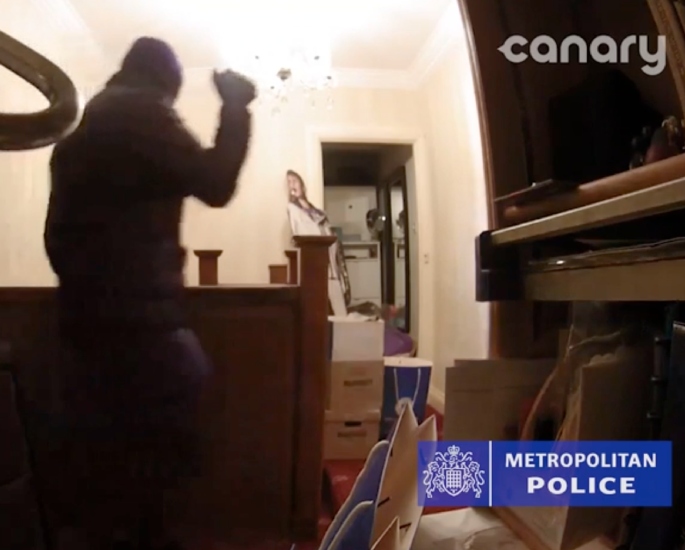
Ferizi and Saliaj arrived at Ruislip station before boarding a bus towards the victim’s address. CCTV captured them breaking into the property and leaving with a bag of valuable possessions.
The footage subsequently showed the pair travelling back towards Ruislip Underground station.
During the journey, Ferizi topped up his Oyster card before using it to enter the station.
The following day, both men forced their way into another property on Marsh Road in Harrow.
Although nothing was stolen, CCTV showed them searching different rooms before leaving.
Detectives initially faced difficulties identifying the suspects because both men had concealed their faces inside the properties.
Officers therefore examined their travel histories to establish connections between the different incidents.
Following their arrests on Monday 23 March, police recovered their Oyster cards.
Investigators analysed the timestamps recorded on the cards, comparing the information with CCTV footage from surrounding areas.
Ferizi’s debit card transactions also showed that he had used it to top up his Oyster card at Ruislip station, providing further evidence of their movements.
Detective Sergeant Smith explained how the different forms of evidence strengthened the investigation.
He said: “This investigation brought together a range of evidence, including Oyster card data which strengthened the case and helped build a strong evidential picture, placing both offenders at the scene of each burglary.”
The investigation demonstrated how everyday travel records could become valuable evidence when combined with CCTV and forensic enquiries.
Further Investigations Uncover Burglaries Targeting South Asians

The investigation involving Ferizi and Saliaj was not the only case in which detectives identified offenders targeting South Asian households.
The Met Police also highlighted separate investigations involving Hetaj Dionis, 35, and Arben Cuka, 31.
The pair were connected to burglaries targeting South Asian homes in Hayes over eight days.
Detectives used doorbell footage, CCTV, mobile phone information and travel records to connect them to the offences.
On Monday 19 January 2026, officers received reports of a burglary in progress at a property in Ealing.
Police arrived within minutes and discovered Dionis on the roof attempting to avoid capture.
With assistance from the Met’s Dog Support Unit, he was apprehended and found carrying a crowbar and possessions stolen from the property.
Cuka was subsequently arrested on Wednesday 4 March.
Both men received a combined five-year prison sentence at Isleworth Crown Court on Thursday 23 April 2026.
A separate investigation by the Met’s Flying Squad uncovered an organised crime group targeting South Asian households across London and surrounding counties.
Investigators examined witness statements, CCTV footage and Automatic Number Plate Recognition (ANPR) data to connect Patrick Doherty, 24, to multiple burglaries.
Following a surveillance operation, officers arrested members of the group within minutes of them breaking into a property in south-west London.
Doherty was arrested on Thursday 16 October 2025 and later charged with multiple burglary offences.
He received three years and nine months in prison at Kingston Crown Court on Monday 22 June 2026.
Together, these investigations highlight several cases involving criminals deliberately targeting South Asian households across the capital.
Police Urge Action as Burglary Continues to Affect Communities
The latest sentencing brings attention to the ongoing impact of residential burglaries on families and communities.
While stolen possessions can sometimes be replaced, the emotional consequences of having a home broken into can remain long after an incident.
For households deliberately selected because of assumptions about their wealth or possessions, the experience can create additional concerns about personal safety.
The investigations also demonstrate how criminals can monitor properties and residents before attempting to break in.
Detective Sergeant Smith said the Met remained committed to pursuing burglary offenders and supporting victims.
He added:
“We know burglary has a lasting impact on victims, and we’re committed to pursuing offenders and bringing them to justice.”
He also reported that burglary across London had fallen by six per cent over the previous year, attributing the reduction to increased patrols and targeted police action.
The Met’s figures indicate its wider approach to tackling residential crime, although the individual investigations demonstrate that targeted burglaries remain a concern.
For South Asian families, the cases underline the importance of recognising suspicious activity around residential properties and reporting concerns to police.
The sentencing of Ferizi, Saliaj, Dionis, Cuka and Doherty represents several successful investigations into crimes affecting households across the capital.
However, the wider concern remains how families can feel secure in their own homes when criminals deliberately select properties based on assumptions about the valuables they might contain.