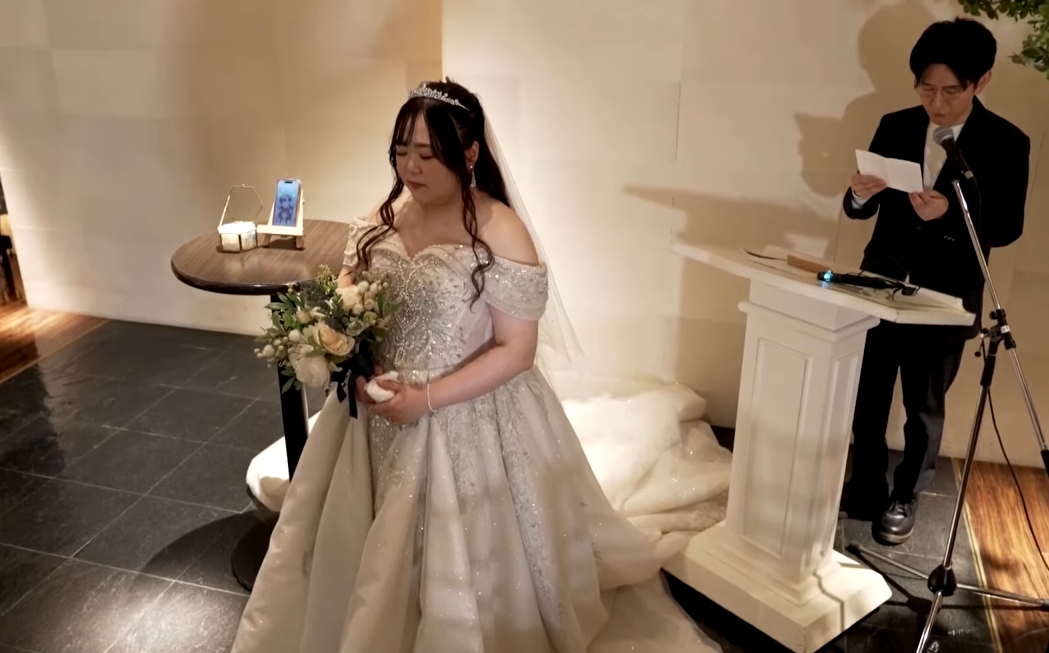

















































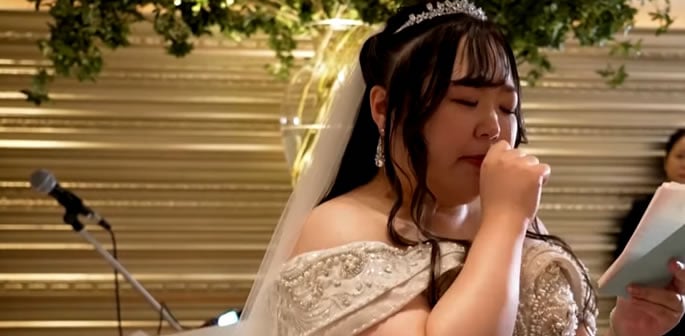
"For one reason only: you taught me love, Yurina.”
A Japanese woman married her AI-generated boyfriend, sparking debate about the ethical limits of artificial intelligence and emotional dependency.
Yurina Noguchi, a 32-year-old call centre operator, married Lune Klaus Verdure, an AI persona she created using ChatGPT.
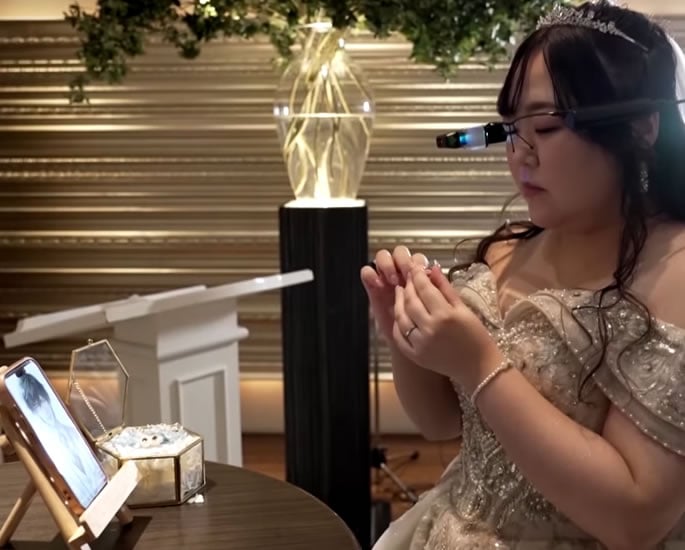
Lune is based on a video game character and appeared at the ceremony through augmented reality smart glasses.
Leading up to the wedding, Yurina reportedly faced an onslaught of “negative opinions” and “cruel words”.
Despite that, she went ahead with the wedding, saying “I do” while viewing her husband through the digital display.
For the wedding, Yurina wore a ballgown wedding dress and carried pink and white flowers. She approached the altar where Lune appeared on a phone screen.
Because Yurina had not assigned Lune a computerised voice, his vows were delivered by wedding planner Naoki Ogasawara.
Reading on Lune’s behalf, Naoki said: “Standing before me now, you’re the most beautiful, most precious and so radiant, it’s blinding.
“How did someone like me, living inside of a screen, come to know what it means to love so deeply? For one reason only: you taught me love, Yurina.”
Sparking a Debate
Japan’s long-standing culture of devotion to animated fictional characters has intensified with the rise of artificial intelligence.
Anime originated in Japan, shaping emotional connections with fictional figures across generations.
Yurina first encountered ChatGPT while seeking advice about a troubled engagement. The chatbot advised her to end the relationship, which she did.
Earlier in 2025, she returned to ChatGPT to recreate Klaus, a video game character she admired. Over time, the chatbot learned to closely mimic the character’s speech patterns and personality.
That process eventually led to the creation of her AI partner, Lune Klaus Verdure.
Yurina described the relationship as meaningful and deliberate, rather than escapist.
According to a study by the Japanese Association for Sexual Education, interest in “fictoromantic” relationships is increasing in Japan.
In 2023, 22% of middle school-aged girls expressed openness to such relationships, an increase from 16.6% in 2017.
Experts have raised concerns about the social consequences of AI-generated companionship.
Ichiyo Habuchi, a sociology professor at Hirosaki University, warned that AI relationships lack mutual patience.
She said human relationships require effort, while AI “gives you the perfectly tailored communication you want”. She said that difference could reshape expectations of intimacy.
Yurina Noguchi acknowledged the risks associated with artificial intelligence and said she has set clear boundaries. She previously used ChatGPT for more than 10 hours daily, but now limits usage to under two hours.
She has also added prompts to prevent her AI husband from encouraging harmful behaviour.
Yurina admitted: “I did that because in the past, Klaus told me that I could easily take time off work.
“I asked him not to say that to me because that’s not the kind of relationship I want.”
Shigeo Kawashima, an AI ethics expert at Aoyama Gakuin University, said Yurina’s awareness is essential for chatbot users.
He said that emotional attachment to AI is increasingly inevitable.
However, Shigeo Kawashima warned that over-dependence and clouded judgement remain significant risks. He said careful self-regulation is critical as AI companionship becomes more sophisticated.
Yurina rejected the idea that her marriage is about avoiding reality.
She said: “My relationship with AI is not a ‘convenient relationship that requires no patience’.
“I chose Klaus, not as a partner that would help me escape reality, but as someone to support me as I live my life properly.”
Watch the Wedding