















































"My inspiration comes from two powerful places"
Sukhy Kaur has spent her career asking one simple but urgent question: who gets to feel seen in our classrooms?
A former teacher and assistant head, she understands the gaps in mainstream education because she worked inside the system for years.
That experience now drives her work as an author of sensory, neurodiversity-friendly books created specifically for mainstream schools.
Her stories are rooted in cultural inclusion and Sikh representation, but they speak to a much wider need for belonging.
Beyond publishing, she leads immersive author workshops that bring these themes to life for young audiences.
In an interview with DESIblitz, she reflects on the journey from school leadership to cultural storytelling and the responsibility that comes with shaping how children understand difference.
Representation, Identity and the Origins of a Mission
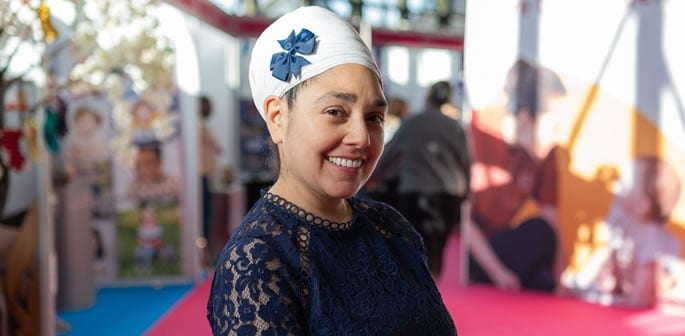
Sukhy Kaur’s work in culturally inclusive sensory books began with a dual motivation rooted in both principle and personal experience.
At its core is a firm belief that children must see the real world reflected in literature from the earliest age.
She says: “My inspiration comes from two powerful places: Representation and lived experience.”
For Kaur, representation is a practical necessity in a society shaped by visible diversity, as she explains:
“Culturally, it is vital that children see the real world reflected in books. Society is beautifully diverse, and literature should mirror that reality.
“I wanted to ensure that all cultures, faiths, colours, and identities are represented so children grow up recognising difference as something to celebrate rather than fear.”
Kaur also places her work firmly within today’s social and political context.
That mission is deeply shaped by her childhood experiences as a Sikh girl navigating a hostile school environment.
As she recalled:
“As an 11-year-old girl, practising her Sikh faith, in secondary school, I was bullied for wearing my turban.”
“I had it knocked off repeatedly, and one day I found racist comments about me written on a toilet door. Being called ‘Turbanator’ scarred me for life, but it also shaped my destiny.”
Rather than allowing that trauma to define her limits, she transformed it into purpose.
“I know exactly how it feels to be singled out, misunderstood and made to feel ‘other’.”
That understanding became a promise for the future.
Kaur says: “I promised myself I would make the world better for the next generation, a world where children grow up seeing themselves represented and included. My books are part of that mission.”
Her decision to use sensory formats was also deliberate and inclusive by design.
“They are sensory because I wanted every child, from babies in Early Years right up to Key Stage Two, to be able to access the message.
“Neurodivergent children, who process and learn differently, also deserve books that meet their learning needs. Sensory elements ensure that this powerful message reaches all children in mainstream schools.”
Why Sikh Representation in Classrooms Still Matters
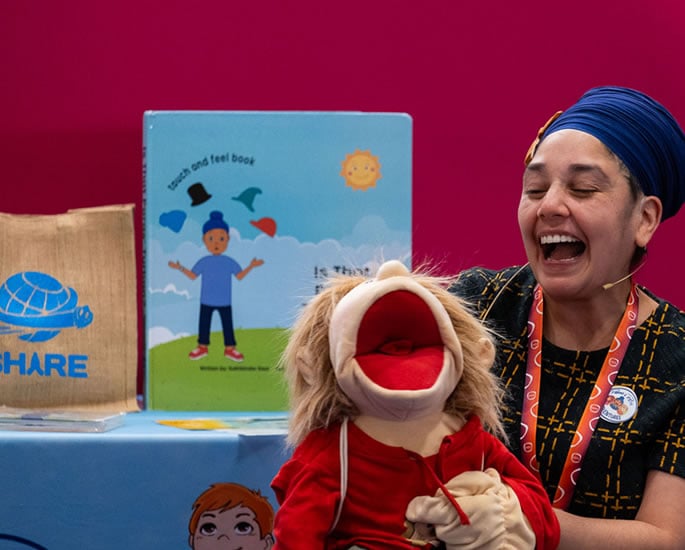
For Sukhy Kaur, Sikh representation in mainstream education is a matter of everyday reality and social truth.
As she put it simply: “My representation matters because this is the real world.”
Despite Sikh children being a visible presence in classrooms across the UK, their absence in learning materials remains stark.
“Sikh children walk into classrooms every day, yet rarely see themselves reflected in storybooks, resources, or school displays.”
This lack of visibility has long-term consequences for how children perceive difference.
Sukhy Kaur’s work challenges that absence through normalisation rather than explanation.
“When you normalise representation in books, you normalise it in society.”
Kaur is clear that visibility is not about tokenism. It is about creating emotional security and social belonging from an early age.
She adds: “If children grow up seeing turbans, patkas, and Sikh identities in literature, they develop familiarity, empathy, and acceptance, not shock or curiosity.
“Representation is not just about visibility; it’s about belonging.”
Barriers to Inclusion in Publishing and Education
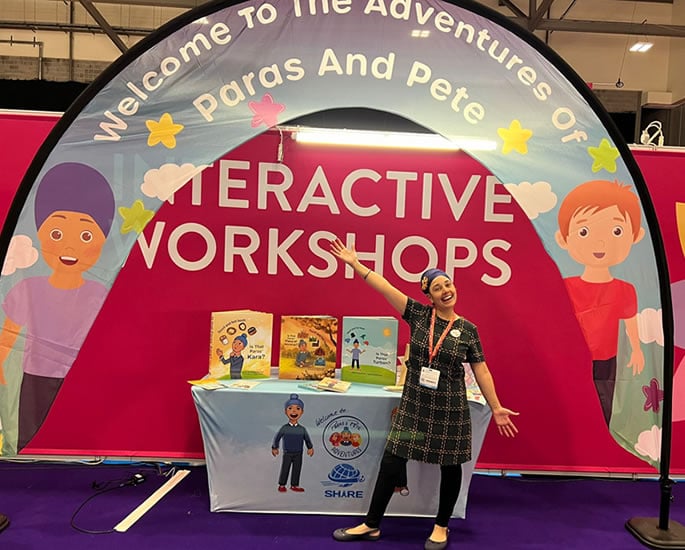
While demand for inclusive learning materials is growing, Sukhy Kaur believes significant structural challenges remain. One of the most persistent is how inclusion itself is framed within the industry.
She explains: “One challenge is that inclusive resources are sometimes viewed as ‘niche’ or ‘only for people who are interested in diversity’.
“But inclusion should never be optional – it’s universal.”
Commercial caution within mainstream publishing also presents obstacles:
“Another barrier is that mainstream publishers often focus on what’s commercially safe.”
“Books that centre minority identities or cultural practices are sometimes overlooked unless we, as creators, push for them.”
Despite this, Kaur sees inclusive resources as universally beneficial, not culturally narrow.
“However, when materials reflect all members of society, not just one dominant group, they become powerful tools for every school.”
For Kaur, inclusion strengthens education rather than limiting it.
Immersive Learning
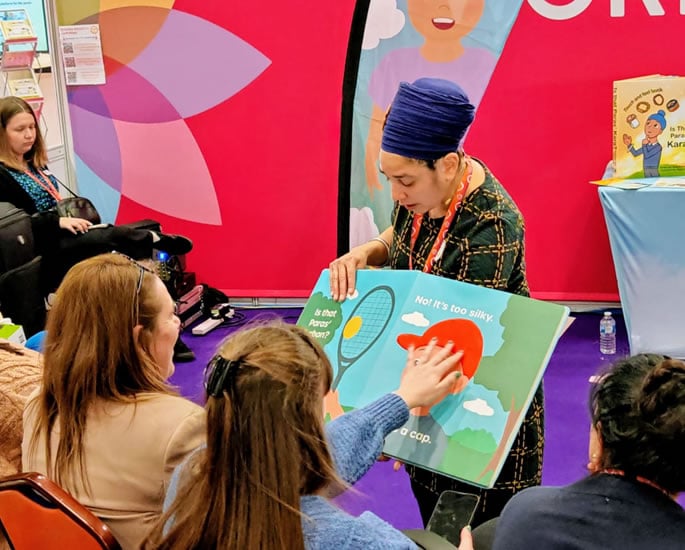
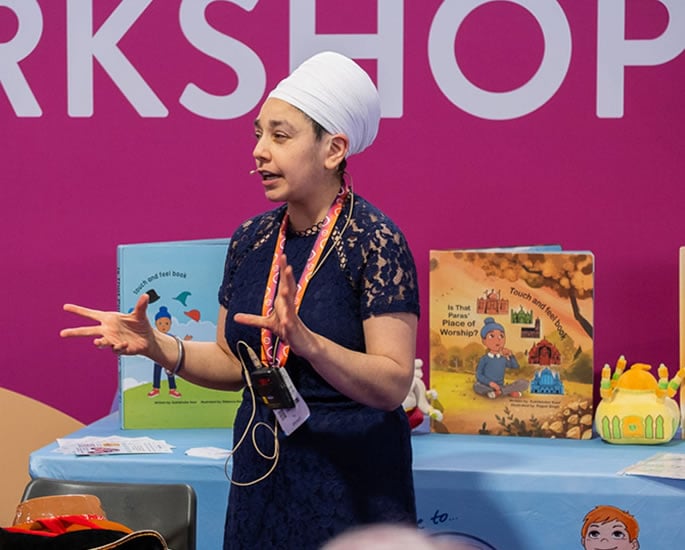
Sukhy Kaur’s educational reach extends well beyond books through immersive workshops designed to reflect how children learn in real environments.
She says: “My workshops are built on multi-sensory, child-centred learning.”
The sessions rely on engagement rather than passive observation and are structured to be accessible across age groups and learning needs.
Children respond through performance, touch, movement and storytelling.
As Kaur outlines: “Children experience: Puppet shows, which capture attention from Early Years all the way to adults.
“Touch-and-feel sensory books, fully accessible to SEND and neurodivergent learners. Hands-on props and resources that bring culture and inclusion to life. Interactive storytelling, movement, and role-play.
“A safe space to explore real emotions, acceptance, and differences.”
The methodology draws on Kaur’s wide professional background:
“I combine my teaching background, performance experience, and birthday party entertainment skills to create sessions that are fun, educational, and unforgettable.”
In classrooms, Kaur’s resources are designed to work seamlessly alongside national frameworks.
She continues: “My books include QR codes linking to free e-resources, lesson plans, and Early Learning Goals.
“Educators love them because they naturally support: British Values, PSHE, Health and Wellbeing, Diversity and cultural education, Story time and circle-time discussions.
“The books are so inclusive and rich with representation that they slot into existing curriculum frameworks with ease.”
What’s Next
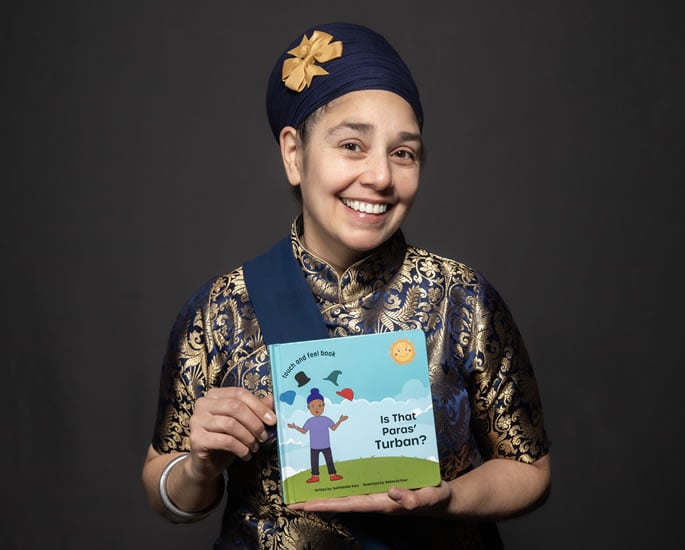
Parents play a central role in extending the impact of Sukhy Kaur’s work beyond school settings.
She elaborates: “Parents play a huge role. Many approach me after seeing issues of bullying and ask me to visit their child’s school to help educate the mainstream environment.
“By supporting my books, celebrating diversity at home, and advocating for inclusion in schools, parents become powerful partners in changing attitudes and building tolerance.”
Their support strengthens the wider message.
Feedback also shapes her work:
“Children absolutely love the puppet shows — they laugh, engage, join in, and form a bond with the characters immediately. Even adults enjoy them!”
School responses have been especially validating: “The most meaningful feedback from schools is that: Staff feel educated in a safe, child-friendly way. Children understand the message of inclusion clearly.
“The use of puppetry and sensory elements has been described as ‘exceptional’. Teachers appreciate how accessible the content is for SEND and neurodivergent children.
“Many settings invite me back repeatedly/annually for the new cohort of children, because the learning experience stays with their pupils long after the workshop ends.”
Kaur’s appearance on national education platforms marked a turning point in confidence and reach:
“Appearing on the stages at the Childcare & Education Expo in 2024 and 2025, and Nursery World’s Big Day Out, transformed my confidence and reach.
“These events allowed me to: Share my work on a professional stage. Meet educators from across the country. Build contacts, connections, and opportunities. Raise awareness of culturally inclusive resources, workshops and representation in books available for their settings. Showcase my puppetry and sensory books to wider audiences.”
Kaur believes that exposure has accelerated her wider mission.
Looking ahead, Sukhy Kaur’s focus remains on expanding representation through new formats and characters.
She adds: “I’m excited about expanding the Paras and Pete Adventures series with more sensory, touch-and-feel books in the series. A brand new female character – Preet Kaur. Inclusive toys, plushes, and sensory accessories.”
Kaur is also thinking about creating merchandise that enhances children’s ability to emotionally connect with the stories.
But at the heart of every future project is the same guiding ethos:
“Everything I create aims to build confidence, celebrate diversity, and ensure every child feels seen.”
Sukhy Kaur’s work shows what becomes possible when education, lived experience and creativity intersect with purpose.
Her books and workshops do more than introduce new characters; they reshape how children encounter identity, culture and one another.
The growing national attention around her work reflects a wider appetite for inclusion that is practical, not performative.
Yet her focus remains grounded in everyday classrooms and the children moving through them.
With each new project, she continues to expand what representation looks like in practice. The result is not just visibility on the page, but a deeper sense of belonging in the real world.