


















































"It feels like buying insurance for your future."
British South Asians face pressure to do their best, whether in the workplace or in their studies, but for some, they are turning to ‘smart drugs’.
There is a rising use of cognitive enhancers or nootropics: prescription medications like Modafinil, Ritalin, and Adderall used off-label to boost concentration.
And unlike other substances like alcohol or cannabis, which are well-known and out in the open, ‘smart drugs’ are slipping under the radar.
When faced with the constant pressure of academic or career success, taking ‘smart drugs’ quickly spirals into an addiction.
This is a crisis, largely affecting the doctors, lawyers, and pharmacists of tomorrow.
It reveals a disturbing paradox where the community’s relentless drive for status is inadvertently fuelling a silent dependency among its brightest minds.
Where Demographics Meet Dosage

When it comes to studies, there is a distinct correlation between British Asians and high-pressure vocational courses.
For instance, students from Asian backgrounds are significantly overrepresented in medicine, comprising approximately 16% of acceptances despite the demographic making up a much smaller fraction of the UK population.
When cross-referenced with substance misuse data, the picture becomes alarming.
A study surveying UK university students found that the lifetime prevalence of “cognitive enhancement” drug use was significantly higher among students in competitive, vocational courses compared to arts or humanities.
Dentistry student Ajay* says: “It’s a calculated risk. I have cousins who failed a year and were practically disowned. The shame was unbearable.
“Taking a pill to ensure you can study for 12 hours straight doesn’t feel like ‘doing drugs’ in the way our parents think of it. It feels like buying insurance for your future.”
This sentiment reflects a broader trend, which reveals that at universities like Oxford, up to one in five students admit to using study drugs.
The pressure cooker environment creates a market, and British South Asians, often carrying the “model minority” burden, are prime customers.
The ‘Good’ Addiction

The reason this issue remains so pervasive yet unspoken is that it mimics the aesthetics of success.
In a culture deeply concerned with honour and public perception, a child addicted to heroin is a catastrophe, but a child dependent on “study aids” looks like a model citizen.
Dr Reenee Singh, a systemic family psychotherapist and founding director of the London Intercultural Couples Centre, has spoken about the “performance” of identity in South Asian households.
The drug use here is functional; it serves the family narrative.
Because these substances are pharmaceutical-grade medicines rather than street drugs sold in plastic wraps, they bypass the traditional stigma associated with addiction.
A mother finding a strip of pills in her son’s bag might assume they are for a headache or a legitimate medical need, unaware that they are powerful psychostimulants.
The “addict” in this scenario is often the highest achiever in the family, the one securing the Magic Circle law contract or the surgical rotation.
Junior doctor Anjali* said: “My parents see the grades, not the tremors.
“During my exams, I was taking 200mg of Modafinil a day. I wasn’t eating properly. I was irritable. But I got a Distinction.
“If I had been smoking weed and getting a Third, I’d be an outcast.
“But popping pills and becoming a doctor? I’m the golden child.”
Consequently, the community implicitly sanctions the behaviour, effectively teaching a generation that their health is a secondary concern to their output.
This creates a loop where chemical assistance is viewed as a necessary tool for survival rather than a dangerous dependency.
This creates “hidden populations” of addicts who never present to drug services because they do not fit the profile of a “user”.
They are well-dressed, employed, and outwardly successful, masking the chaos occurring within their own nervous systems.
From ‘Back Home’ to Campuses
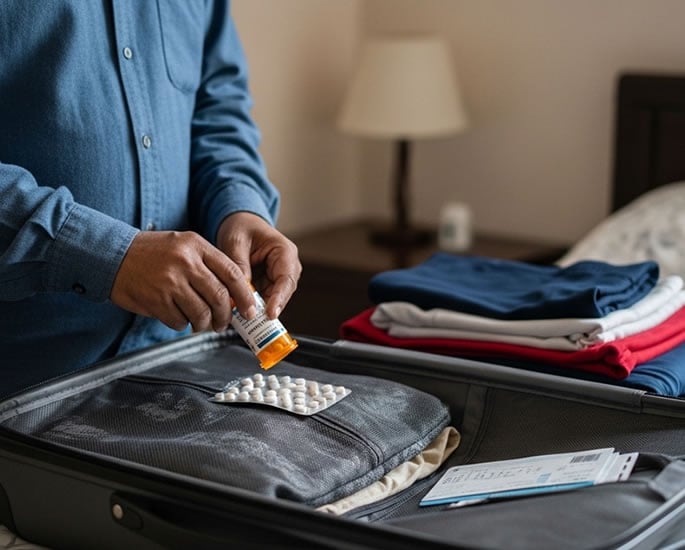
The accessibility of ‘smart drugs’ reveals another layer of the British Asian experience, one that ties back to transnational connections.
While some students turn to the dark web or Bitcoin marketplaces, a significant portion of the supply chain in British Asian communities is domestic.
In South Asia, pharmacy regulations can be looser than in the UK.
Medications that are strictly Prescription Only Medicines (POM) or Class B controlled substances in Britain, such as generic Methylphenidate or Modafinil, can sometimes be purchased over the counter in the subcontinent.
As a result, the “uncle’s suitcase” returning from a wedding in Lahore or Mumbai contains more than just clothes and sweets.
Ishaan* explains: “It’s not seen as smuggling.
“Why pay for prescription fees or risk buying fake pills online when your relative can bring some pills from a chemist in Gujarat for a few hundred rupees?”
However, this creates a dangerous lack of medical oversight.
The Medicines and Healthcare products Regulatory Agency (MHRA) frequently issues warnings about the dangers of imported, unlicensed medicines.
Self-medicating with imported pharmaceuticals removes the safety net of GP supervision.
A student taking unverified pills “from back home” is gambling with potential heart defects, blood pressure spikes, and the risk of counterfeit substances.
The Crash

Perhaps the most insidious aspect of this phenomenon is how the side effects are interpreted through a cultural lens.
Long-term and excessive use of Ritalin and Adderall is linked to severe anxiety, paranoia, insomnia, and heart palpitations.
However, within British South Asian families where mental health literacy can still be low, these symptoms are downplayed.
When a student crashes after a two-week exam binge, exhibiting signs of panic or deep depression, it is rarely attributed to drug withdrawal.
Instead, it is spiritualised.
The trembling hands and paranoia are blamed on Nazar (the evil eye), black magic, or simply “exam stress”.
Kamlesh Patel, a leading voice on substance misuse in South Asian communities, has historically argued that such communities often lack the vocabulary to discuss addiction as a medical issue.
Families may turn to religious leaders for prayers or spiritual healing, completely missing the fact that their child is suffering from a chemical comedown.
This misdiagnosis prevents effective medical intervention.
Reflecting on his final year, Umar* says: “I thought I was possessed.
“I was having palpitations and seeing shadows because I hadn’t slept in over 24 hours.”
“My mum tied a band on my wrist and we did extra prayers. Nobody asked if I was taking anything. We treated a chemical overdose with spirituality.”
Young professionals are entering high-stress careers with pre-existing dependencies and undiagnosed anxiety disorders.
Therefore, they are trapped in a cycle where they believe they are spiritually weak or naturally anxious, rather than acknowledging they are suffering from the physiological fallout of a functional drug addiction.
The conversation around substance misuse in British Asian society has remained stagnant for too long, focused on the visible “failures” of street crime and recreational excess.
Attention now needs to shift to the high-achieving tiers of the community, where a silent epidemic is taking hold.
The use of smart drugs reflects a dangerous over-adherence to them.
It emerges when a generation is conditioned to believe their worth depends entirely on academic performance.
As long as certificates on the wall are valued more than the mental and physical health of those who earn them, an addiction will persist – hiding in plain sight, concealed by the very success it helps to produce.