















































This experience taught her the value of community in poetry
South Asian diaspora poetry continues to be on the rise, and women are at the heart of this movement.
Across the diaspora, female poets are rethinking how verse can respond to pressing questions of identity, memory, migration, and belonging.
They are experimenting not only with language, but also with the poem’s delivery and formal structure.
Many are forging new paths by adapting their work for the digital age, gaining recognition both in literary circles and on social media.
Here are five female South Asian diaspora poets whose voices are actively shaping today’s poetic landscape.
Fatimah Asghar
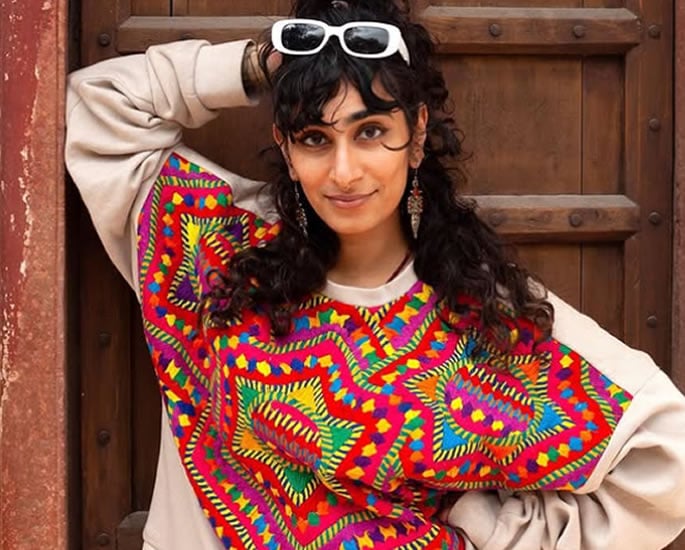
Fatimah Asghar is a US-Pakistani poet, best known for their 2018 debut collection, If They Come for Us.
Their journey into poetry began in college, when they joined a spoken word collective and learned to be vulnerable, sharing their personal writings publicly.
This experience taught Asghar the value of community in poetry, shifting their view of it from a solitary pursuit to a collective practice.
That sense of artistic community continued to shape Asghar’s work, inspiring them to compile the anthology Halal if You Hear Me, which spotlights and unites underrepresented Muslim poets.
Asghar’s writing often explores the complex identity of being both a Muslim woman and part of the South Asian diaspora.
Their innovation is most evident in their experimentation with form, as she frequently challenges traditional poetic structures.
Asghar plays with the visual presentation of their poems, inviting readers to engage with themes as much visually as linguistically.
Alongside poetry, Asghar works in film and television, co-producing the Disney+ series Ms Marvel and writing the episode ‘Time and Again’.
Across both mediums, Fatimah Asghar’s work demonstrates an unwavering commitment to championing the diasporic experience, making space for voices long pushed to the margins.
Tarfia Faizullah
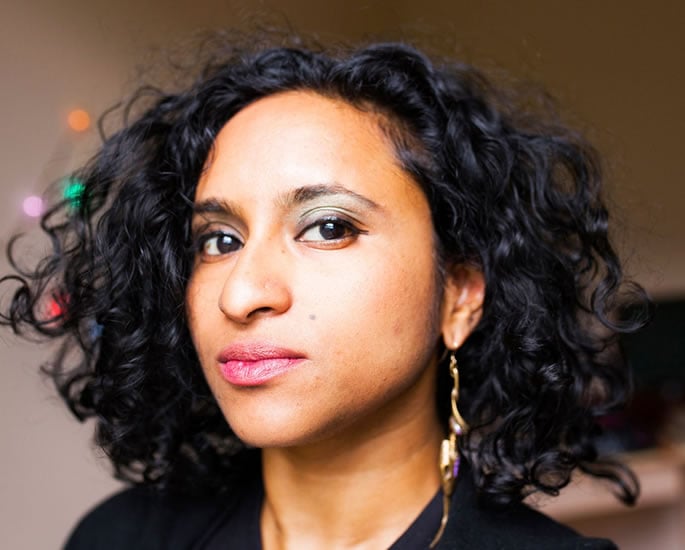
Bangladeshi American poet Tarfia Faizullah has gained recognition for her direct, lyrically intense work, exploring themes of history, memory, and the body.
Two of her collections have drawn particular attention: Seam (2014) and Register of Illuminated Villages (2018).
Faizullah began writing in her second year at university, determined to tell the stories of survivors of Bangladesh’s Liberation War.
She approached this with care, dedicating years to understanding the ethical responsibilities of representing others’ suffering.
Faizullah then spent extensive time in Bangladesh, working closely with the communities she wished to portray, a process that ultimately culminated in the publication of Seam.
Today, her work has been translated into multiple languages and featured in prestigious venues, including the Library of Congress, the Smithsonian, and the Liberation War Museum of Bangladesh.
Her poetry illustrates how South Asian diaspora writers transform visibility into responsibility, shining a light on silenced histories and the oppressed voices of those who came before them.
Bhanu Kapil
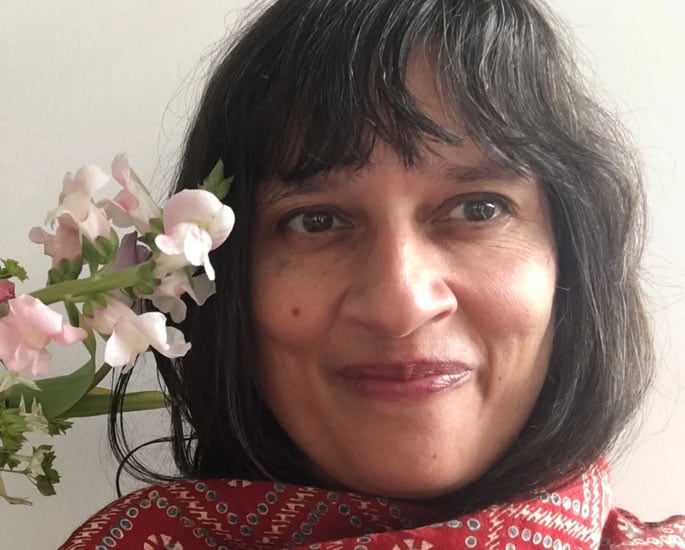
Born in 1968, British-Indian poet Bhanu Kapil has built a longer legacy than other diaspora poets.
Her career began in 2001 with The Vertical Interrogation of Strangers and extends to her most recent collection, How to Wash a Heart (2020). The latter won the T.S. Eliot Prize, cementing her as a leading voice in contemporary poetry.
Kapil recalls how, at barely two years old, her mother would ask her to “sing a poem to the stars” on clear nights, which she would then write down.
These early experiences, alongside her improvisational, blogging, and notebook-based writing, helped shape the distinctive style she is known for today.
Her work explores diaspora, migration, and belonging, with a focus on the body and the boundaries between humans and animals.
Kapil experiments with poetic form to reflect the disjointed experience of migrants and diasporic life, a technique she calls the “diasporic form”, aiming to capture memory even when its fragments resist full recollection.
Through this approach, Bhanu Kapil continues to reshape contemporary poetry, structuring her work to embody the movement, memory, and complexity of the South Asian diaspora.
Divya Victor
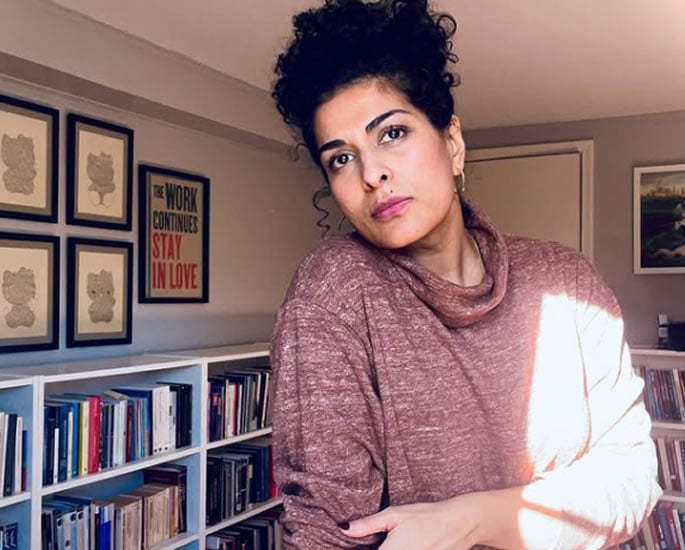
Divya Victor is a Tamil American poet, essayist, and associate professor at Michigan State University, producing work that spans lyric poetry, documentary materials, and critical essays.
She won both the PEN America Open Book Award and the Kingsley Tufts Poetry Award for her 2021 hybrid collection, Curb.
Victor’s poetry focuses on the position of “the voice” within a poem. Rather than speaking into a vague void, she makes her voice’s perspective tangible, giving her writing a distinct focus.
She is particularly interested in how diasporic communities maintain their identity under pressure to assimilate, capturing the pervasive feeling of being “out of place”.
When exploring migration and belonging, Victor often uses motifs of place and positionality.
Maps, coordinates, and documentary elements appear in her work as symbols of attempts to anchor identity.
Her innovative use of physical presence and symbolic imagery creates a striking, visceral portrait of the diasporic experience, enriching and expanding the contemporary landscape of South Asian poetry.
Suhaiymah Manzoor-Khan
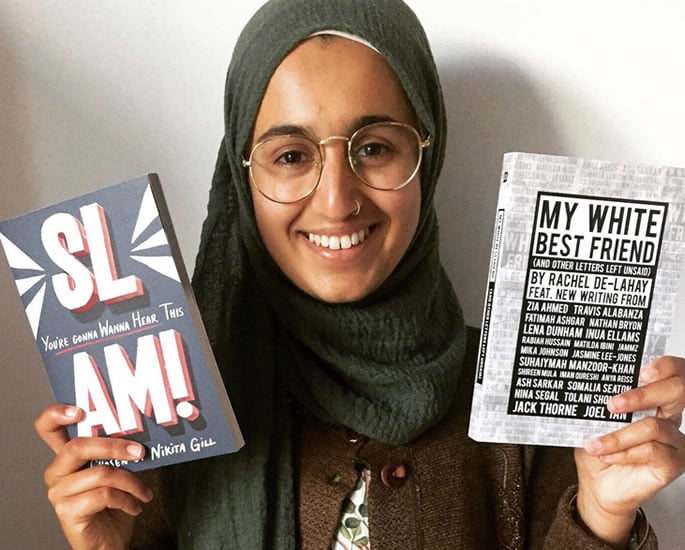
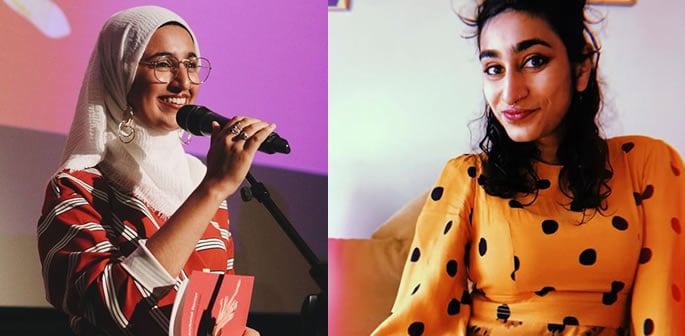
British-Pakistani Suhaiymah Manzoor-Khan may be younger than some of her peers but she has made an impact in the poetry world.
She gained recognition through viral spoken-word performances of her poem ‘This is Not a Humanising Poem’ and her debut collection, Postcolonial Banter.
Manzoor-Khan’s work confronts and disrupts conversations around migrants and people of colour, challenging audiences to think critically about how history and cultural knowledge are shaped by lingering colonial and racist frameworks.
Her poetry merges creative expression with a rigorous Cambridge academic background, producing work that critiques systemic racism, Islamophobia, and the nation-state with intellectual precision.
Its confrontational and provocative tone makes it particularly powerful in spoken-word settings.
By combining sharp political commentary with compelling performance, Suhaiymah Manzoor-Khan’s poetry is unapologetic and demands attention, marking her as an emerging voice in South Asian diasporic literature.
Together, these five poets reveal just how vibrant and evolving South Asian diaspora poetry has become.
They have moved beyond traditional literary spaces, connecting with younger audiences online who are still navigating questions of identity.
By reshaping form, voice, and audience, they reject fixed definitions, insisting that diasporic experience and the poetry it inspires demands complexity.
Despite their distinct styles, each poet tackles migration, faith, identity, war, and loss with immediacy and resonance, making their work feel urgent and alive today.
From printed collections to spoken-word stages and social media feeds, their poetry moves fluidly across spaces, reaching audiences in ways that feel intimate and direct.
In doing so, they not only reshape contemporary literature but also ensure that South Asian women’s voices remain visible, heard, and impossible to ignore.