














































Critics argued the book would “titillate and excite” readers
The history of obscenity in late colonial North Indian Hindi literature reveals a profound struggle between a rising middle-class desire for respectability and a thriving, defiant subculture of erotic print media.
During the late 19th and early 20th centuries, Uttar Pradesh, then known as the United Provinces (UP), became the epicentre of a “moral panic” regarding how love and sexual pleasure were depicted in the vernacular.
Research by Charu Gupta indicates that while moral guardians tried to purge Hindi literature of eroticism to forge a “civilised” national identity, a parallel “ashlil” (obscene) commercial press flourished.
This catered to the very desires the elite sought to suppress.
From male-male desire to inter-religious elopements, these subjects were contested in an era defined by shifting social boundaries and the birth of a new literary ethics.
By delving into these archival records, we gain insight into a world where the “unspeakable” was, in fact, being printed and consumed in vast quantities, challenging the rigid patriarchal norms of the time.
The Rise of ‘Ghasleti Sahitya’
The late colonial period saw a dramatic transformation in print culture, fuelled by rapid technological advances in publishing.
Between 1878 and 1925, printing presses in the UP surged from 177 to 743, reshaping how information circulated.
As Charu Gupta notes, by 1925, UP had overtaken Bengal in vernacular book production, cementing its status as a Hindi literary powerhouse.
This explosion in print created a divided literary sphere that mirrored the social fractures of colonial India.
On one side stood the “high” Hindi intelligentsia, led by figures like Mahavir Prasad Dwivedi, who pushed for linguistic standardisation and moral discipline in literary aesthetics.
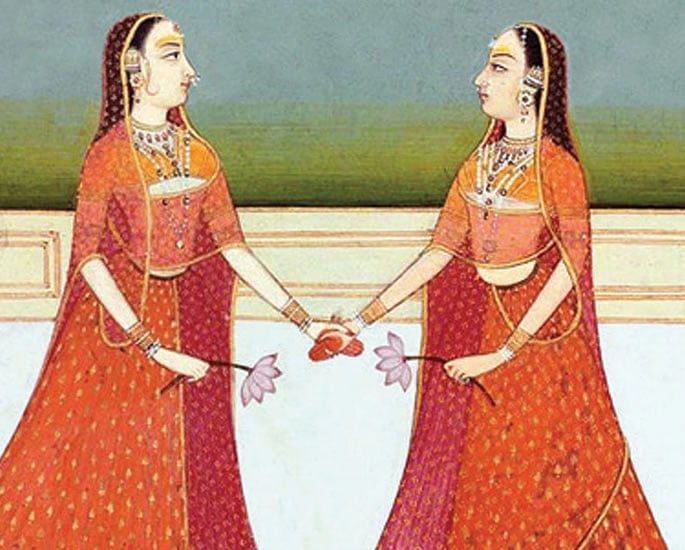
Running parallel was a profitable underground trade in what critics dismissed as ghasleti sahitya or “kerosene literature”.
The term ghasleti was both literal and symbolic, invoking cheap, flammable fuel to imply moral danger and low cultural value.
These publications extended far beyond pamphlets, spanning sex manuals, “amatory” poetry in the Braj dialect, and sensational romantic fiction.
Even after the introduction of obscenity laws under Sections 292, 293, and 294 of the Indian Penal Code, aimed at stopping material deemed obscene, the commercial press continued to flourish.
Printers in Aligarh and Moradabad emerged as key centres for sexual science literature, often cloaking erotic content in medical or scientific language.
One advertisement in the Hindi daily Vartman promoted a book for married couples, claiming it was “full of kam (desire) and shringar (erotic mood)” and featured “pictures which thrilled the heart”.
This surge in erotic consumer culture directly challenged the elite’s vision of “clean” literature, revealing a far stronger public appetite for taboo themes than moral reformers were prepared to accept.
Writing the Unspeakable
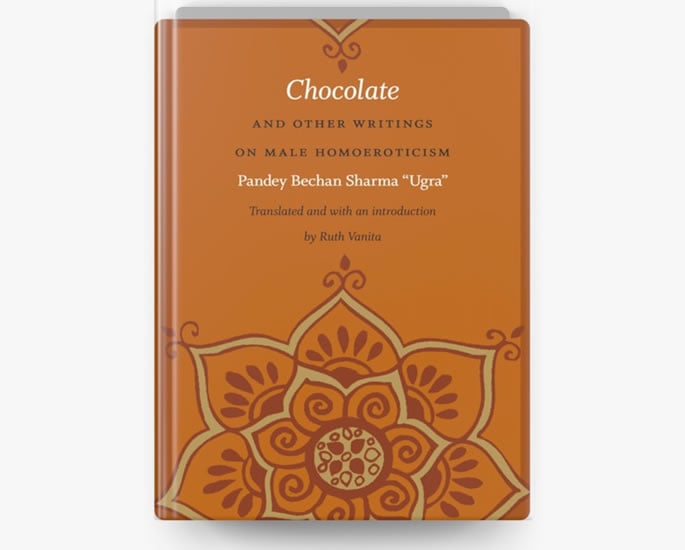
One of the boldest and most controversial challenges to colonial sexual conservatism came in 1924 with Chocolate by Pandey Bechan Sharma.
The story describes an illicit sexual relationship between an upper-class man and a teenage boy.
It centred on the urban phenomenon of “chocolate boys”, beautiful, effeminate adolescents pursued by older men, and adopted a provocative tone that claimed moral critique but often invited desire.
Hindu publicists responded with outrage and sustained condemnation.
A 12-year campaign against Sharma, led by Vishal Bharat editor Banarsidas Chaturvedi, accused Chocolate of promoting “unnatural” acts rather than critiquing them.
Critics argued the book would “titillate and excite” readers, fuelling homosexual desire instead of discouraging it.
Even Mahatma Gandhi entered the debate; after initially criticising the book unread, he later admitted he did not find it inherently obscene.
Gupta’s research suggests Chocolate destabilised the “heterosexual regime” that nationalist leaders were attempting to construct.
At a time when masculine Hindu imagery symbolised resistance to colonial rule, any hint of effeminacy or “sexual inversion” was framed as a national shame.
Yet the book proved commercially unstoppable, selling out two editions within six weeks and reportedly circulating secretly among college students.
This exposed a deep epistemological gap between the “pure” national identity promoted by elites and the lived sexual realities of young men in hostels, parks, and urban clubs.
The Devar-Bhabhi Relationship
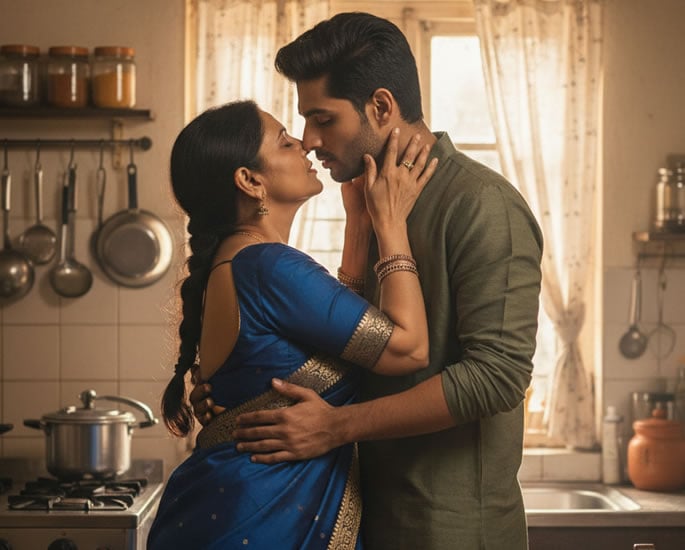
The domestic sphere became a key battleground in regulating sexuality, especially in the relationship between the devar (younger brother-in-law) and bhabhi (elder sister-in-law).
Within the traditional joint family, this bond often offered newly married women rare space for light-hearted, non-hierarchical interaction.
However, as male migration to industrial centres like Kanpur increased, leaving wives isolated in restrictive households, the relationship attracted growing moral suspicion from patriarchal authorities.
Gupta’s study of folk songs and proverbs from eastern Uttar Pradesh reveals a culture deeply aware of the “pleasures of illicit liaisons” between devars and bhabhis.
One song captures this emotional reality:
“Friend, the night of the festival has come, but my dear husband is hovering in foreign land and forgetting me.”
Such loneliness, the research suggests, often pushed women to seek companionship and comfort from younger brothers-in-law.
In response, reformist publications like Chand launched moral campaigns against these interactions, invoking the Ramayana as a model of virtue, where Lakshman famously never raised his gaze above Sita’s feet.
Visual satire reinforced these anxieties.
Caricatures portrayed the devar as a predatory presence, “combing and counting the hairs on his bhabhi’s head”, and warned that such customs would hold society back from walking “on the path of progress”.
Reformers demanded strict prohibition, urging women to avoid speaking to their devar whenever possible, and if unavoidable, to do so with “eyes downcast”.
Yet the sheer volume of books and articles attempting to police this relationship points to how widespread it was in practice.
These interactions offered women subtle ways to challenge their prescribed devoted wife image, carve out moments of leisure, and resist the dominance of husbands and the suffocating “tyrannies of respectability” shaping their daily lives.
Inter-Religious Love
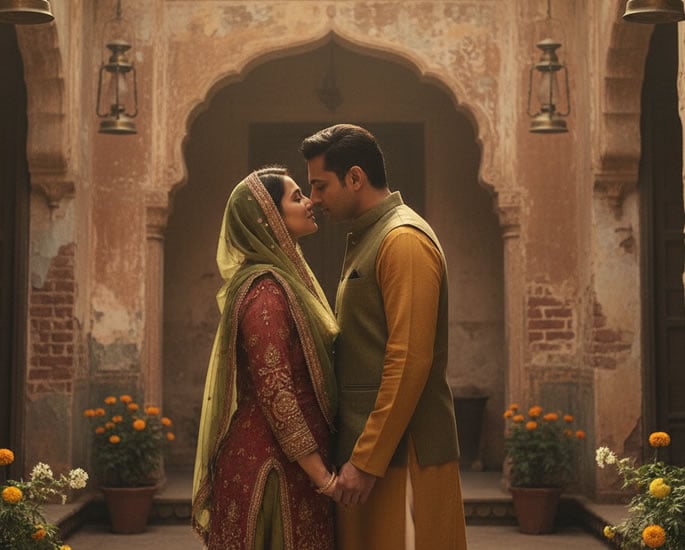
Late colonial literature portrayed interfaith love in sharply unequal ways, often serving as a tool for communal mobilisation.
Gupta’s research highlights a “complete reversal” in Hindu publicists’ accounts depending on gender.
Stories of Hindu men and Muslim women were glorified as heroic triumphs.
The novel Shivaji va Roshanara perpetuated the myth that Shivaji abducted and married Aurangzeb’s daughter, presenting the Hindu hero as a “handsome specimen of manhood” who conquered the heart of the “enemy’s” daughter.
By contrast, relationships between Hindu women and Muslim men were almost always depicted as abductions.
The 1920s saw a flood of inflammatory pamphlets, including Hindu Auraton ki Loot, which claimed Muslims used “strange and inhuman practices” to convert and marry Hindu girls.
Even when women acted out of genuine love or to escape oppressive caste hierarchies, their choices were dismissed as seduction or manipulation.
A notable example came in 1938, when Bimla Devi, daughter of a prominent Hindu lawyer in Kanpur, eloped with a Muslim merchant’s son.
The press covered the story for months.
Despite Bimla’s apparent willingness and conversion to Islam, her father claimed she had been abducted. Both the legal system and media framed the episode as a communal crisis.
Gupta argues that such stories helped construct a “virile” Hindu identity, with community honour tied to the “protection” of women.
Yet the reality was far more nuanced: many women, including widows and those from lower castes, used conversion and elopement to navigate, challenge, and subvert an oppressive social order.
The Feminine Ideal

In the early 20th century, Hindi literature sought to distance the language from what was viewed as a “decadent, feminine and uncivilised” past by systematically “cleansing” the literary canon.
This campaign targeted the Riti Kal tradition of the 16th to 19th centuries, celebrated for its erotic poetry and detailed classifications of heroines.
In this older tradition, Radha was often portrayed as a parakiya, a woman not married to the hero, whose unconventional, sensual love was celebrated over ordinary, domestic life.
With the rise of nationalism, this “sensual” Radha was deemed unsuitable for public consumption.
In works like Ayodhya Singh Upadhyay’s Priyapravas, she was recast as a “patently moral” figure, serving humanity through sacrifice.
The Indian woman was reshaped as a chaste wife and mother, a symbol of purity standing against colonial stereotypes of Indian “derelict sexuality”.
Sexual pleasure came under intense scrutiny, and literary aesthetics became an “exercise in ethics.”
Textbook Hindi literature was deliberately crafted to instil this “new aesthetic taste”, where female chastity was a national virtue.
Yet, Gupta’s research shows that the project of moral regulation was never fully successful.
“Ashlil” material remained at the heart of an emerging subculture, offering entertainment and titillation to audiences indifferent to elite literary ideals.
The “dirty” books, taboo subjects, and unconventional loves of the period demonstrate that the cultural imagination could not be neatly confined within the boundaries of respectability.
The struggle over obscenity in late colonial North India was, at its core, a contest over identity, power, and the authority to define “normal” behaviour.
Hindu moralists and British administrators aimed to build a “civilised” modern nation by purging literature of erotic content, yet their efforts were constantly challenged by a defiant commercial press and individual acts of transgression.
Charu Gupta’s research demonstrates that the creation of a “homogeneous Hindu identity” was repeatedly undermined by the complexities of everyday life.
Whether through the consumption of ghasleti literature, the “illicit” bonds within joint families, or inter-religious romances deemed transgressive, people continually negotiated and subverted the social order.
The so-called “taboo” realms of the past were not marginal; they were vibrant centres of cultural production that refused to be silenced.
This history shows that love and sexual pleasure have always been contested terrains, and the “history of love is also the history of… its transgressions”.
By revisiting these “impossible” loves, we gain insight into the “possible” worlds that morality and nationalist ideals sought to suppress.