

















































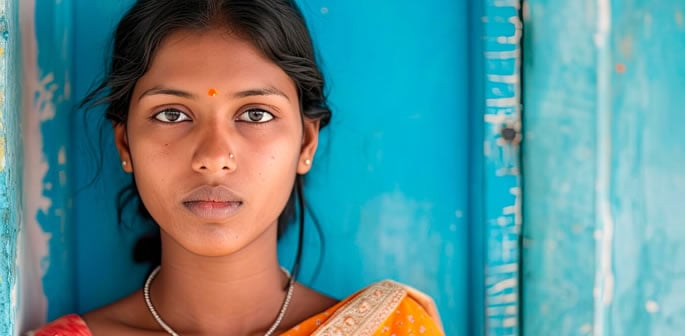
a large portion are victims of circumstance or deceit.
Sex work remains one of the most stigmatised yet pervasive professions in India, particularly within the bustling districts of West Bengal.
A 2016 study by Supriyo Halder, published in the International Journal of Research in Social Sciences, sheds necessary light on the harrowing realities faced by women in the South 24 Parganas district.
The research, titled Problems of Sex Workers: Issues and Challenges, surveyed 1,000 women to dismantle societal assumptions about the trade, revealing a complex web of economic desperation and systemic neglect.
Far from a simple moral issue, the findings present a stark picture of survival where poverty forces women to fluidly move between mainstream labour and the red light districts.
We examine the demographic, economic, and social mechanisms that define the lives of these women.
The ‘Flying’ Sex Worker
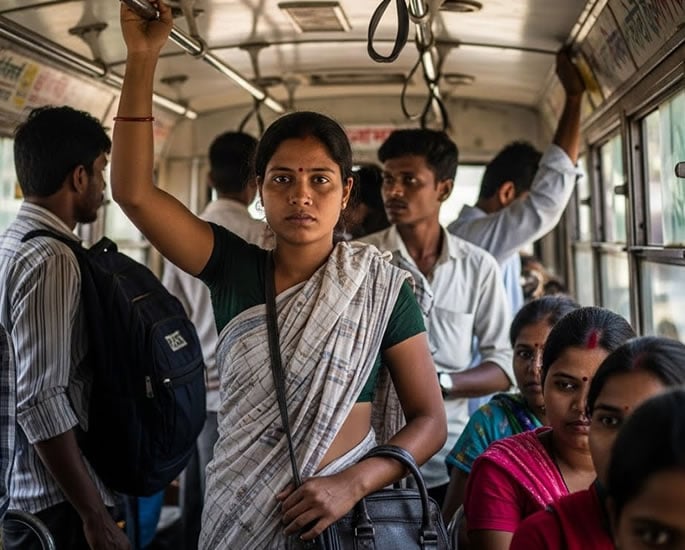
The traditional image of a sex worker residing permanently within a brothel or a designated red-light area does not capture the full complexity of the trade in South 24 Parganas.
The research identifies a significant demographic known as “flying” sex workers.
These women often reside in nearby suburbs or villages, commuting to areas like Tollygunge, Diamond Harbour, or Baruipur only to work during the afternoon or evening.
This mobility allows them to maintain a facade of respectability in their home communities while engaging in sex work to supplement insufficient household incomes.
This fluidity is driven by necessity rather than preference.
The study highlights that many of these women act as sex workers “in order to earn their sustenance”, driven by the closure of factories or the general lack of employment opportunities in the city.
This includes middle-class housewives and students who are unable to make ends meet through other means.
The distinction between a ‘regular’ job and sex work becomes blurred when survival is the primary motivator.
As the study notes: “It is not easy to demarcate women’s work into nearly segregated compartments.”
The motivation for this dual life is almost exclusively economic, rooted in the need to provide for dependents.
According to the research:
“The plight of the flying sex worker shows how poverty can push an individual to such extremes.”
These women are not seeking luxury; they are fighting against destitution.
Halder’s fieldwork reveals that “most of them are in this profession just for the sake of their children, so that their child can have two proper meals a day”.
This finding challenges the narrative that sex work is a detached criminal enterprise, positioning it instead as a desperate extension of the informal labour market where women sell the only asset they have left to ensure their families do not starve.
Demographics and Vulnerability
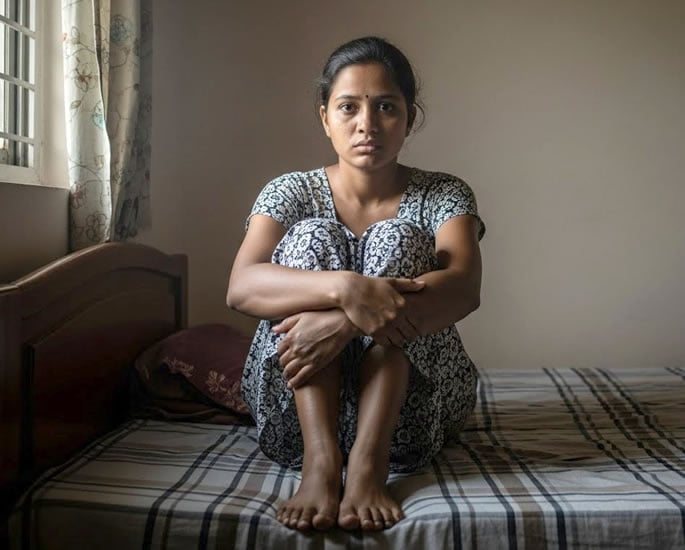
Understanding who these women are is crucial to understanding why they enter the trade.
The demographic breakdown provided in the case study challenges the stereotype that sex workers are exclusively uneducated or from rural backwaters.
While 1.7% of respondents came from rural backgrounds, a significant 25% hailed from urban family backgrounds.
Education levels varied, with 12% having schooling up to class twelve, suggesting that basic education does not grant immunity from the economic pressures that lead to sex work.
The age of entry is a particularly disturbing statistic, with the data suggesting that females start entering the profession significantly in the 15-18 age group, with numbers peaking between 19 and 22 years.
This indicates that young women are rapidly funnelled into the trade when other support systems fail.
The study observes that “poverty and limited education are conditions that push females into labour markets at early ages”, and sex work often emerges as an option after other avenues have been exhausted.
The pathways into the industry are rarely purely voluntary in the traditional sense.
While some women enter on their own accord, a large portion are victims of circumstance or deceit.
The study lists “forced”, “sold”, “cheated” and “devadasi” as modes of entry.
Trafficking remains a critical issue, with blocks such as Kultali, Canning, and Gosaba identified as migration and trafficking-prone areas.
Deceit plays a major role; many are lured by false promises of legitimate employment only to find themselves coerced.
However, the paper clarifies that not all migration is trafficking.
Many move in search of a livelihood, and due to “lack of employment opportunities, child marriage… and social stigmas”, they find themselves in the sex trade.
The line between trafficking and migration for survival is thin, defined by the “poorness of people in this district”.
Violence and the Myth of Protection

Once inside the profession, sex workers in South 24 Parganas face a legal and social environment that is not just indifferent but actively hostile.
The study posits that violence against these women is intrinsically linked to the public perception that they are “criminals and not citizens”.
This dehumanisation strips them of the basic rights guaranteed under Article 21 of the Indian Constitution, despite the Supreme Court’s observation that sex workers are entitled to a right to life.
The perpetrators of violence are not limited to clients or traffickers; the state apparatus itself is often complicit.
The police frequently operate with deep-seated biases.
Halder’s paper notes that there is “little appreciation amongst police of contexts and factors affecting sex workers’ lives”.
When sex workers attempt to report domestic or partner violence, their complaints are often ignored.
Instead of legal recourse, they are offered moralising advice about leaving the profession or settling domestic matters “amicably”.
This effectively leaves them without protection, reinforcing their vulnerability.
Social stigma creates a barrier to justice that is fortified by dangerous myths. One of the most damaging misconceptions highlighted in the research is the belief that “a sex worker cannot be raped”.
This prevailing attitude suggests that because a woman consents to sex for money, she loses the right to consent entirely. This myth ensures that they remain “constantly on the fringes of access and redress to justice”.
Consequently, crimes against them go underreported or unpunished.
The data reveals an uprising trend in crimes against women in the district between 2005 and 2014, yet for sex workers, the legal system remains a closed door.
They are ostracised by society and looked upon in disgust, “without knowing why they are in the profession”, leaving them isolated in their struggle against abuse.
Age and Health Risks

The financial reality of sex work in West Bengal is governed by a brutal inverse relationship between age and income.
The profession places a premium on youth, creating an economic trap that is difficult to escape.
The data illustrates that women in the 15-25 age bracket earn the highest, with monthly incomes ranging between 30,000 to 50,000 rupees.
This is a “significant premium of income to that offered by other informal labour market offer across India”, making it an attractive option compared to the starvation wages of unskilled manufacturing or service sectors.
However, this earning potential plummets as the women age. By the time a sex worker reaches the 35-45 age group, average earnings drop to between 7,000 and 10,000 rupees.
For those over 60, the income falls to a destitute level of 2,000 to 2,500 rupees.
This sharp decline leaves older sex workers in a precarious position, often without savings or social security, having spent their peak earning years supporting dependents.
The “financial incapability of the sex workers make them vulnerable”, and as their market value decreases, their economic desperation increases.
Health risks further compound this economic fragility.
The International Labour Organisation (ILO) and UNDP have emphasised the need for occupational health and safety, yet the reality on the ground is grim.
Sex workers face high risks of HIV and STIs, yet the approach of the authorities is often punitive rather than curative.
The paper recommends prohibiting “mandatory HIV and STI testing of the sex workers following arrest”, suggesting that the current system uses health status as a tool for criminalisation rather than care.
Without proper access to healthcare or the power to negotiate safe practices, and with the constant threat of police harassment, maintaining physical well-being is a constant battle.
The environment is one where “sex work cannot be considered as singular or isolated” but rather a compounding factor in a life already marred by poverty and lack of agency.
The situation in South 24 Parganas serves as a microcosm for the broader struggles of sex workers across India.
Supriyo Halder’s case study dismantles the convenient narrative that sex work is solely a moral failing or a criminal choice. Instead, it exposes a rigid intersection of poverty, gender inequality, and state apathy.
Whether they are “flying” workers trying to feed their children or victims of trafficking trapped in a cycle of debt, these women are engaged in a relentless fight for survival.
The legal framework exists to protect them, yet social stigma renders these laws invisible.
Until society acknowledges them as citizens with rights rather than subjects of disgust, the cycle of exploitation and silence will continue unabated.