


















































Naga tribal leaders intend to give them a "respectful rest"
The University of Oxford has returned the remains of 39 people taken from the Naga community during British colonial rule in India.
A delegation of around 30 people from Nagaland, a mountainous state in north-eastern India, attended a handover ceremony at Oxford’s Pitt Rivers Museum on November 9, where the ancestral remains were formally returned.
Most of the remains are skulls and will be taken back to India, where Naga tribal leaders intend to give them a “respectful rest”. Plans are also in place to bury them beneath a joint memorial in a park in Nagaland.
Museum director Laura Van Broekhoven described the handover as “a historic moment that will be part of stories told to next generations”.
She said the remains were finally on their way home after overcoming “so much red tape everywhere”.
The remains had been held at the Oxford museum for decades before being removed from public display in 2020 as part of what the institution described as a “decolonisation process”.
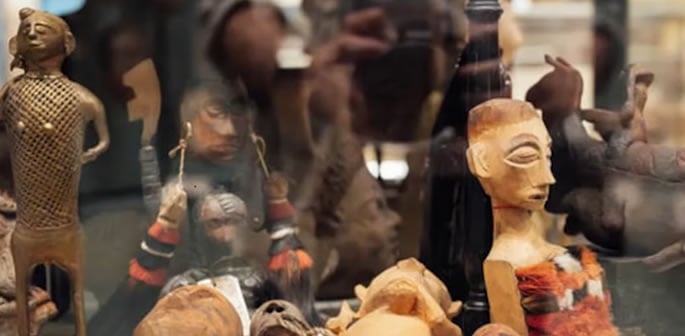
The Pitt Rivers Museum holds more than 6,000 objects associated with Naga culture, believed to be the largest collection of its kind in the world.
Most were acquired during British colonial rule in India and Myanmar, formerly known as Burma.
According to the museum’s website, 219 items in its collection are classified as human remains. They were added between 1910 and 1940, with most collected by two colonial administrators who were also anthropologists.
The museum acknowledges that objects acquired during this period were “frequently confiscated during punitive military expeditions, rather than freely given”.
During their visit to Oxford, members of the Naga delegation also met descendants of one of the anthropologists involved in collecting the remains.
Tribal leader Thejao Vihienuo said: “The manner in which these human remains were taken away from our land leaves much for us to speculate.
“I suspect that nobody would have given the skull of his father or his grandfather as a gift to another person.”
The Naga people historically practised headhunting, with anthropologists documenting how the heads of enemies were taken as trophies.
However, the heads of their own chiefs were also kept at the centres of villages, highlighting the cultural significance attached to ancestral remains.
Founded in the 19th Century, the Pitt Rivers Museum has previously returned human remains to indigenous communities in Australia, New Zealand and the United States.
The latest handover concerns only the 39 ancestral remains and follows a visit by a Naga delegation to Oxford in 2025, when representatives formally requested their return.
The museum announced in September 2026 that the remains would be returned to India.