

















































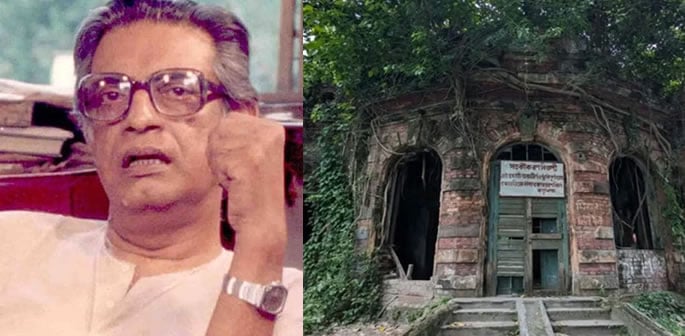
the crumbling structure sparked alarm
Demolition of the ancestral home of filmmaker Satyajit Ray in Mymensingh, Bangladesh, has been halted after intervention by the Indian government.
The decision follows India’s expression of “profound regret”.
India offered to help restore the site as a museum celebrating literary and cultural heritage.
The house belonged to Ray’s grandfather, and esteemed writer Upendra Kishor Ray Chowdhury.
It had been marked for demolition to make room for a new building.
Bangladeshi authorities had planned to build a semi-concrete structure to support the operations of the Mymensingh Shishu Academy.
The academy had been operating from a rented location and sought to resume activities on government-owned land.
The historic property had been lying in disrepair for nearly a decade.
Images and videos of the crumbling structure sparked alarm among historians, cinephiles, and cultural activists across borders.
Public outcry gained momentum, urging both governments to recognise the significance of the location.
India’s Ministry of External Affairs responded swiftly.
In an official statement, the ministry said the property had landmark status as a symbol of the shared literary renaissance of the subcontinent.
They urged Bangladeshi authorities to reconsider the demolition and instead preserve the space.
India also proposed assistance to transform it into a ‘museum of literature’ to honour the Ray family’s legacy.
Sandip Ray, the late filmmaker’s son, said he did not know about the demolition until the news broke publicly.
He recalled how Satyajit Ray once intended to include the house in a documentary on his own father, Sukumar Ray.
That plan was abandoned after an assistant visited the site in 1987 and reported the dilapidated condition of the building.
Sandip said his father was deeply affected by the state of the home and chose not to go ahead with the shoot.
Despite the Ray family’s limited connection with the house in recent years, its cultural value remains immense.
Upendra Kishor Ray Chowdhury, the original owner, was a towering figure in Bengali literature and publishing.
His lineage would go on to shape not only Indian cinema but also children’s literature and satirical writing in Bengal.
District officials in Mymensingh previously defended the decision to demolish the house, citing safety concerns and the lack of structural integrity.
However, following diplomatic engagement, the process was paused.
The Indian government’s willingness to assist in reconstructing the space offers hope that the historic site may still be saved.
Supporters of preservation have welcomed the development, calling it a step toward honouring a legacy that transcends national boundaries.
For now, the ancestral home of Satyajit Ray stands, damaged but intact.