
















































The statement of a victim can be sufficient.
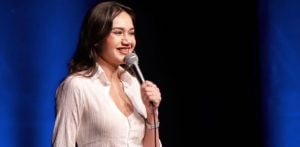
Singer Meesha Shafi has recently filed a formal appeal within the Lahore High Court to challenge a decree.
This legal move follows a court order requiring her to pay 5 million rupees in damages to Ali Zafar.
The original defamation suit was filed by Zafar after Shafi levelled serious sexual harassment allegations against him years ago.
Advocate Saqib Jilani filed the appeal, arguing that the trial court made errors in both law and fact.
A major point raised is that the court decided the case despite the “sexual harassment allegations remaining unresolved on merits”.
Shafi pointed out that her primary complaint is currently still pending before the Supreme Court of Pakistan.
The high court and other bodies previously dismissed her case on jurisdictional grounds rather than on factual merits or evidence.
The appeal maintains that her allegations were a lawful exercise of legal recourse protected under the doctrine of privilege.
She claims the trial court failed to properly evaluate the evidence using the standard of “preponderance of probabilities”.
This standard, according to the appellant, actually supported the overall credibility of her original allegations against the male singer.
Shafi also challenged the interpretation of Section 3 of the Defamation Ordinance 2002 during the recent trial proceedings.
The appeal asserts that Zafar failed to meet the threshold of proving that the statements made were actually false.
Legal experts cited in the appeal argue that an “unproven” allegation cannot automatically be treated as a “false” statement.
The document further criticised the trial court for disregarding settled legal principles regarding testimony in sexual harassment cases.
It argues that the statement of a victim can be sufficient if the court finds the witness to be credible.
Shafi contends the court relied on stereotypical assumptions about how a victim is expected to behave after an incident.
The appeal disputes inferences drawn from the fact that the two parties continued to have social and professional interactions.
Such conduct does not negate the possibility of harassment, especially when the behaviour is subtle or very discreet.
An additional district and sessions judge issued the impugned decree in favour of Ali Zafar on March 31, 2026.
The judge declared that Shafi failed to produce sufficient evidence to prove her claims of harassment.
Meesha Shafi first took to X in April 2018 to allege that Zafar had sexually harassed her multiple times.
Ali Zafar quickly filed a defamation suit claiming the allegations damaged his reputation and caused deep distress to his family.
He originally sought damages of one billion rupees, but the court awarded him a much smaller total sum.
The legal battle between these two high-profile celebrities has lasted for nearly eight years.