














































"we are constantly told to brush it under the rug"
Why do South Asian male survivors of childhood sexual abuse in the UK remain largely invisible within their own communities?
The answer lies in a deeply entrenched cultural framework where rigid expectations of masculinity and the preservation of family honour demand their absolute silence.
For generations, the intersection of gender, ethnicity, and sexual violence has been severely under-researched, leaving minoritised men without a platform to vocalise their trauma.
A groundbreaking 2025 study sheds light on this hidden demographic.
By examining the lived experiences of 11 British South Asian men, the research exposes the unique socio-cultural barriers that actively prevent survivors from disclosing their abuse, seeking mental health support, and pursuing criminal justice.
The Burden of Honour & Shame
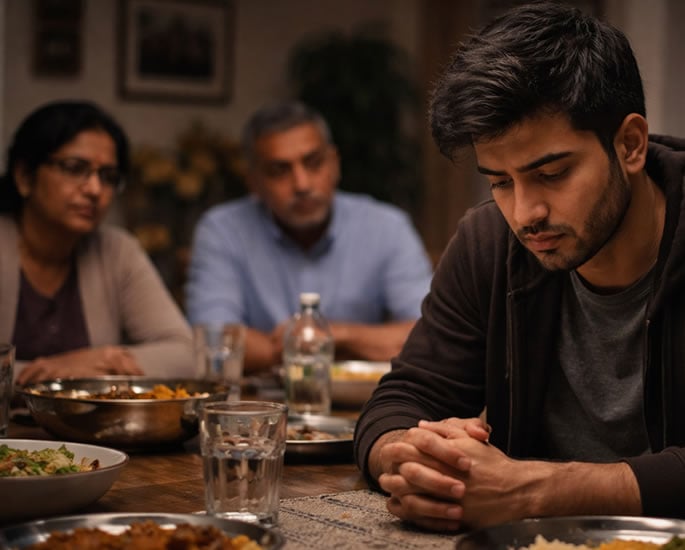
In South Asian communities, the concepts of izzat (honour) and sharam (shame) govern almost every aspect of social behaviour and family dynamics.
These constructs function as powerful mechanisms of social control, placing an immense burden on young boys who are culturally conditioned to be the future providers and protectors of their families.
Disclosing sexual abuse directly contradicts the traditional requirement to project strength, resilience, and success.
The fear of appearing vulnerable prevents many men from speaking out.
Ijaz* explained how community pressure stifled his ability to seek help:
“I’ve always felt from the wider family quite heavy expectations to be successful, to perform well academically and professionally.
“The expectations felt quite heavy, so I don’t feel like opening up about what happened to me, even though I think it’s shaped me as to who I am today.
“It constricted me, the weight of familial expectations where you must be a certain type of man.”
“And being someone who went through sexual trauma as a child doesn’t fit with that because it makes me feel like I’m not the type of man that I should be… you’re not meant to have those kinds of weaknesses or vulnerabilities, whatever, which are holding you back in certain areas of your life.”
When survivors do gather the immense courage to disclose their abuse, families often react with dismissiveness or outright hostility.
The preservation of the family’s standing in the community frequently supersedes the well-being of the victim.
Another survivor, Charan*, recalled how his trauma was downplayed by his own relatives:
“When these things happen, we are constantly told to brush it under the rug as it’s a matter of honour and the honour of the family name.
“It’s something that they don’t want to ruin, for society’s purpose.”
This systemic denial becomes even more complicated when the perpetrator is a family member. Victims are routinely coerced into forgiving their abusers to avoid community scandal.
Reflecting on his mother’s reaction to his disclosure, Ravi* shared a harrowing account of familial betrayal:
“They [the family] ask for forgiveness [from the abuser], you need to find a way to forgive and move on and live like one happy family.
“They just don’t understand that it is not possible. It is not a mistake.”
When Sexual Taboos Collide with Mental Health
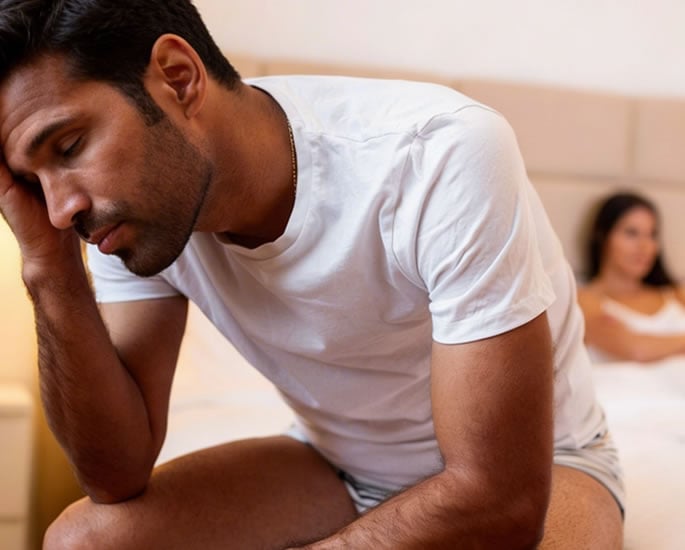
The conservative nature of South Asian communities regarding sex and sexuality creates a uniquely isolating environment for male survivors.
Open discussions about sexual health are virtually non-existent in many traditional households, leaving young boys entirely unequipped to process or even recognise sexual victimisation.
The profound culture of shame surrounding sexuality forces victims to internalise their trauma.
Ijaz detailed how his religious upbringing further complicated his understanding of the abuse he suffered:
“I grew up in a Muslim household… sex was never really spoken about, and the expectation was always no sex before marriage, you shouldn’t have any girlfriends, no masturbation.
“I always associated sexual feelings with a certain amount of shame.
“And I’d always try and suppress any kind of sexual feelings that I had growing up… growing up I never even considered the idea that I could have been vulnerable to sexual victimisation or anything like that.”
These strict cultural parameters also fuel damaging misconceptions about male sexual abuse, frequently linking it to homophobia.
Victims fear that disclosing their abuse will result in their sexual orientation being questioned or mocked by their peers.
Omar* highlighted this exact fear, noting the harsh judgment that awaits those who speak out.
He explained: “If you do mention it, they’re going to look down on you.
“They’re going to think you’re odd. You’re weird, you’re queer or you’re gay.”
“And obviously, these all things are not very… even though as a society we’ve changed and attitudes have relaxed, but especially in the Muslim and Asian community, it’s going to be really embarrassing to bring up something quite personal like that.”
Compounding this isolation is a widespread dismissal of mental health struggles within the community. Psychological distress is frequently viewed as a personal failing or a temporary mood rather than a legitimate medical issue requiring support.
Charan experienced this invalidation firsthand when he attempted to discuss the lingering effects of his trauma:
“I just didn’t feel like I received any support, and even today, like I still suffer from mental health issues, but my parents just constantly tell me to get over it.
“As if it’s a feeling that I can get over and not a mental illness.”
‘Going Undercover’ for Professional Support
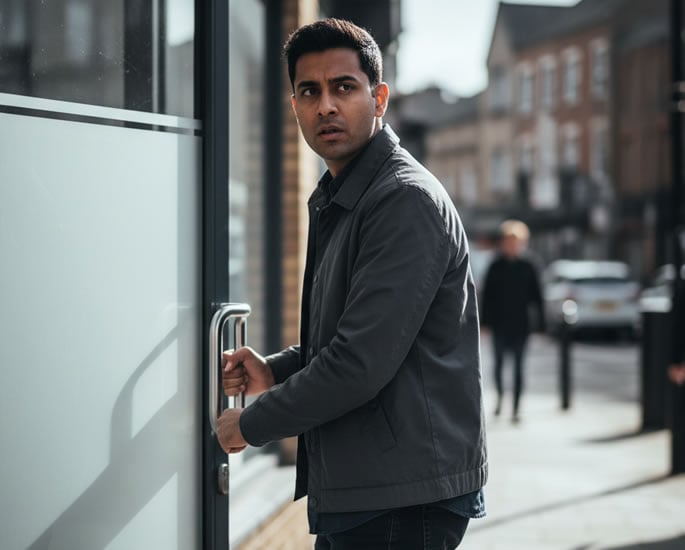
The combination of familial pressure and cultural stigma forces many British South Asian male survivors to live double lives.
Seeking professional help becomes a clandestine activity, hidden from the very people who should be offering support.
The exhaustion of maintaining this facade takes a severe toll on the psychological wellbeing of victims.
Describing the heavy emotional labour required to navigate his healing journey in secret, Charan said:
“To be honest, it felt like [support] didn’t exist because I used to have my sessions with my therapist and then when I would go home, there would be nothing on that topic and it would basically be like me going undercover to go have therapy and then coming back and trying to fake my emotions for the sake of my family.
“It’s honestly hard and it’s exhausting when you’re constantly having to fake a smile and inside, you’re just broken.”
Even when survivors manage to access mental health services, they frequently encounter a profound lack of cultural competence among Western practitioners.
Standard therapeutic advice often clashes heavily with the realities of South Asian family structures, which emphasise collectivism and deep familial bonds.
Ravi expressed deep frustration over the cultural disconnect he experienced during his counselling sessions:
“A White counsellor is never going to understand the dynamics of a BAME family.
“So, when I was having counselling, it’d be a common theme. Just cut off your parents, stop talking to them, walk away from your family.
“Our family dynamics don’t work like that. Even when we get married, we’re connected to the family, we live together.”
Systemic Betrayal
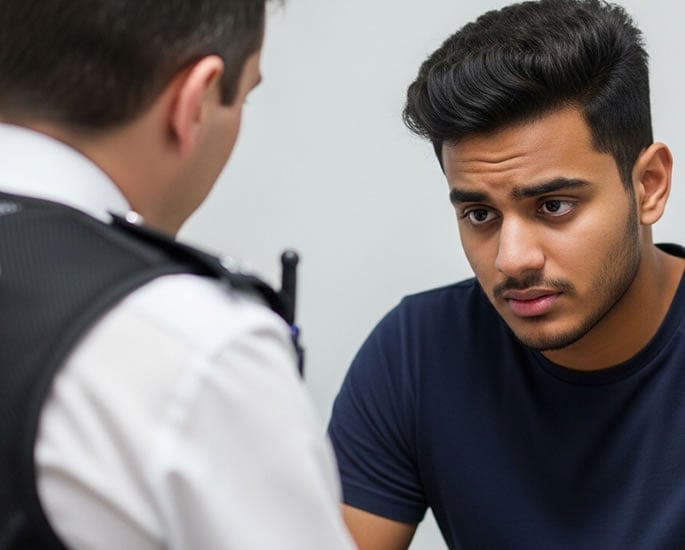
The hurdles South Asian male survivors face extend far beyond their immediate families and therapists. Engaging with the criminal justice system presents an entirely new set of harrowing challenges.
For many, reporting historical abuse to the police feels futile, heavily weighed down by the potential community fallout and the fear of institutional incompetence.
When a survivor decides to involve law enforcement, the resulting family fractures can be devastating.
Amir* found himself at the centre of an intense family conflict after reporting his abuser, leading to profound feelings of guilt:
“I was feeling really bad. I was thinking, ‘What am I doing? I’m breaking the family up’.
“I felt I was breaking the family up because obviously I’ve got emotional ties to my mother, sister, but also to the abuser as well.”
He noted that his extended family actively pressured him to drop the police investigation to handle the matter internally.
Those who do push forward with police reports frequently encounter a system ill-equipped to handle the nuances of their trauma.
The lack of sensitive communication and tangible action from authorities leaves survivors feeling entirely disillusioned.
Sunny*, who reported his abuse as a teenager, experienced severe institutional betrayal that completely eroded his trust in the system.
He said:
“When I look at what has happened, it’s that severe where the police just don’t even care about justice anymore.”
“It just doesn’t even matter to them. And for me, I’d never go to the police again. Because right now, when you look at the police procedure, it works completely against the survivor.”
British South Asian male survivors of childhood sexual abuse navigate a uniquely treacherous landscape, trapped between the trauma of their past and the rigid expectations of their culture.
The powerful social currencies of honour and shame actively suppress their voices, while a widespread lack of culturally competent support services leaves them to manage their psychological wounds in complete isolation.
The systemic failures of both mental health frameworks and criminal justice procedures further validate their fears, proving that the outside world can be just as hostile as the silence within their own homes.
The lived experiences of these men reveal a profound intersection of culture, masculinity, and trauma, highlighting a deeply entrenched societal crisis that continues to thrive in the shadows of the community.