


















































"We’re looking for 'perfect' instead of looking for 'compatible'..."
Sex is everywhere in modern British culture, yet conversations within British Asian communities often remain noticeably quieter.
This silence has fuelled long-standing assumptions about whether British Asians are less sexually active than their peers.
However, the reality is far more complex, shaped by culture, religion, gender expectations and generational change.
Research suggests attitudes toward sex may still lean conservative, but behaviour does not always align with these beliefs.
In an exclusive chat with DESIblitz, several British Asians in their 20s and early 30s shared honest insights into sex, dating and relationships.
Their experiences reveal a generation navigating between tradition and modern expectations while redefining intimacy on their own terms.
Are British Asians Really Having Less Sex?
 The idea that British Asians are less sexually active is often rooted in perception rather than fact.
A 2018 BBC and ComRes survey found more conservative attitudes toward premarital sex and same-sex relationships among British Asians.
However, holding conservative views does not necessarily mean people are less sexually active in private.
Arjun* challenges this stereotype, explaining: “I think it’s a massive stereotype born out of the fact that our community just don’t talk about it.
“Other groups are loud about it; we’re raised with this ‘don’t ask, don’t tell’ policy.
“We’re definitely having it, but there’s still that lingering ‘log kya kahenge’ energy that makes us keep it behind closed doors more than our peers.”
This cultural hesitation means sexual activity is likely underreported, reinforcing outdated assumptions about intimacy within the community.
Attitudes Versus Behaviour in a Changing Generation
 Academic research indicates that South Asians in Britain often report later sexual initiation compared to other groups.
This reflects cultural expectations around marriage, family honour and maintaining a respectable image.
Yet behaviour can differ significantly from publicly expressed beliefs, particularly among younger generations.
Nina highlights how guilt, rather than lack of desire, often shapes sexual experiences for British Asian women.
She says: “It’s not that we’re having less, it’s that the guilt trip is longer.
“Even in 2026, there’s this weird mental barrier for Asian women where you feel like you’re breaking a rule, even if you’re a grown adult with your own mortgage.
“And it’s not a case of we want to have less sex either, a lot of people almost don’t make time for it or prioritise other things like their careers, education or finding a spouse, so casual sex between partners decreases.”
This tension between personal freedom and cultural conditioning creates a complex relationship with sex rather than a lack of it.
Gender, Shame and the Confidence Gap
 Gender plays a crucial role in shaping how sex is experienced and discussed within British Asian communities.
Women often face stricter expectations, leading to limited conversations about sexual health, pleasure and boundaries.
This silence can impact confidence, communication and overall satisfaction within relationships.
Mandeep reflects on this shift, explaining: “Completely.
“In my early 20s, it felt like something you had to hide or something that was ‘naughty.'”
“But now, I’ve stopped viewing it as a ‘shameful’ thing and started seeing it as a form of communication between my partner and me.
“It’s a normal thing which can feel jarring as you’re becoming an adult because it’s not spoken about, and it’s hard even to do it because most of us Asians live with our parents for a very long time and don’t have a lot of privacy.”
These experiences highlight how cultural silence continues to shape confidence, even as attitudes begin to evolve.
From Arranged Matches to Swipe Culture
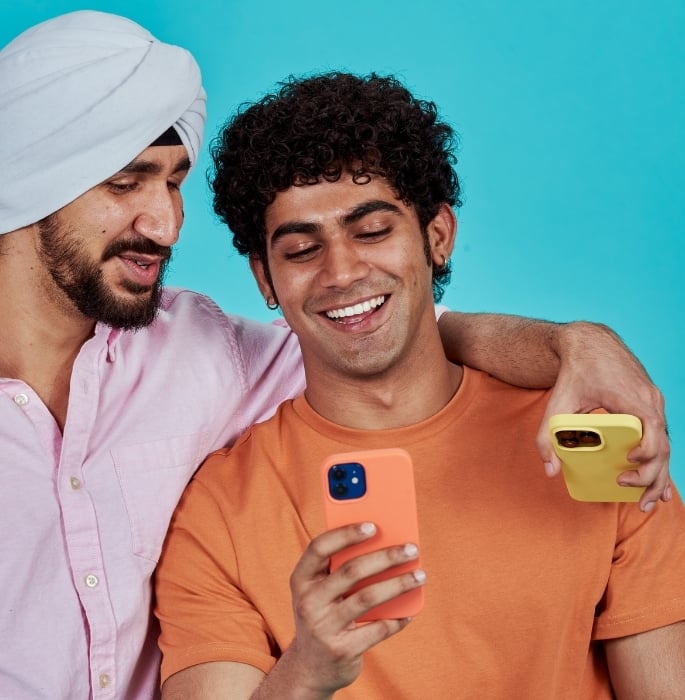 Dating culture among British Asians has evolved dramatically over the past decade.
Dating apps and digital platforms increasingly replace traditional introductions through family networks.
Karam notes this shift, saying: “It’s gone from ‘Who do our parents know?’ to ‘Who is within a 5-mile radius?’
“The community aspect is going downhill.
“We used to meet at weddings or through family friends, where there was a layer of accountability. Now, it’s anonymous.
“That’s changed the respect level massively. People feel they can behave worse.”
This transformation reflects a broader move away from collective matchmaking toward individual choice and convenience.
Social Media, Trust and Modern Relationships
 Social media has introduced new challenges that affect intimacy and relationship dynamics.
Navpreet argues: “Social media has ruined our relationships. Plus, the micro-cheating culture is real.
“Guys liking pictures of ‘Instagram models’ while sitting next to their girlfriends on date night.
“It creates a huge lack of trust, and then of course, because that trust is gone, the last thing you want to do is have sex.”
Davina adds: “You think there’s always a better Asian guy just one swipe away, so nobody puts in the work to fix things when they get slightly difficult.
“We’ve become disposable to each other, which is perfect for those who care about casual sex, but for those of us who are looking for a forever partner, it’s hard.”
Together, these perspectives highlight how digital culture is reshaping trust, commitment and intimacy.
Redefining What a Healthy Sex Life Looks Like
 For many young British Asians, the definition of a healthy sex life is shifting away from secrecy and shame.
Reema* reflects on modern dating expectations, explaining: “The ‘Halal/Sanskari’ dating apps have changed a lot.
“It’s like a hybrid of an arranged marriage and Tinder.
“It’s definitely made dating more accessible, but it’s also made us more picky.
“We’re looking for ‘perfect’ instead of looking for ‘compatible’, which is crazy because nobody’s perfect, and we prolong the whole process, and then I think a lot of people settle with partners who they don’t even love because they feel pressured to settle down.”
Mandeep adds: “It means being with someone who doesn’t make you feel judged for having desires.
“A healthy sex life is one where you can actually talk about what you like without it becoming an ‘issue’.”
Pavan and Karam reinforce this, emphasising that intimacy should not feel like a chore or something too awkward to discuss openly.
The question is not whether British Asians have less sex, but how they experience and discuss it.
Cultural silence, generational shifts and evolving dating norms all play a role in shaping this narrative.
While conservative attitudes may still exist, behaviour is far more nuanced and often private.
Younger generations are gradually redefining intimacy on their own terms, balancing tradition with modern realities.
Differences across religion, ethnicity, gender and personal values make it impossible to generalise one experience.
Ultimately, the conversation is changing, and with it, a more honest understanding of British Asian relationships is beginning to emerge.