


















































"I’m actually considering asking my parents to step in."
Modern dating was meant to offer freedom, choice, and endless possibilities, yet many Desi women are finding it exhausting instead of empowering.
The rise of dating apps and casual culture has shifted expectations, often creating confusion where clarity should exist.
For South Asian women in the UK, this experience is further layered with cultural expectations, family pressure, and personal ambition.
The result is a growing sense of fatigue, where dating feels more like a responsibility than an exciting journey.
Many are questioning whether modern dating aligns with their values, goals, and emotional well-being.
This shift is not about rejection of love, but rather a re-evaluation of how love is pursued in today’s world.
The Burnout of Modern Dating
 For many British Asian women, modern dating no longer feels like an exciting experience, but instead an emotionally draining cycle.
The constant repetition of talking stages, unclear intentions, and inconsistent communication has led to widespread burnout.
Nina’s experience reflects this reality, where emotional investment happens quickly, followed by anxiety and withdrawal.
She explained, “I meet someone, we vibe for a few weeks, and I’m already imagining the Roka.”
Her words highlight how quickly hope builds, only to be followed by disappointment and self-protection.
This emotional rollercoaster can make the entire process feel unsustainable over time.
The idea of having to continuously meet new people and start over adds to the exhaustion.
Many women feel they are putting in effort without meaningful progress, which creates frustration.
When connections do not evolve into something more substantial, it reinforces the feeling that dating is repetitive and unproductive.
As a result, some women begin to disengage entirely, choosing emotional peace over constant uncertainty.
This shift is less about giving up on love and more about preserving mental and emotional energy.
The burnout is not accidental, but a response to an environment that often lacks clarity and intention.
Ghosting, Anxiety and the Talking Stage
 One of the biggest frustrations in modern dating is the infamous “talking stage,” which often lacks structure and commitment.
For many Desi women, this phase creates more anxiety than excitement, as expectations remain undefined.
Nina’s experience captures this perfectly when she said, “I start overthinking every DM, and suddenly, I just can’t do it.”
This overthinking is not uncommon, especially when communication is inconsistent or unclear.
The lack of reassurance often leads to self-doubt and emotional exhaustion, making the process feel overwhelming.
Ghosting has also become a defining feature of modern dating, contributing to a sense of emotional instability.
Instead of clear communication, many people simply disappear, leaving the other person without closure.
Nina admits, “I ghost because the ‘talking stage’ feels like a marathon.”
This highlights how avoidance can become a coping mechanism when emotional fatigue sets in.
Rather than confronting difficult conversations, disappearing feels easier in the moment.
However, this behaviour only reinforces a cycle of disconnection and mistrust.
Over time, it makes genuine connections feel increasingly rare and difficult to sustain.
Career Ambition vs Dating Fatigue
 For many Desi women, career success is no longer secondary to relationships, but a central focus of their lives.
This shift has changed how dating is perceived, often making it feel like an added responsibility rather than a priority.
Sonia’s* perspective reflects this sentiment when she said, “Dating in my 20s feels redundant.”
Her statement captures the growing conflict between personal ambition and the effort required to maintain a dating life.
When energy is limited, women are increasingly selective about where they invest it.
Sonia* further explained, “Most of the guys I meet feel like an extra task or a chore.”
This highlights how dating can feel burdensome when it does not align with one’s goals or values.
Many women are unwilling to engage in long, undefined situations that offer little return on emotional investment.
The expectation to “see where things go” can feel incompatible with structured, goal-driven lifestyles.
As a result, some women are choosing to prioritise career milestones over uncertain romantic pursuits.
This is not a rejection of love, but a demand for relationships that complement, rather than complicate, their lives.
The Pressure of Time and Expectations
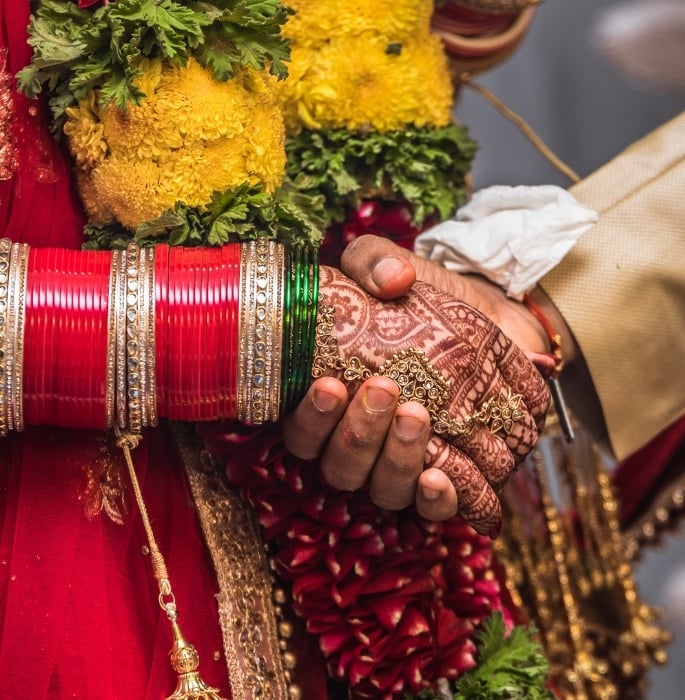 Age and timing continue to play a significant role in shaping the dating experiences of British Asian women, often creating a quiet but constant pressure.
Cultural expectations can intensify this further, making personal timelines feel like they are under scrutiny from both family and community.
Davina expressed this reality when she said, “There’s this specific South Asian pressure where 29 feels like 50.”
Her words reflect how deeply ingrained timelines can influence confidence and decision-making.
This pressure often builds an invisible urgency, even when a woman may feel emotionally or practically unready to settle.
Alongside this, many women are also navigating conflicting expectations around independence and tradition.
Reema* captured this internal tug-of-war when she said, “My parents want the ‘perfect boy’ from a specific background, but on the apps, everyone is so detached from their roots.”
This highlights the challenge of balancing family expectations with modern dating realities.
She added, “I want someone who understands why I can’t just stay out until 3 AM, but who doesn’t expect me to be a 1950s housewife.”
Her words underline the difficulty of finding someone who respects cultural boundaries while also embracing a modern mindset.
This ongoing balancing act can make dating feel even more exhausting, as women are often trying to meet expectations on multiple fronts.
At the same time, Davina expressed a desire for meaningful connection, saying, “I want the partnership.”
However, she also noted that many people in the dating pool seem unwilling to commit, which creates frustration and disappointment.
This mismatch between intention and availability makes it difficult to find genuine compatibility.
Women are often left feeling like they are the only ones investing emotionally and seriously.
This imbalance can lead to feelings of isolation and fatigue.
Ultimately, the pressure of time and identity only intensifies the need for clarity, commitment, and mutual effort in relationships.
Social Media and Red Flags
 In the digital age, social media has become a significant factor in how relationships begin and evolve.
For many Desi women, online behaviour is now a key indicator of character and intentions.
Navpreet highlighted this when she said, “The ‘following’ list is a huge red flag for me.”
This reflects a growing awareness of how digital habits can impact real-world relationships.
Behaviour that may once have gone unnoticed is now under greater scrutiny.
She also pointed out, “If I’m talking to a guy and his Instagram is just a catalogue of hundreds of random women, I’m out.”
This demonstrates how social media patterns are often interpreted as a lack of respect or discipline.
The concept of “micro-cheating” has further complicated modern dating, blurring the lines of acceptable behaviour.
Constant scrolling, liking, and engaging with multiple profiles can feel unsettling for those seeking genuine connection.
As a result, many women are choosing to walk away early when red flags appear.
This reflects a desire for authenticity and respect in an increasingly superficial digital dating landscape.
Reclaiming Control Through Clarity
 With growing frustration with modern dating, many Desi women are reconsidering their approach to relationships.
Some are stepping away from dating apps altogether, while others are exploring alternative methods of meeting partners.
Pavan shared her perspective, saying, “I’ve essentially retired from the apps. I’m done.”
Her decision reflects a broader shift towards prioritising mental well-being over constant exposure to rejection and inconsistency.
This growing trend highlights a desire for more intentional and meaningful connections.
Pavan also said, “I’m actually considering asking my parents to step in.”
This statement reflects a renewed openness to traditional approaches, particularly when modern methods feel ineffective.
Arranged introductions offer clarity from the outset, removing ambiguity and aligning expectations early on.
For many, this provides a sense of security and direction that dating apps often lack.
It is not a step backwards, but rather a strategic move towards clarity and purpose.
Ultimately, reclaiming control means choosing what aligns best with one’s values and emotional needs.
Modern dating has evolved rapidly, but not always in ways that support emotional well-being or meaningful connection.
For many Desi women, the experience has become increasingly complex, shaped by burnout, cultural expectations, and digital behaviours.
Rather than continuing to navigate uncertainty, many are choosing to step back and reassess what they truly want.
This does not signal the end of dating, but rather a shift towards more intentional and fulfilling approaches.
Love remains a priority, but only when it aligns with respect, clarity, and shared values.