

















































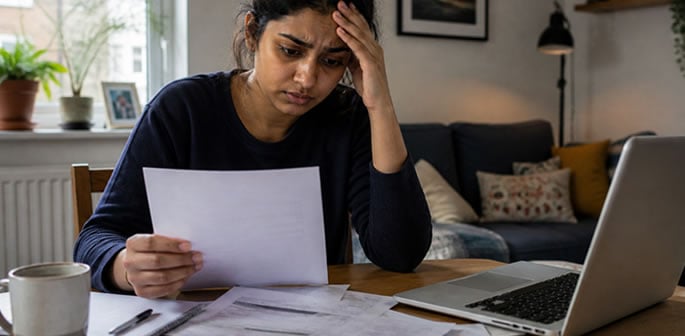
"you shoulder the responsibility for every bill"
New research has found that people living alone in the UK are spending nearly £1,250 a month on bills, and that is before considering money for socialising or holidays.
The study by Aviva highlights the financial strain facing single-occupant households as living costs remain high.
Adults who are single or live alone spend just over £630 a month on essentials, including food, transport, council tax and utilities.
When rent or mortgage payments are added, this rises to around £1,100 per month per person.
Additional costs such as broadband, mobile phone bills, insurance and subscriptions push total monthly spending to almost £1,250.
These costs come before any money is taken into account for socialising, holidays or hobbies.
Aviva’s survey of 2,100 UK adults suggests many single people are struggling to manage unexpected costs.
More than half (58%) say they are not confident they could cope with an unexpected but necessary bill of £850, such as a car repair or boiler breakdown.
Savings levels among those living alone also remain low.
More than a third (37%) say they do not save anything regularly.
Among those who do save, just over four in ten (42%) contribute to a Cash ISA.
Just over one in five (21%) use a Stocks and Shares ISA.
When asked how they would use an extra £100 a month, 20% said they would put it into a regular savings account.
A further 15% said they would use it to boost their emergency fund.
Alistair McQueen, Head of Savings and Retirement at Aviva, said: “When you live alone, you shoulder the responsibility for every bill that hits the doormat.
“Our research shows that more than £1,250 a month is already committed for many single people, and nearly six in ten don’t feel confident they could cope with an £850 emergency bill.
“That helps explain why saving can feel so hard.”
“However, even small, regular amounts set aside can still make a meaningful difference to people’s confidence and financial resilience over time.
“Our data shows that people living alone don’t necessarily spend much more on essentials than others do but they also don’t benefit from sharing costs either.
“That gap is what makes saving more difficult and it’s harder to bear the cost of any financial shocks.”