



























"I am standing here as your MSP now with care."
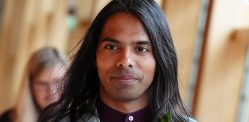
A transgender Tamil immigrant has become the first person elected to the Scottish Parliament without a permanent visa to remain in the UK.
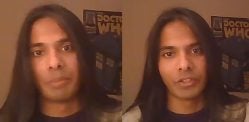
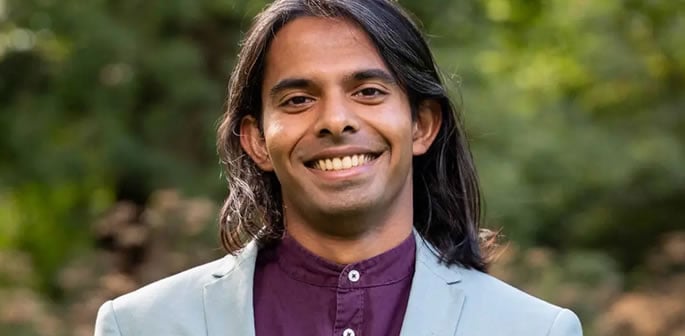
Q Manivannan, who identifies as non-binary and uses they/them pronouns, was elected as an MSP for Edinburgh and Lothians East for the Scottish Greens.
The anthropologist and poet reportedly appealed to colleagues for £2,089 to secure a temporary graduate visa.
The visa would allow them to continue living and working in the UK for another three years while earning the MSP salary of £77,711.
According to reports, Manivannan told colleagues the extension would provide time to save the £5,047 needed for a global talent visa application.
The self-described “queer Tamil immigrant” was able to stand in the election after the Scottish National Party government changed Holyrood candidacy rules in 2025.
Previously, only individuals with indefinite leave to remain could become MSPs. The updated legislation allows people with any form of leave to remain, including student visas, to stand for election.
Born in Tamil Nadu, Manivannan has spoken about their connection to the region’s “significant history of resistance, of social justice, of ecological justice, being inextricable from social justice”.
After completing an undergraduate degree in Delhi, Manivannan moved to Scotland in 2021 to study for a PhD in international relations at the University of St Andrews.
They were elected under Holyrood’s proportional representation system after the Greens secured three seats in the Lothians region. The party ranked Manivannan third on its regional list.
Overall, the Scottish Greens won a record 16 MSPs, including two transgender representatives.
Speaking to supporters at the Edinburgh count, Manivannan said:
“My name is Dr Q Manivannan. I am a transgender Tamil immigrant. My pronouns are they/them.
“I am to some in this country everything that the hateful despise, and I am standing here as your MSP now with care.
“They say politics is the art of the possible. A politics of care expands what is possible for everyone left behind, pushed out or never invited in.”
On social media, immigration campaign group Migration Watch UK criticised the situation:
“Britain is almost unique in allowing Commonwealth nationals not just the right to vote in our elections, but also to stand as candidates.
“Indian migrant Dr Q Manivannan, who arrived in Britain on a student visa, is now a politician in Scotland pushing for the break-up of Britain.”
A Scottish Greens spokesperson said: “The Scottish Greens are proud of our record election result and to have Q elected to represent Edinburgh and Lothians East.
“The Scottish Parliament rightly and explicitly chose to permit everyone with the right to live here to stand in elections, including new Scots on visas.
“Q is on a valid visa with the right to work and live in Scotland, and is a Commonwealth citizen.”
“The UK’s visa system is needlessly expensive and hostile, and we are determined to replace it with one that welcomes people with care rather than throwing up hurdles and barriers.”
Alongside its success in Scotland, the Green Party of England and Wales gained hundreds of council seats in local elections across England.
The party took control of Hackney Council for the first time, gained Norwich City Council and saw two Green mayoral candidates elected in London.
However, it also lost seats in several affluent London boroughs and traditional working-class areas in northern England.
Critics claimed party leader Zack Polanski had failed to adequately address concerns over anti-Semitism within the party, which some argued affected voter support.