

















































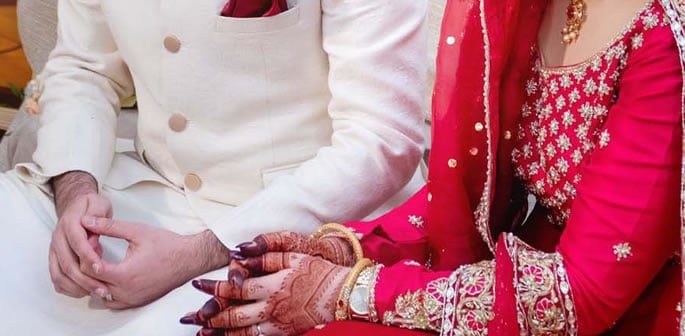
“They want to protect the tribe”
Why do first-cousin marriages remain central to family life in the British-Pakistani community, despite growing medical concerns?
The answer lies in a complex mix of cultural tradition, financial security, and deeply rooted family networks.
Consanguineous marriage, which refers to unions between close relatives, remains a widely debated issue in the UK, particularly within parts of the British-Pakistani community in cities such as Bradford.
While fewer than 0.05 per cent of white residents in Bradford marry a cousin, the rate among the city’s Pakistani population is estimated to be between 40 and 60%.
In some highly concentrated neighbourhoods, community leaders say that figure can rise as high as 90 per cent.
To understand why these marriages remain so common, it is important to look beyond health concerns and examine the historical, cultural, and social systems that continue to sustain them.
For years, the issue remained largely unspoken in wider British society, often avoided because of fears around causing racial offence.
Now, changing demographics, evolving patterns of integration, and growing public health evidence have pushed the discussion firmly into the mainstream.
Cultural Roots of Cousin Marriage

To understand why cousin marriage remains common in modern Britain, it is important to look at the social structures of rural South Asia.
At the centre of this is the biradari system, a traditional kinship network built around brotherhood, family loyalty, and mutual support. For generations, it acted as both a social and economic safety net.
In regions where state welfare systems were limited or non-existent, extended family networks provided financial security, physical protection, and stability through shared land and agriculture. Marrying within the family helped strengthen those ties.
When families migrated to the UK, the biradari system came with them.
For many, cousin marriage is viewed positively. It is seen as a way to preserve family unity, maintain trust, and help younger generations start married life with stronger financial security.
One Bradford resident told GB News that arranged cousin marriages often happen to protect “marital rights towards certain lands and different things”.
Keeping wealth, property, and inheritance within the family remains a major reason these marriages continue.
Critics, however, argue that bringing this tribal-style structure into Britain can create deeply insular communities.
Conservative Muslim activist Hassan Imam links consanguineous marriage directly to this framework. He argues that hyper-local family networks can deepen the divide between some communities and wider British society.
“They want to protect the tribe”, Imam said, suggesting that this inward-looking mindset can limit social integration.
He also argued that highly closed systems can shape community behaviour in harmful ways, including historically influencing the worldview behind localised criminal networks such as grooming gangs.
By placing the internal clan above everything else, Imam suggested that people outside that family structure “might be seen as a fair game”.
While family duty and financial stability remain the main reasons for cousin marriage, the social isolation created by these closed networks continues to raise concerns about wider community cohesion.
What are the Issues?

The most serious public health concerns around cousin marriage centre on genetics.
Every person carries genetic mutations, but most are harmless because they are recessive. Problems usually only arise when a child inherits the same faulty gene from both parents.
Because close relatives share a larger proportion of DNA, the chances of both parents carrying the same recessive mutation are significantly higher. This increases the risk of autosomal recessive disorders, which can cause severe physical disabilities, lifelong health conditions, and intellectual impairments.
This is the main medical argument against first-cousin marriage.
In Bradford, where cousin marriage remains common within parts of the Pakistani community, more than half of Pakistani children are born to related parents.
As a result, genetic disorders linked to consanguineous marriage account for up to half of all South Asian infant deaths in the city.
The landmark Born in Bradford study, which tracked thousands of local families over several years, provided some of the clearest evidence on the issue.
Researchers found that marrying a first cousin doubles the absolute risk of serious congenital abnormalities.
In the general population, the risk sits at around 3 per cent. Among first-cousin marriages, it rises to approximately 6 per cent.
That means the majority of cousin marriages still result in healthy children. However, when these marriages happen repeatedly across generations and within large populations, the long-term impact becomes far more significant.
The increased number of inherited disorders places pressure on families, healthcare services, and local support systems, particularly in areas where the practice is highly concentrated.
These medical realities have pushed the issue beyond cultural debate and into politics.
Conservative MP Richard Holden recently called for a nationwide ban on first-cousin marriage, arguing that the practice should be outlawed on health grounds alone.
He believes the case for intervention rests on three areas: public health, social integration, and personal liberty.
From a health perspective, Holden argues the evidence is strong enough to justify legal action.
Socially, he believes highly insular marriage patterns can prevent communities from mixing with wider British society, reinforcing separation rather than integration.
He also raised concerns about consent, questioning how much personal choice exists when marriages are arranged by older relatives and family expectations carry significant weight.
Holden added: “It’s about freedom for individuals within these communities to marry who they’re in love with, rather than who they’re told that they have to marry for the good of the family.”
Religious Precedent and Education
Despite the medical evidence, calls for a blanket ban on cousin marriage face strong resistance from civil liberties campaigners, religious leaders, and many healthcare professionals.
For critics of a ban, criminalising first-cousin marriage would be a heavy-handed response that unfairly targets specific minority communities, particularly British Pakistanis.
Marrying a first cousin is already legal under British civil law through the Marriage Act 1949.
Broadcaster Fahima Mahmood argues that this historical context exposes a clear double standard:
“Our own monarchy was built on it.
“Queen Victoria married her cousin Prince Albert, and even our late Queen Elizabeth II and Prince Philip were related as cousins.
“If it was acceptable at the very top of society for centuries, why suddenly criminalise it now?”
Mahmood accepts that the medical risks are real, but argues they are often presented without enough context.
She pointed out that the increased risk of congenital disorders, while important, remains statistically manageable and should be treated like other recognised pregnancy risks rather than through criminal law.
Mahmood compared it to older mothers having children, where the medical risks are also higher, but society responds with healthcare support and monitoring rather than legal bans.
She also highlights other preventable health conditions, such as fetal alcohol syndrome disorder, which place a far greater financial burden on the NHS without leading to calls for criminalisation.
For opponents of a ban, this raises an important question about consistency. If the focus is truly public health, they argue, why is cousin marriage treated differently?
There are also major practical problems with enforcing a ban.
Defining the legal boundary of who qualifies as a cousin would be difficult, particularly across large extended families and undocumented family histories.
In many cases, records may be incomplete or difficult to verify, creating major administrative complications.
More importantly, British law only applies to marriages registered through the civil system.
Many couples within these communities are married only through an Islamic nikah ceremony and may never formally register the union with the state.
Critics warn that criminalisation would not necessarily end cousin marriage. Instead, it could drive the practice underground, leaving women and children with fewer legal protections around divorce, inheritance, and financial rights.
The religious argument is also far more complex than many assume.
Some people in Bradford believe cousin marriage is a required part of Islam, but religious scholars say that is not the case.
Hassan Imam argues there is no Islamic obligation to marry within the family and that historical Islamic teaching often encouraged the opposite.
He points to the 12th-century Muslim scholar Ibn Qudamah, who explicitly “made the link between intelligence and marrying relatives.”
Imam says Islamic precedent often supported marrying outside the family to promote stronger and healthier future generations.
Because of this, many health advocates believe education is more effective than criminalisation.
Rather than using the law to punish families, they argue the focus should be on better theological understanding, stronger community conversations, and targeted genetic counselling.
The goal, they say, should be to give young couples clear medical facts and genuine personal choice, rather than forcing decisions through fear of punishment.
Cousin marriage among British-Pakistanis sits at the intersection of culture, health, religion, and personal freedom, which is why the debate remains so difficult to resolve.
While some say it represents trust and stability, others say it raises serious concerns about inherited illness.
The issue cannot be reduced to simple headlines or political slogans.
A blanket ban may satisfy calls for action, but many argue it would ignore the deeper social structures that keep the practice in place.
Real change is more likely to come through education, honest community dialogue, and access to genetic counselling than through criminalisation alone.
As younger British Asians gain greater financial independence and wider social networks, traditional family systems are already beginning to shift.
What was once treated as an untouchable taboo is now being openly questioned, both inside and outside these communities.
The challenge moving forward is not simply whether cousin marriage should continue, but whether the next generation has enough information, support, and personal freedom to decide for themselves.