

















































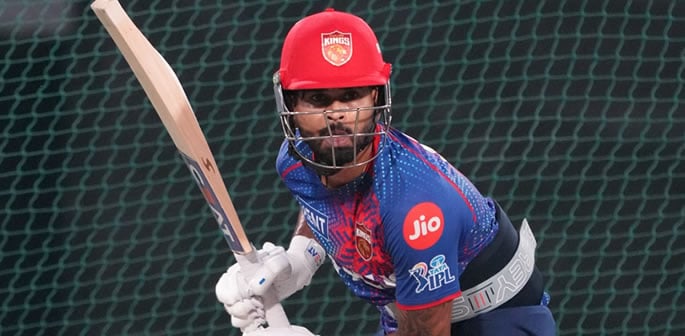
Since 2020, Iyer has regularly contributed in the middle order
Shreyas Iyer’s IPL 2026 performances have once again placed him among the most consistent batters in the tournament.
His ability to control innings while maintaining a high scoring rate has stood out across matches.
Despite this, his absence from India’s T20I setup continues to generate discussion. The situation has drawn attention from analysts and fans, particularly as his performances build across the season.
Discussions around Shreyas Iyer’s performances have also gained attention among British South Asian cricket audiences who closely follow the IPL.
This is far from a sudden rise.
Over the last few IPL seasons, Iyer has repeatedly delivered in pressure situations, building a reputation as one of the league’s most dependable middle-order batters.
Whether stabilising an innings or guiding a chase, he has often looked comfortable when matches become tense.
However, selection at the international level involves multiple factors beyond individual form. Team balance, competition for places, and evolving strategies in T20 cricket all influence decisions.
As Shreyas Iyer’s IPL 2026 campaign continues to unfold, the debate highlights a broader question. How are performances valued in modern cricket, and where does he fit within India’s T20 structure?
Shreyas Iyer’s IPL 2026 Form in Focus
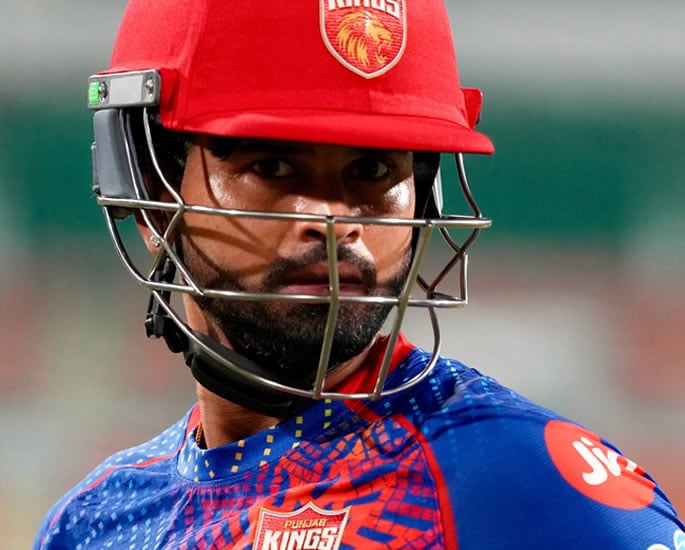
Shreyas Iyer’s IPL 2026 campaign has continued to impress as the tournament has progressed. Across his first 10 matches, he has scored 328 runs at an average of 54.67, alongside a strike rate of 165.66.
Those numbers stand out even more given Iyer’s role at number four, a position where players are expected to steady the innings while keeping the scoring rate moving.
Several of Iyer’s standout innings have come in tense run chases, reinforcing his reputation as a calm and dependable middle-order batter under pressure.
Importantly, this form is not limited to a single season.
In the 2025 IPL, Iyer scored 604 runs at a strike rate above 175 and across his IPL career, he has now surpassed 4,000 runs.
These figures position him among the more dependable performers in the league. They also contribute to the ongoing discussion around his absence from India’s T20I plans.
Consistency Beyond a Single Season
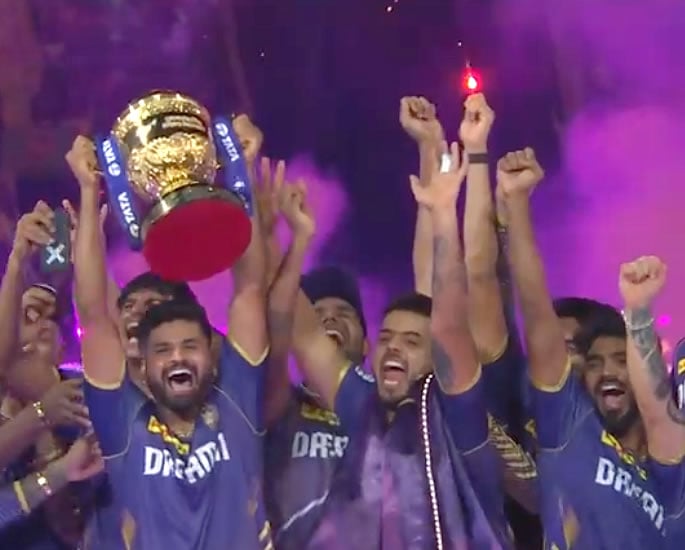
The discussion around Shreyas Iyer’s performances gains further weight when viewed over a longer period. His performances across multiple seasons suggest reliability rather than a short-term rise.
Since 2020, Iyer has regularly contributed in the middle order, adapting his game to different match situations. His strike rate has improved over time, particularly in the last two seasons, reflecting a more aggressive approach.
In the 2024 IPL, he played a leading role in guiding the Kolkata Knight Riders to the title. This was followed by another strong season in 2025, where he combined consistency with a higher scoring rate.
This progression highlights a player who has adapted to the demands of modern T20 cricket.
It also raises questions about how sustained franchise performances are evaluated in the context of international selection.
Statistics offer one perspective, but they do not fully capture the complexity of team composition. Selection decisions often depend on specific roles rather than overall numbers alone.
India’s T20I Setup and Competition
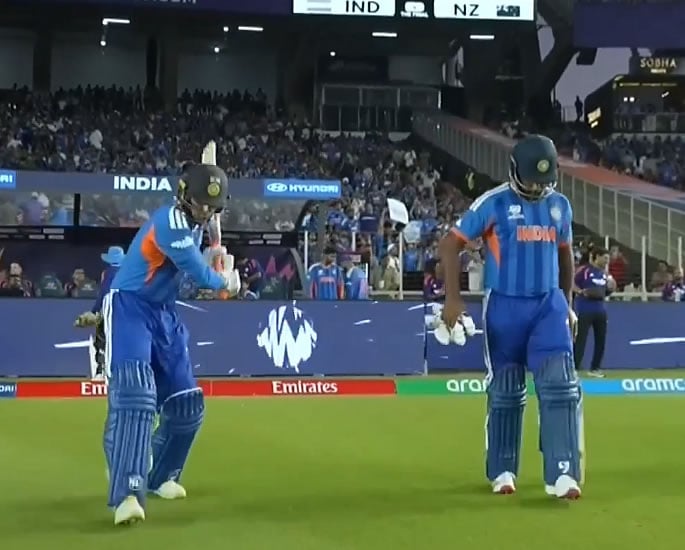
India’s T20I setup currently features intense competition in the middle order, with players such as Suryakumar Yadav, Tilak Varma, Rinku Singh and Shivam Dube all offering different strengths suited to specific match situations.
The team has increasingly prioritised flexibility, with an emphasis on players who can accelerate scoring from the outset. This approach has influenced selection choices, particularly in the shortest format.
In this context, Shreyas Iyer’s performances add another dimension to the discussion. His ability to control innings contrasts with the aggressive intent favoured in some team combinations.
That debate has only intensified as India continues to reshape their T20 setup around aggressive scoring and flexible middle-order options.
Former cricketers, including Aakash Chopra and Sanjay Manjrekar, have also backed Iyer’s inclusion, pointing to his consistency and ability to control the middle overs in high-pressure situations.
That is what makes Iyer’s situation so interesting. The debate is about whether his style fits the direction India’s T20 setup is moving towards.
Why IPL Form Does Not Always Translate to Selection
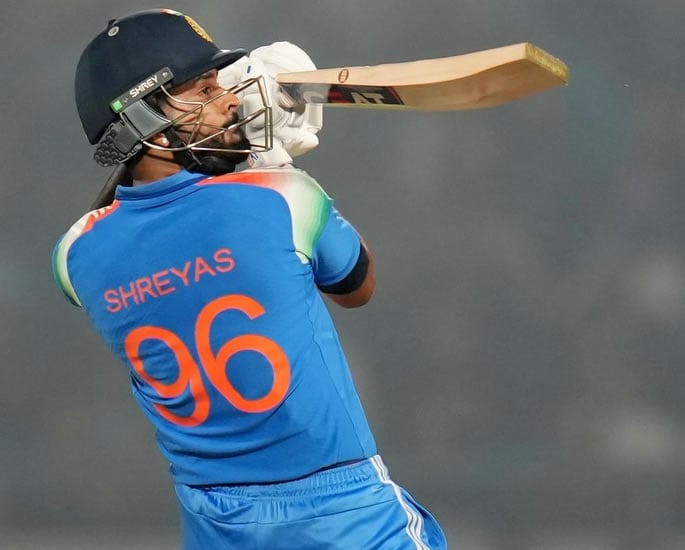
While Shreyas Iyer’s performances strengthen his case, selection in international cricket is rarely based on numbers alone. Team composition in T20 cricket often prioritises specific roles over individual consistency.
India’s approach in recent years has leaned towards players who can accelerate scoring immediately, particularly in high-pressure phases.
This has led to a preference for multi-dimensional batters who can adapt quickly to different match situations.
Former India cricketer Zaheer Khan addressed this aspect, stating:
“First, being part of the T20 setup will be on his mind.
“He needs to focus on making an impact as a player.”
“Once you are in the squad, then the rest depends on how the team management looks at things.”
This perspective highlights the structured nature of selection. It suggests that performance must align with tactical requirements rather than existing independently of them.
In this context, Shreyas Iyer’s contributions raise a broader question. Is consistency in a defined role enough, or does the modern T20 setup demand a different skill set altogether?
A Divided Debate

The discussion around Iyer’s place in the T20I setup reflects a wider divide among analysts regarding how players should be evaluated.
Former India opener Virender Sehwag also praised Iyer’s influence in the middle order during the early stages of IPL 2026. Speaking to Cricbuzz, Sehwag said:
“Shreyas Iyer scored fifty in the last match as well. He finished the game for Punjab Kings, and he did the same in this match as well.”
However, more recent observations have pointed towards a different challenge. Sehwag noted the difficulty of accommodating in-form players within an already competitive squad, suggesting that selection is often constrained by limited opportunities.
This shift reflects the broader complexity of the discussion. It is not solely about whether Iyer has performed but whether there is space within the current team structure.
Former India cricketer Ravichandran Ashwin suggested that Iyer is on the journey from being a good player to a great one, pointing to the fearless mindset, improved approach against pace bowling and leadership maturity he has displayed throughout IPL 2026.
At the same time, the presence of multiple players competing for similar roles makes selection decisions more nuanced.
What this Says about Modern T20 Cricket
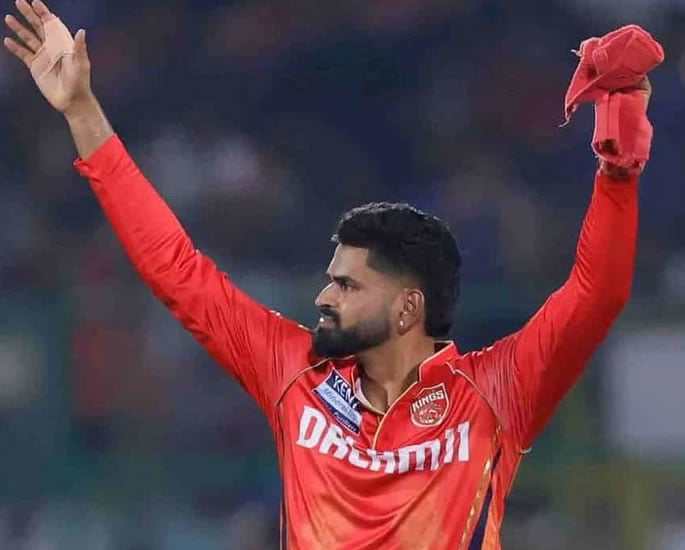
Shreyas Iyer’s performances offer insight into how T20 cricket continues to evolve. The format has shifted towards aggressive scoring patterns, with an increasing emphasis on flexibility and adaptability.
In this environment, traditional middle-order roles are being redefined. Players are expected to contribute at a higher tempo, often from the moment they arrive at the crease.
Iyer’s approach, which combines stability with controlled acceleration, represents a slightly different model.
His strength lies in building innings while maintaining scoring momentum, particularly during transitional phases.
This raises a key question about team composition.
Should teams prioritise consistency in the middle overs, or favour explosive impact across shorter bursts?
The answer is not straightforward. It depends on conditions, opposition, and overall strategy. As a result, players like Iyer often find themselves at the centre of selection debates.
The discussion surrounding Shreyas Iyer is less about a single player and more about the direction of modern T20 cricket.
His performances have reinforced his reputation as a consistent and reliable middle-order batter.
At the same time, his absence from India’s T20I setup highlights the complexity of selection in a highly competitive environment. Factors such as team balance, role definition, and tactical priorities continue to shape decisions.
Rather than offering a clear answer, Iyer’s situation presents a broader reflection of how cricket is evolving.
It shows that performance alone may not always determine selection, particularly in a format that demands constant adaptation.
As the season progresses, the discussion is likely to continue. Whether Shreyas Iyer’s form leads to a return remains uncertain, but his performances have ensured the conversation remains relevant.