















































Adaptation is not always about chasing trends.
It started, as many good ideas do, with lunch.
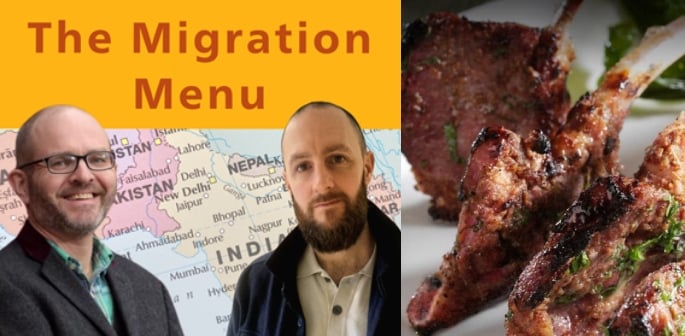
James Staples and Luke Heslop, both social anthropologists at Brunel University of London, kept looking for somewhere decent to eat near campus.
In their own patch of West London, home to one of the country’s largest South Asian diaspora communities, they found plenty of food. Eventually, they also found a story about South Asian food in Britain and the people who make and serve it.
That story became their podcast, The Migration Menu.
James has been visiting India since 1984, spending time in coastal Andhra Pradesh, Hyderabad, Mumbai and Delhi. Luke’s research has taken him to Sri Lanka and the Maldives.
They tell DESIblitz: “We were both troubled by the fact that although we worked in a London borough with one of the biggest South Asian diaspora communities in the country, we weren’t really engaging with those communities.”
The Migration Menu became their way to challenge that, to open the door to the rich cultural heritage embodied in Desi food to a whole new audience.
Food as a vehicle for culture
The pair did not set out to make a food podcast. Their first idea was simpler: record interviews with restaurateurs and keep them as an archive for future research.
With help from Brunel’s media team, especially Vimal Dalal, those recordings turned into edited conversations bookended by the hosts’ own chat, background and reflection.
Food proved to be the perfect gateway to culture. Taste and smell are vividly associated with memory; a dish can prompt recollection in ways an interview question cannot.
The smell of tomato and onions in a curry, the aroma of a dal or the taste of a childhood street snack can pull someone straight back to a place they’ve forgotten about.
“Food is one of the most portable aspects of one’s culture,” say James and Luke.
Recipes travel with people, even when ingredients do not. They get recreated, adjusted and reshaped in the diaspora, familiar flavours adapted for local palates and ingredients.
That is clear across the restaurants and cooks featured on the show. The recipes on the menus at Madhu’s and Brilliant Gastro are shaped just as much by Kenya as they are by their ancestral roots in Punjab and Kashmir.
Ravinder Bhogal’s family migrated from India to the UK via East Africa, and her restaurant Jikoni in Marylebone has pieces of it all. Even her take on a Scotch egg transcends the British classic.
Eating with people also changes the conversation. The atmosphere brings out emotions and stories that might never surface in a formal interview.
The pair continue: “Sharing and talking about food can help us access stories about the human condition that might otherwise remain obscured.”
As many of their guests have told them, food connects people, especially in a climate where migration is often a distant, abstract, even hostile thing; food offers a different, closer perspective.
More than “Indian food”
One of the podcast’s central arguments is that Britain has spent decades flattening South Asian cuisine into a single idea: the curry house menu.
In the 1960s and 1970s, many restaurants shaped their food around what they thought white British customers would accept.
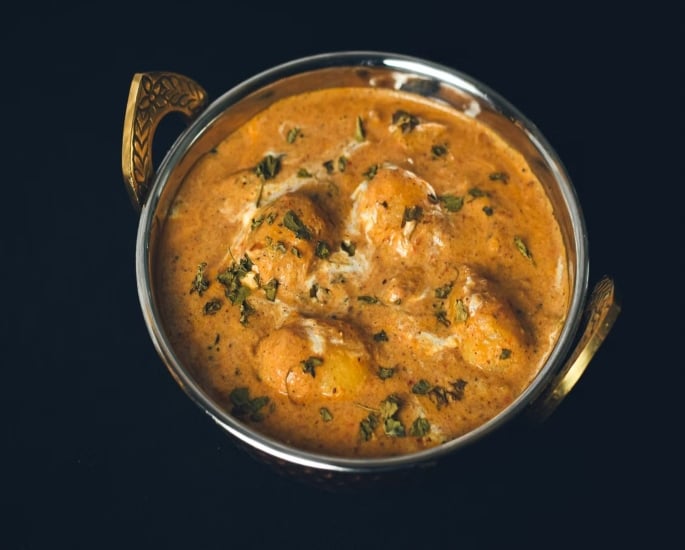
Dishes like the korma and vindaloo, far removed from their regional origins, became conventions of a new genre of food. Regional differences and nuances in South Asian cooking disappeared behind a short list of crowd-pleasers; chefs from Sylhet might be cooking an imagined version of Punjabi food.
The lamb dhansak on many British menus, for example, had only a loose connection to the Parsi dish developed in Mumbai.
“Chicken Madras” was similarly detached from the city it claimed to represent.
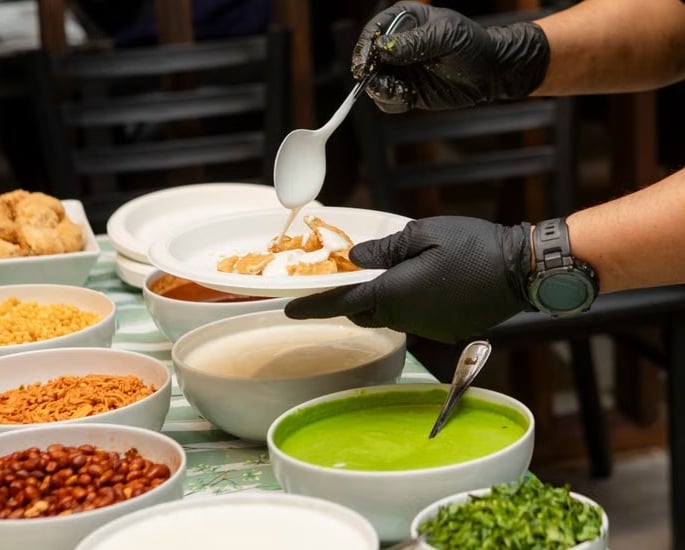
On the other hand, in places such as Southall and Hayes, restaurants were feeding diaspora communities who wanted food that tasted like home.
They might keep recognisable dishes on the menu, but they also served regional food with actual personal meaning.
As The Migration Menu has developed, it has followed those differences more closely.
The team visited Graam Bangla on Brick Lane to explore why Bangladeshi communities became so closely associated with East London, while Punjabi and other communities settled in the west.
They have also eaten at a Maldivian supper club, and Behesht in Kensal Green, where a dinner companion argued that Iran belongs in the South Asian conversation.
The range of food has widened too. Bangladesh, Pakistan, Afghanistan, the Maldives and Nepal all appear on the podcast.
So do Muslim and Buddhist voices, alongside Hindu ones. They made a deliberate choice to set their first episode at a Nepalese restaurant rather than an Indian one.
The women behind the menus
Another change has been who gets to speak.
In the first series, most guests were men, largely because they were the ones running the restaurants.
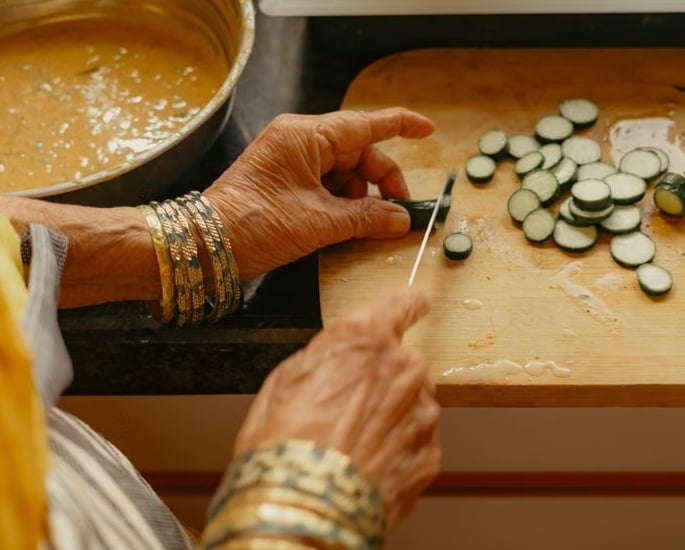
But James and Luke quickly noticed the women working around them: mothers, sisters and daughters passing on recipes, cooking at home and holding businesses together behind the scenes.
By the third series, the balance had shifted.
Most guests are women, working through supper clubs, tiffin services, cookbooks, television and social media as well as restaurants. That shift says something important about where South Asian food in Britain is being made.
Sohini Banerjee’s Smoke and Lime supper club is one example. For the hosts, it captures adda: the Bengali love of informal conversation and company.
A supper club can feel closer to eating in someone’s home than dining out: a small group of strangers, a set menu shaped by what is good that day, and stories served alongside the food.
Sohini’s approach to zero waste, for instance, is tied to histories of famine as well as to contemporary concerns about sustainability. That is the kind of detail that rarely makes it onto a restaurant menu, but changes how you taste the meal.
Haggis pakora and other border crossings
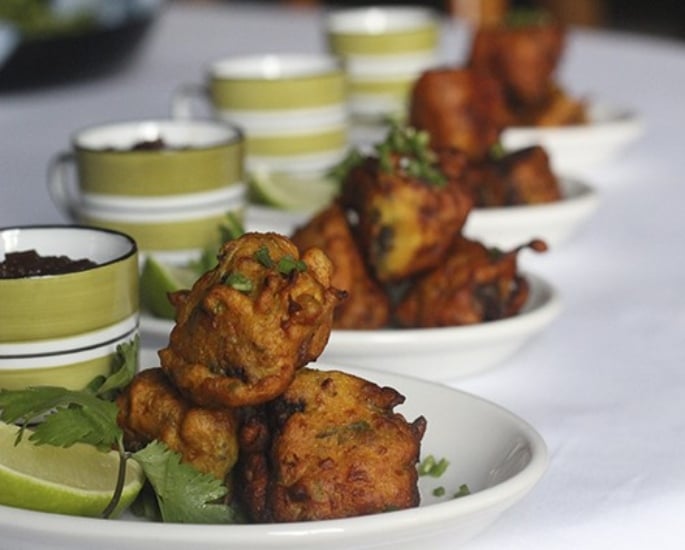
Some of the most interesting food in the series refuses to stay in its lane.
When James and Luke spoke to Tony Singh in Edinburgh and Ravinder Bhogal at Jikoni, they kept returning to one question: does this count as South Asian food?
Tony trained in classical French cooking while Ravinder’s career began after she won a competition on Gordon Ramsay’s The F Word.
Neither serves food that looks conventionally “Indian” but both are British South Asian cooks drawing on their own family histories.
Tony’s haggis pakora comes from his Punjabi mother’s recipe. Ravinder’s menu reflects an Indian childhood in Nairobi, teenage years in South London and years of travel.
To James and Luke, the fusion is not a watering down of tradition. “In both cases, boundaries were being blurred, but food is always evolving, and that blurring of culinary boundaries was more authentic to their own experiences than had they stuck rigidly to old family recipes,” they tell us.
Younger chefs are especially comfortable with that blending. Arjun Anand introduced High Chai at Madhu’s, an Indian spin on English afternoon tea.
Dipna Anand has turned her grandfather’s recipes into gastro-pub food at Brilliant Gastro. Ravinder’s “cooking without borders” approach feels less like a trend and more like where British South Asian food is heading.
One dish, three countries
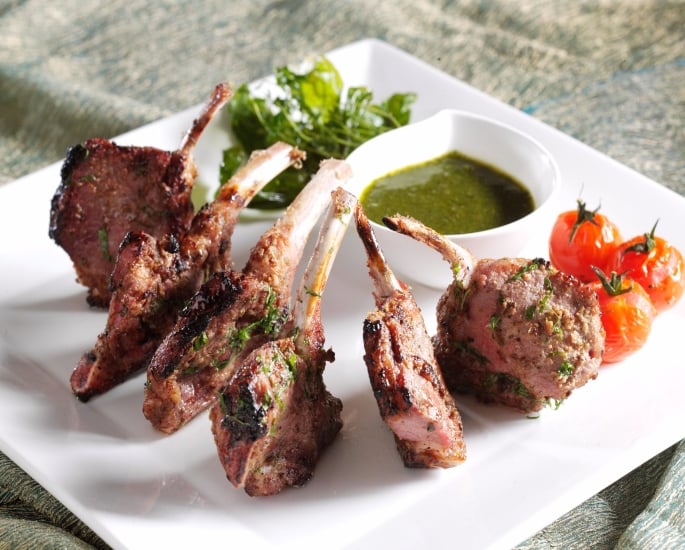
If you want a single dish that sums up the podcast, try the nyama choma at Madhu’s in Southall.
The lamb ribs are marinated in chilli and lemon, using spice combinations developed by Bishan Das Anand, grandfather of the current owner.
Bishan travelled from India to East Africa by dhow boat and later founded Brilliant, a restaurant and nightclub in Nairobi.
The quality of Kenyan produce allowed him to build on the dishes he had learned from barbers back in Punjab.
Nyama choma, Swahili for grilled or roasted meat, carries that Punjabi-Kenyan story straight onto a London plate.
Chefs make these choices all the time: what to preserve, what to change, what customers will order.
Dipna Anand took her grandfather’s chicken keema off the Brilliant menu because people stopped buying it.
At Namaste Gurkha, Indra Hang Linden keeps bhunas, baltis, jalfrezis and kormas on the menu to bring people through the door, then tempts them towards Nepalese dishes such as sukuti, pangra and momos.
Adaptation is not always about chasing trends.
Goat reared in the Himalayas and cooked over a wood fire will never taste quite like lamb from a British restaurant kitchen. The challenge is keeping enough of the original to make someone feel at home.
Where to start eating
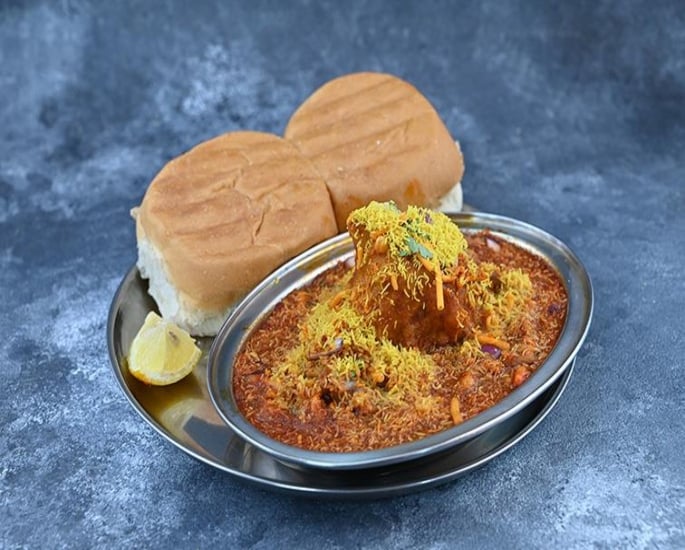
For readers who want to taste the stories for themselves, James and Luke have three recommendations.
Start with Sri Krishna Vada Pau (SKVP). It is affordable, and its vada pau tells a story of Maharashtrian food shaped by Portuguese influences and reworked for British high streets. It is also a good bet for younger diners looking for plant-based options.
Then book one of Sohini Banerjee’s Smoke and Lime supper clubs or pop-ups.
Expect a set menu, probably fish, and an evening built around Bengali food, conversation and history. You will leave having learned something as well as eaten well.
Finally, head to YAKO, which has a takeaway in Harrow and a restaurant in Pinner, for southern Sri Lankan food. The founder arrived in Britain after fleeing the civil war, and the food offers something different from the South Indian-Sri Lankan mix found in many London restaurants.
Luke recommends the chicken or mutton rolls and the Sri Lankan-style chicken curry. James goes for aubergine moju, green bean curry, tempered dhal and pol sambol.
The future is mixed. Migration controls and tight margins are making life hard for restaurants, even those that look busy. But appetite for good food and new experiences keeps growing, helped along by social media and food creators.
South Asian food in Britain has already moved well beyond the old curry house, from street food to high-end cooking.
The next stories may come from desi pubs, online cooks, and cities beyond London, Cardiff, Glasgow, Leicester, Birmingham, where diaspora food scenes have developed in their own ways.
For James and Luke, the aim remains the same: sit down, share a meal and listen to the stories behind each dish. Because behind almost every plate is a journey.