













































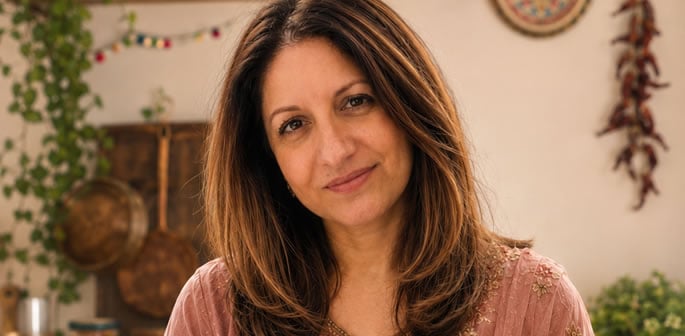
"I wanted to capture those sounds, smells and characters"
A cookbook is rarely just about food, but Butter Chicken & Green Shield Stamps begins far away from the polished idea of recipes on a page.
Instead, it is rooted in 1970s Southall, where kitchens doubled as memory banks and everyday life unfolded through shared meals, crowded homes and tightly woven neighbourhood ties.
For Baljinder ‘Bee’ Kaur, the book grows out of an instinct to preserve what was never formally recorded, drawing on her upbringing between British and Punjabi cultures and the stories carried through her family’s daily routines.
That same impulse now runs through her wider work, including her platform The Authentic PunjaBee, where food and storytelling continue to intersect with identity and intergenerational memory.
What emerges is a portrait of community life shaped by lived repetition, where even the smallest domestic details hold cultural weight.
In an interview with DESIblitz, Bee reflects on how these memories formed the foundation of her book and why preserving them has become central to her work.
Preserving Memory Through Food and Migration
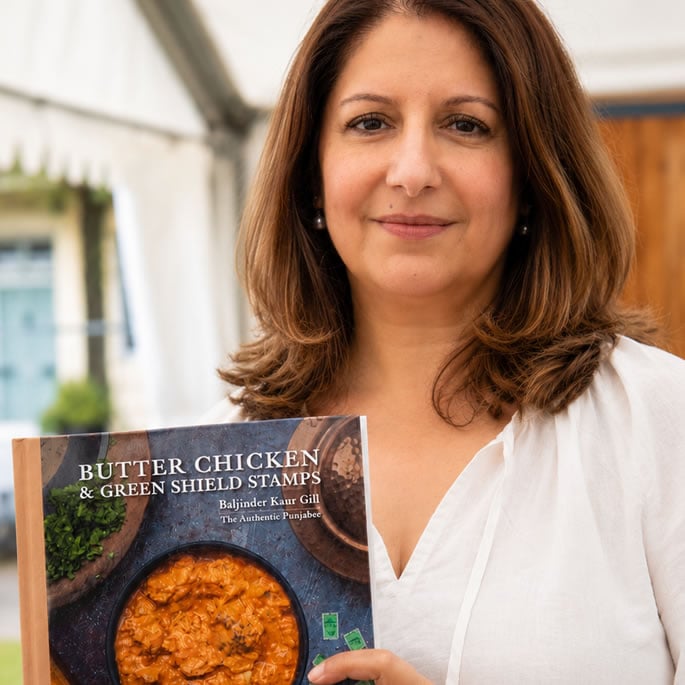
Butter Chicken & Green Shield Stamps began as a way to preserve a mother’s recipes, but it quickly became an exercise in documenting a wider history of migration, labour and family life that risked being lost.
Bee started writing after the death of her mother in 2019, initially focused on recipes that were never formally recorded.
But what she uncovered was a layered family history.
“Butter Chicken & Green Shield Stamps began with a desire to preserve my mum Prakash Kaur’s recipes after she passed away from cancer in 2019, but it quickly became something much bigger.
“Like many Punjabi women of her generation, my mum never measured ingredients and rarely wrote anything down.
“She cooked entirely from instinct, adding a pinch of this and a handful of that, somehow producing the same delicious dishes every single time.
“I realised that if I didn’t take the time to record what she had taught me, a lifetime of knowledge would disappear with her.”
As she began documenting those recipes, the process naturally pulled in memories, as Bee says:
“As I started writing the recipes down, memories I hadn’t thought about for years began coming back to me. I found myself remembering not only the food, but the world it came from.
“My father, Gurdial Singh Sangha, arrived in Britain in 1954 and settled in Aldgate. He would cycle all the way to Hayes in Middlesex to work at the rubber factory there and cycle back in the evening.
“One of his dearest friends was Pritam Singh Sangha, who would later go on to open the first grocery store in Southall. Mum arrived from Punjab in 1965, and together they built a life in a community that was still finding its feet.”
What followed was a widening of focus beyond recipes entirely.
“The more I wrote, the more I realised the recipes were only half the story.”
“I wanted to preserve my Mum, the Green Shield Stamps she collected, the Airmail letters she looked forward to from her family back home every month and the Cow & Gate milk tins she re-used to store spices, the smell of Punjabi food and incense drifting from kitchen windows, and the sound of Punjabi being spoken in homes, gardens and shop doorways, creating a little piece of Punjab thousands of miles from home.
“I wanted to capture those sounds, smells and characters that made Southall what it was.”
On when she discovered that her experiences resonated with many, Bee says:
“The turning point came when I started sharing the recipes and memories through my Authentic PunjaBee social media accounts.
“People weren’t simply responding to the recipes; they were telling me that their parents had done the same things, that they remembered the same tins in their cupboards, and that they had grown up in houses just like ours.
“That’s when it occurred to me that these weren’t just my memories. They belonged to a generation of British Asians whose stories were slowly disappearing.
“Butter Chicken & Green Shield Stamps became my way of preserving a world that helped shape me.
“It is a cookbook, but it is also a love letter to my parents, to Southall, and to a generation whose sacrifices built the communities many of us enjoy today.”
Southall’s Everyday Intimacy and Community Life
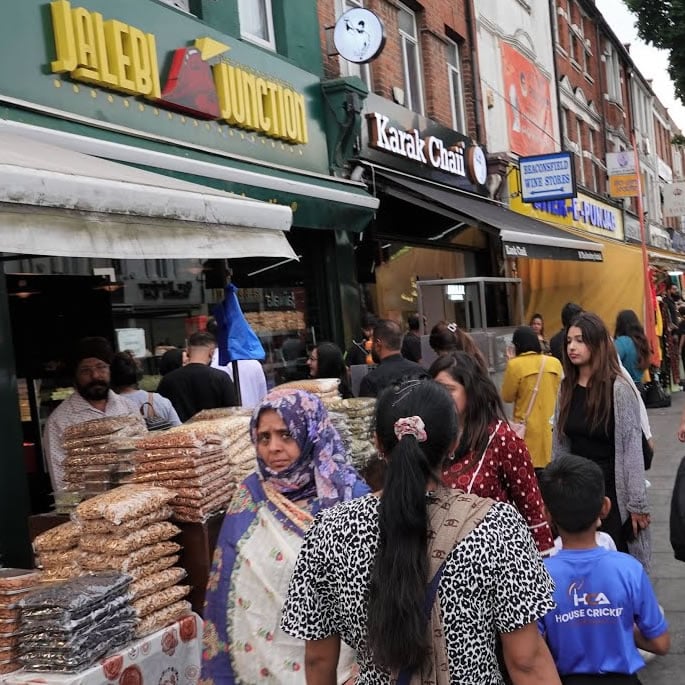
Southall in the 1970s, as Bee recalls it, was by proximity, familiarity and constant social contact. It was a place where privacy was limited, but connection was unavoidable and often essential.
She said younger British Punjabis “would be surprised by just how close-knit the community was and how little people actually had. Today, Southall is a thriving and confident community with businesses, restaurants and supermarkets on every corner, but when I was growing up, it felt very different”.
Her memories focus on Scotts Road, as she says:
“When I think of Southall in the 1970’s, I don’t immediately think of the Broadway. I think of our road, Scotts Road.
“I remember looking out of the window and seeing very few cars because not many families owned one. Children played outside until it got dark, neighbours stood chatting over garden fences and people thought nothing of dropping in unannounced for a cup of tea.
“Privacy wasn’t really a thing, but neither was loneliness.”
Even routine activities, such as shopping, carried a social weight that extended well beyond their practical purpose.
She explains: “Looking back, there was a wonderful sense of belonging. People genuinely looked out for one another.
“If a family was struggling, neighbours stepped in. Food was shared, furniture was passed around, money was lent and children were looked after by whoever happened to be nearby.
“I also think younger generations would be surprised by how different the food was.
“Many people’s understanding of Punjabi food today comes from restaurants and takeaways, but that wasn’t how most Punjabi families ate.
“The curries my mother cooked were simple, honest family meals designed to feed a household rather than impress customers.
“She relied mainly on turmeric and her own homemade garam masala, not dozens of different spice blends.”
“Her food wasn’t overloaded with cream, butter or oil, it was fresh, seasonal and cooked from scratch every day.”
Even sensory memory became a marker of identity, particularly through smell as a form of recognition.
Bee recalls: “One of my strongest memories is walking down the street and instantly knowing which houses belonged to Punjabi families because of the smell of turka drifting from their kitchens.
“Every home had its own aroma, but there was something comforting about those familiar smells that made Southall feel like home.”
Bee acknowledges that the first generation experienced hardships but there was always “somebody will to help”.
She adds: “That’s the Southall I remember, and it’s the Southall I wanted to capture in my book.”
Work and Support Networks
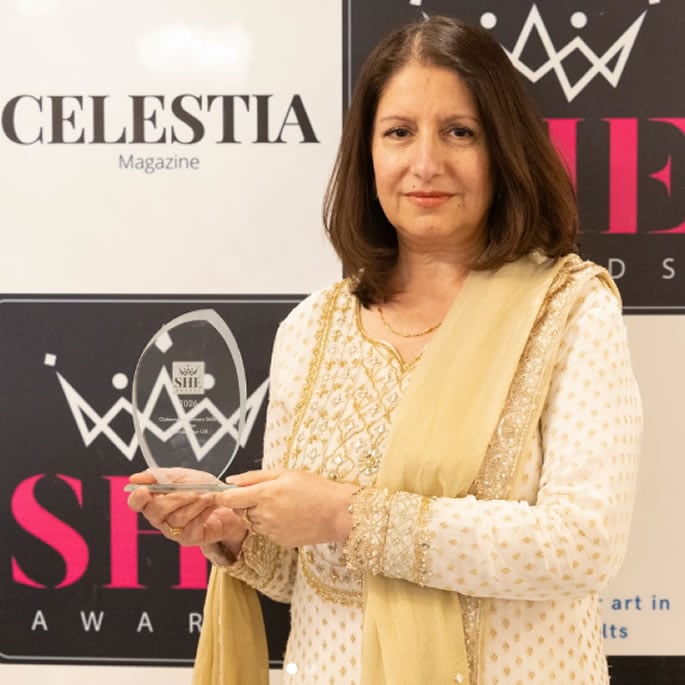
Beyond domestic life, Bee’s reflections highlight how migration was shaped by informal systems of labour, recommendation and mutual assistance that rarely appear in official accounts but were central to settlement.
She recalls acting as an interpreter during her school holidays.
Bee elaborates: “One of the stories I was determined to preserve was how communities helped one another build a life in Britain.
“I spent many of my school holidays accompanying neighbours, relatives and family friends to job interviews, acting as an interpreter because many were still learning English.
“Jobs were often secured through word of mouth and recommendation rather than formal recruitment processes.”
On her mother’s role, she continues: “My mum seemed to know everyone who was looking for work because she was known as a loyal and hardworking employee at the Heathrow catering company where she worked; managers frequently asked whether she knew others with a similar work ethic.
“She recommended both men and women from the community and helped countless people find employment. Looking back, she would have made an excellent recruiter.
“What strikes me now is that nobody saw this as anything unusual. People helped one another because they understood how difficult it could be to start again in a new country.
“Finding someone a job wasn’t just about earning a wage. It was often the first step towards independence, stability and building a future for their family.
“Those acts of support played a huge part in shaping communities like Southall, and they are exactly the kind of stories I wanted to preserve before they were forgotten.”
When it came to her parents’ generation, their stories were “shared around kitchen tables, during family gatherings or while preparing meals”.
But this way of sharing stories risk disappearing between generations, as Bee says:
“As children, we assume those stories will always be there.
“We hear them so often that we almost stop listening. It is only when our parents and grandparents are no longer around that we realise those memories existed only because someone was there to tell them.”
On what she wanted to capture in her book, she explains:
“I wanted to capture memories of fifteen people living in a three-bedroom house and somehow making it work.
“The stories of tenants who became extended family, of food being cooked and shared, and of children being loved and cared for regardless of whether they belonged to you or someone else.
“I also wanted people to understand that communities like Southall weren’t built by organisations or governments.
“They were built by ordinary people looking out for one another, sharing what little they had and helping each other build a life in a new country. That spirit of generosity, resilience and togetherness is something I never wanted to see forgotten.”
Food and Identity
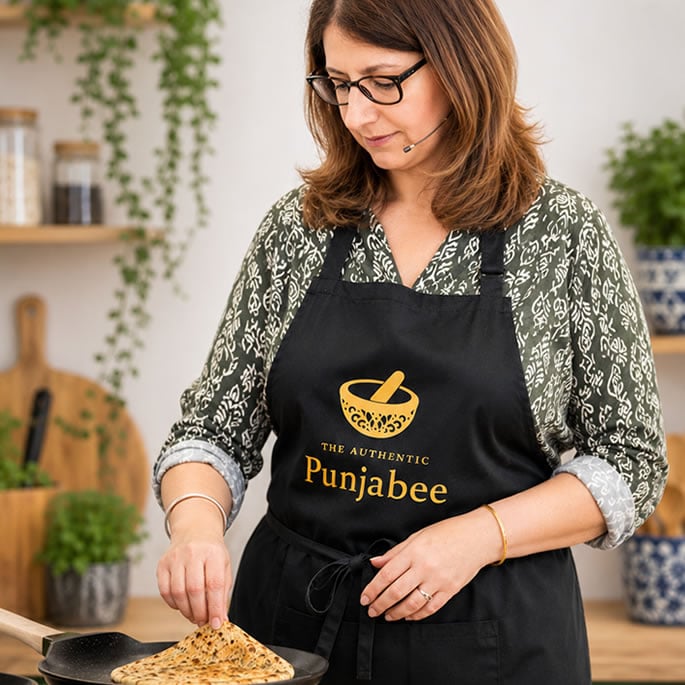
Food, for Bee, operates as both memory and method of cultural continuity, shaped by adaptation rather than preservation alone.
She says: “Food taught me that heritage is about much more than where you come from.
“It is about the stories, traditions and experiences that are passed from one generation to the next, often without us even realising it.”
Her mother’s cooking reflects this adaptability:
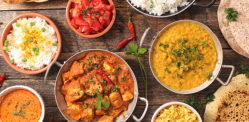
“One recipe that perfectly captures my childhood is my Mum’s Tariwala chicken.
“The thing that still amazes me is that my mother was a lifelong vegetarian. She never ate meat and never tasted her meat dishes, yet somehow she could produce the most incredible chicken curry.
“Everyone who tasted it loved it, and it was one of the meals we looked forward to most at weekends. To this day, I have no idea how she managed to season it so perfectly without ever tasting it herself.
“Another dish that means a great deal to me is Tamatar wali machhi, or ‘Tin wali machhi’, made using tinned pilchards in tomato sauce. Many Punjabi families still cook it today.
“It was affordable, filling and could feed a whole family when money was tight.
“Mum would cook it with onions, green chillies and her homemade garam masala, creating something far more delicious than its humble ingredients would suggest.
“These days I often serve it as a side dish with daal, and every time I do, it takes me straight back to my childhood.”
According to Bee, one of Punjabi food’s biggest misconceptions is that it resembles the food seen in restaurants.
She states: “The food my mother cooked was completely different, in fact, she relied mainly on turmeric and her own homemade garam masala.
“There were no shortcuts, no packet mixes and no hidden ingredients to bulk out a dish. It was honest food made with care.”
At its core, cooking is relational and rooted in care:
“What made it special wasn’t just the recipes themselves. It was the love behind them.
“My mum wasn’t cooking to impress customers or win awards; she was cooking to feed her family.
“Looking back, I think that is why those meals tasted so good, as they were made with patience, generosity and a genuine desire to bring people together around the table.
“One of the things Dad loved to say was if you added the ingredient of ‘love’ into your cooking – the dish turns out 10 times better. Something I still practice to this day.”
Humour also sits within this wider cultural framework, functioning as a shared language of resilience and storytelling across generations.
This is embedded in storytelling traditions:
“Punjabi families have a unique ability to turn ordinary moments into stories that are retold for decades. Family gatherings were full of laughter, teasing and storytelling.
“Someone’s mistake, a misunderstanding, an embarrassing moment or a family disagreement would quickly become part of the family folklore.
“Looking back, some of the stories we laugh hardest at today probably weren’t very funny at the time.”
Even today, Bee sees that tradition continuing through both family life and digital platforms, where memory is shared and reshaped collectively.
She adds: “What surprises me most is that people often connect more strongly with the stories than the recipes.
“A recipe may attract someone initially, but it is usually the memory attached to it that starts the conversation.”
“Through The Authentic PunjaBee, my blog Very British Asian Problems, my podcast In-Laws Out Loud and the Facebook cooking community I started during lockdown, I have discovered that people are hungry for connection to their roots and to the stories of previous generations.
“Whenever I share a memory about growing up in Southall, family life, community traditions or the way our parents and grandparents lived, the response is often overwhelming.”
What stays with the reader is the weight of ordinary detail that has rarely been written down with this kind of clarity.
Through food, memory and lived experience, Bee’s work captures how British Punjabi communities were formed in the everyday spaces between work, home and shared streets, where survival and connection were built side by side.
Rather than treating the past as something distant, her storytelling keeps it active, carried forward through cooking, conversation and the ongoing conversations taking place through The Authentic PunjaBee.
Butter Chicken & Green Shield Stamps sits in that space between archive and continuation, where remembering is not an exercise in looking back, but a way of understanding what is still present in family life today.