

















































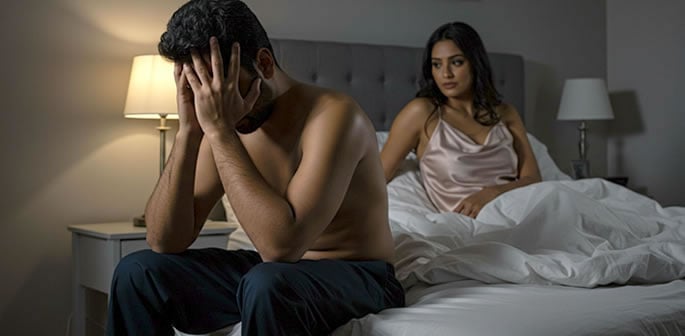
"The pressure leading up to my wedding was unbearable."
British Asian men are confronting sexual performance anxiety, a condition defined by persistent fear or nervousness around sexual performance that can directly interfere with arousal and confidence.
It is driven not only by psychological factors, but also by cultural expectations, masculinity norms, and silence around sex.
In many cases, sexual performance anxiety is less about physical ability and more about perceived failure against culturally constructed ideas of masculinity.
This creates pressure to perform with confidence in intimate situations.
The issue is shaped by cultural ideals and expectations of sexual dominance that are often reinforced through silence rather than education.
For many British Asian men, this produces a cycle where anxiety replaces intimacy and fear replaces communication.
What is Sexual Performance Anxiety?

Sexual performance anxiety is the persistent fear of not being able to perform sexually. It activates stress responses in the body, which can lead to erectile dysfunction and low libido.
It is not only physical. It is closely linked to self-esteem, identity, and perceived masculinity.
In many cases, performance anxiety becomes more psychologically disabling than any underlying physical condition.
Sexual health educator Seema Anand said: “We have made sex into a performance, a race to an end goal.
“The ancient texts never spoke of sex as a performance. They spoke of it as an exploration.
“When you remove the pressure to perform or to reach climax by a certain time, the anxiety disappears.”
In British Asian contexts, this anxiety is intensified by cultural silence around sex.
Without open discussion or formal education, many men enter adulthood with distorted expectations shaped by pornography or peer talk.
This creates a gap between expectation and reality that directly fuels anxiety and sexual dysfunction.
Masculinity and the Pressure to Perform

In many British Asian communities, masculinity is shaped by the idea of Mardangi – a cultural concept linked to manliness, strength, and sexual virility.
It connects male worth directly to dominance and performance.
This creates pressure to appear confident, experienced, and in control, even when many men lack space to develop sexual understanding safely or openly.
As younger British Asian men navigate between traditional family expectations and modern UK lifestyles, this tension becomes sharper. Identity is no longer singular, but split between cultural loyalty and personal reality.
The result is internal pressure that often goes unspoken until it manifests as anxiety.
Gym Culture and the Performance Trap
Modern British Asian masculinity is increasingly shaped by gym culture and the “Pehlwan” physique – a modern reinterpretation of traditional wrestling ideals.
In UK cities like Birmingham and Bradford, Desi gym culture has become a key site of identity formation. Physical strength is highly valued, while emotional vulnerability is often absent.
This creates a contradiction. Men build powerful physiques but may carry deep insecurity about sexual performance and masculinity.
The gym becomes a performance space where strength is constantly displayed and validated.
That pressure does not stay in the gym; it often transfers into intimate relationships.
Fitness enthusiast Aman* told DESIblitz:
“I spent three years building my body because I wanted to look like a ‘proper’ man.”
“But my relationships suffered. A constant focus on my body and hoping partners would find me attractive made it difficult to perform in the bedroom.”
This pressure is often reinforced by gym environments where toughness is valued and vulnerability is dismissed.
Wedding Night Pressure and Honour
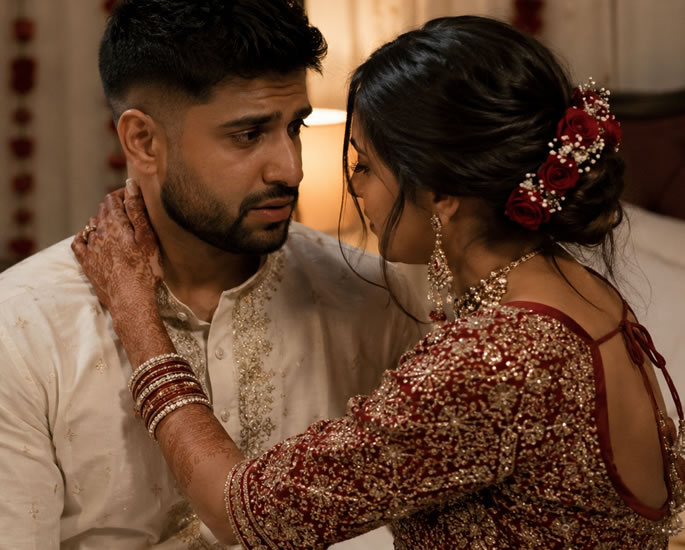
Sexual performance anxiety extends to married British Asian men, especially on the wedding night, which remains one of the most psychologically intense moments in their lives.
Men are often expected to be confident, dominant, and sexually assured. This expectation exists despite limited sexual education or open dialogue in households.
This leads to a reliance on pornography or conversations among peer groups, both of which distort expectations of intimacy and performance.
When reality does not match this constructed ideal, anxiety, shame, and avoidance behaviours often follow.
Hamza* admitted: “The pressure leading up to my wedding was unbearable.
“Older relatives would make jokes about ‘being a man’ and ‘making the family proud’.
“On the wedding night, I was so worried about failing that I couldn’t do anything. My wife put it down to tiredness but I felt like such a let-down.”
In many cases, this experience is not framed as anxiety, but as a loss of honour linked to Ghairat. That framing reinforces silence and discourages help-seeking.
Self-Medication and Stigma
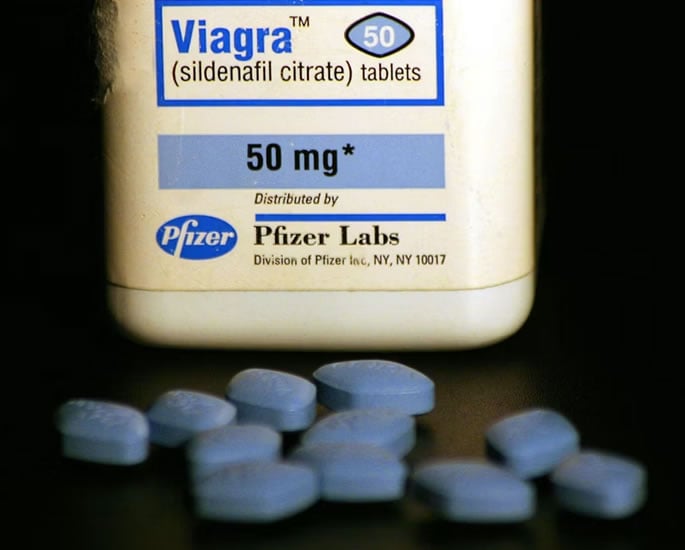
A growing number of British Asian men are turning to online pharmacies for sildenafil, commonly known as Viagra or the “blue pill”, to overcome sexual performance anxiety.
This shift is largely driven by stigma and fear of being seen accessing sexual health services within their own communities.
Concerns about reputation and gossip act as a powerful barrier to formal healthcare.
Raj* admitted: “I would never go to my local GP, especially for sex-related issues, in case someone I know is there.
“My issues would quickly spread among the neighbourhood.
“It’s easier to buy Viagra online and have it delivered in a discreet box.”
“I use it to prevent any physical problems when getting intimate with my partner.”
While effective for physical symptoms, medication does not address underlying anxiety. In some cases, it reinforces psychological dependence on external solutions.
It also highlights a wider gap in culturally safe sexual health provision for ethnic minority communities.
More Open Conversations

A shift is beginning to emerge across British Asian communities, particularly among younger men, where sexual performance anxiety is kept in silence.
More men are discussing their problems among peer groups, online forums and support networks.
This change signals a break in long-standing cultural silence around sex and masculinity. For many, the first step is simply finding language to describe what they are experiencing.
The normalisation of sexual health conversations is gradually reducing the isolation that intensifies performance anxiety.
Social media platforms, anonymous forums, and mental health content creators have played a role in opening up discussion.
Men who previously had no reference point for their experiences are now encountering shared stories that reflect their own.
This visibility is important because sexual performance anxiety often becomes worse when individuals believe they are the only ones experiencing it.
At the same time, conversations within friendships and relationships are also shifting.
Some men are beginning to speak more openly with partners about anxiety rather than framing sexual difficulty as failure.
While stigma remains strong in many households and communities, the direction of change is increasingly visible.
The growing openness does not eliminate the problem, but it weakens the silence that sustains it.
Sex and Trauma Therapist Neha Bhat said younger generations are finally having a “vocabulary for their mental and sexual health”.
She added that there has been a “massive increase in people seeking therapy because they realise they don’t have to carry their parents’ or culture’s silence around intimacy”.
Sexual performance anxiety among British Asian men reflects a wider pressure to treat masculinity as something that must be constantly proven rather than experienced.
At its core, the issue is not sexual performance itself, but the expectation that masculinity must always be performed without vulnerability.
This creates a cycle where identity, intimacy, and self-worth become dependent on perceived control rather than emotional well-being.
Across cultural expectations, silent sexual education, and community stigma, men are left navigating intimacy without language to describe anxiety when it appears.
The emerging shift is not simply about better sexual health awareness, but about redefining masculinity itself as compatible with uncertainty, communication, and vulnerability.
As conversations slowly open up, the key change is structural rather than individual. Sexual performance anxiety only reduces when shame stops being the default response to sexual difficulty.
The future direction of British Asian masculinity will depend on whether openness replaces silence as the dominant cultural response to sexual and emotional struggle.