
















































"It is an attempt to understand someone."
What happens when a child refuses to fit the boxes society creates for them?
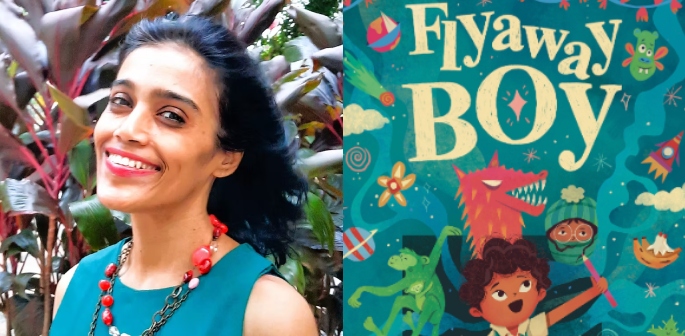
In her book, Flyaway Boy, author Jane De Suza explores difference, imagination and the importance of empathy.
The children’s book follows Kabir, an imaginative boy who struggles to meet the expectations of his family and teachers.
When he suddenly disappears, they must enter his world to understand him.
Inspired by questions about how society defines children’s success, Jane uses humour and inventive illustrations to challenge conventional thinking.
The book also contains beautiful illustrations by Richa Bhembre.
In our exclusive interview, she discusses Flyaway Boy, Kabir’s journey and why every child deserves to be understood.
Can you tell us about Flyaway Boy What is it about and can you describe the characters?
 Kabir lives with his family in a small hill town, where society expects everyone to be orderly and compliant. Kabir isn’t.
He imagines things, he creates strange stories, he just doesn’t fit into the boxes that other kids do.
Naturally, this causes all sorts of rather funny, rather sad problems at home and in school.
Misunderstood by most adults, Kabir gets increasingly confused. One day, he vanishes.
His harried parents who only wanted him to fit in, and his schoolteachers who demanded the same, are now terribly worried.
How do they find the boy who’s been kidnapped or lost or run away?
The only way to find Kabir is to enter his world. They need to allow themselves out of their strict lines, and to begin to imagine.
Flyaway Boy is a story that uses gentle humour and heart to challenge its readers to understand ways of thinking that are different.
What inspired you to write the book, and explore Kabir’s journey?
 Over breakfast one morning, I had opened the newspaper to a double spread of faces of ‘star’ children who had topped a national exam.
These are commonplace advertisements in Indian newspapers.
It got me wondering about the standards we use to classify children.
Surely, all children have beautiful, brilliant, special qualities? Why do we recognise only the achievers?
It kept gnawing at me and slowly seeped into a story.
I wrote Flyaway Boy to give tribute to the outsiders, those who see things differently.
How can other children understand a child like Kabir? How can a child like Kabir hope for understanding?
Can you tell us how the illustrations in the book complement the story?
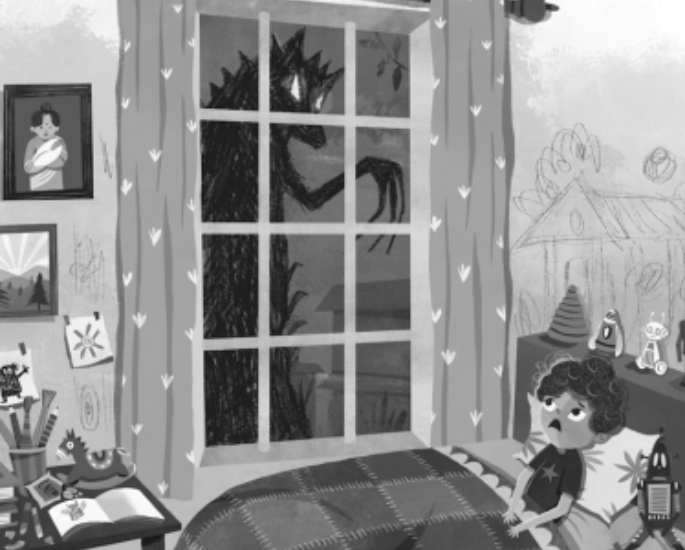 Young Kabir thinks laterally and visually. To do his flights of fancy justice, we need visual storytelling, as well.
The visuals in the book use typography, fill-in-the-blanks, roadside menus, even splotches of curry on a tablecloth.
The irregular visuals mirror how wondrously Kabir’s mind flies around.
While some of these visual ideas originated as doodles on my pad, most were created by the lovely illustrator, Richa Bhembre.
This is a book where words and images together make the story. One without the other would not work.
Within the South Asian community, do you think more can be done to combat fear in children?
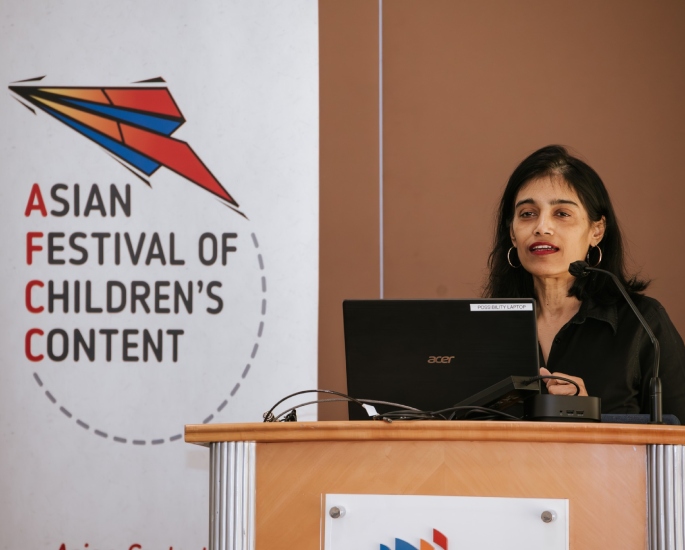 Many South Asian children are aware that they need to adjust to certain expectations.
They need to meet more rigorous academic standards and cultural norms.
Our children have more boxes to fit into than others do.
Though it sounds difficult, we may need to see how many of these expectations that we place on our childrens’ shoulders are hangovers of our own, scrutinise them under a strong critical light, and see if we can let our children just ‘be’.
Even the youngest have a need to be accepted among their peers.
We need to help them look beyond what separates them, to what they share.
What made you pursue writing for children, and what makes it different for you from writing for adults?
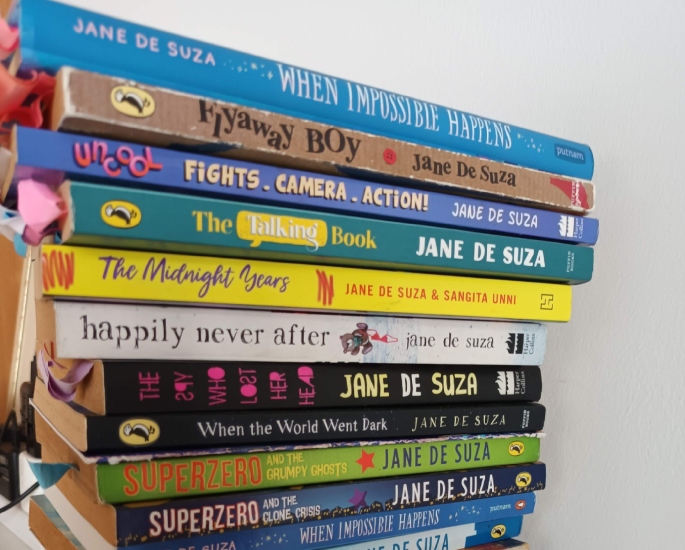 I did start out writing for adults. My first book for children converted me. Writing for children is challenging.
You cannot ‘dumb’ it down and you cannot be smugly clever. You will get caught out.
Young readers are lethal critics. Their feedback is instant and honest.
Either they love the book or they’re bored.
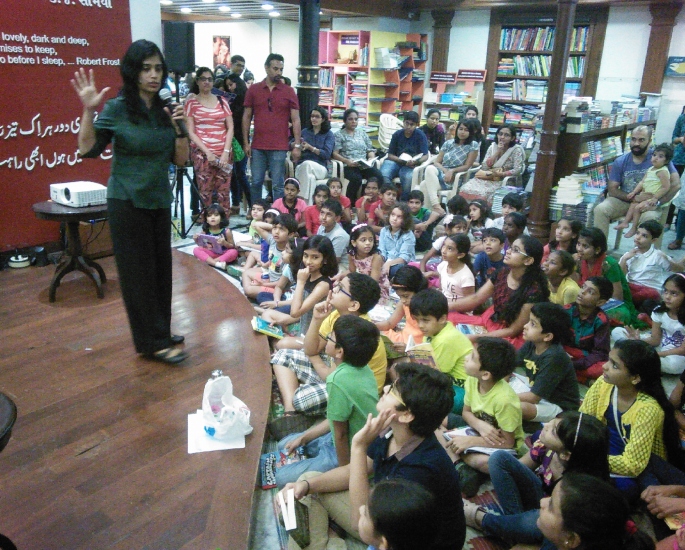
The feedback that I get in mails or in sessions is what drives me from book to book.
An added bonus is the world of children’s publishing. Penguin, in India, first published Flyaway Boy.
Lantana, who has picked up the book’s world rights, has treated it as precious and handheld it at every point.
What do you hope readers take away from Flyaway Boy?
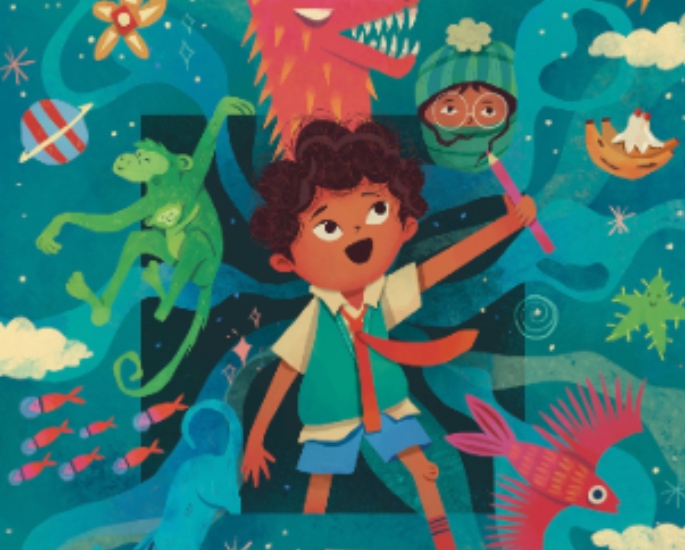 Flyaway Boy is about stepping into unfamiliar territory.
It is an attempt to understand someone who is not like you – by entering their world and not forcing them to fit into yours.
I hope this leaves young readers, and their adults, with more empathy, and a willingness to look for that something special in classmates and friends.
Jane De Suza’s Flyaway Boy encourages readers to look beyond expectations and understand children who see the world differently.
Through Kabir’s story, humour and inventive illustrations, the book explores empathy, individuality and belonging.
Jane hopes Flyaway Boy will help readers question narrow ideas of success and recognise the value of different perspectives.
Through our interview, her message is clear: children should not be forced to fit expectations.
Sometimes, understanding begins when we enter their world.
You can find out more about the book here.