


















































Kate's accessories added another layer of significance
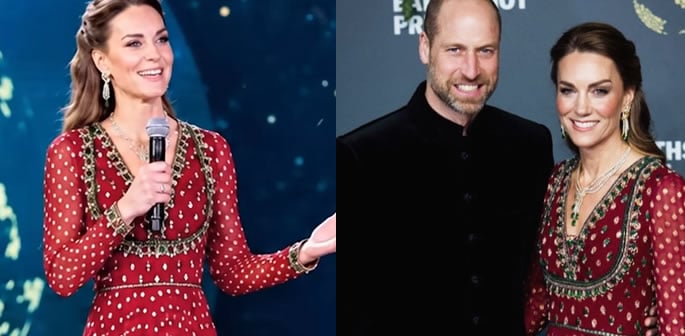
Princess Catherine brought Indian fashion and traditional craftsmanship to the international spotlight as she joined Prince William at the 2026 Earthshot Prize ceremony in Mumbai, India, wearing a striking red Anarkali gown by Indian designer Mahima Mahajan.
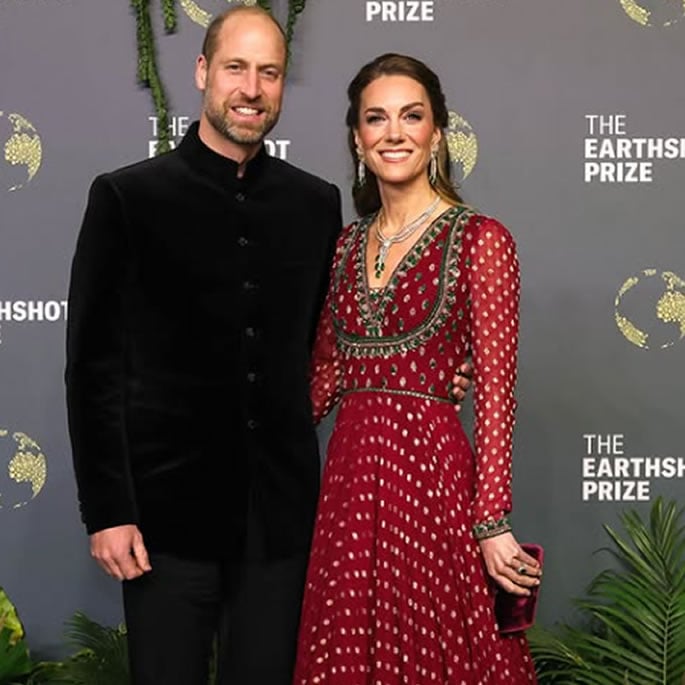
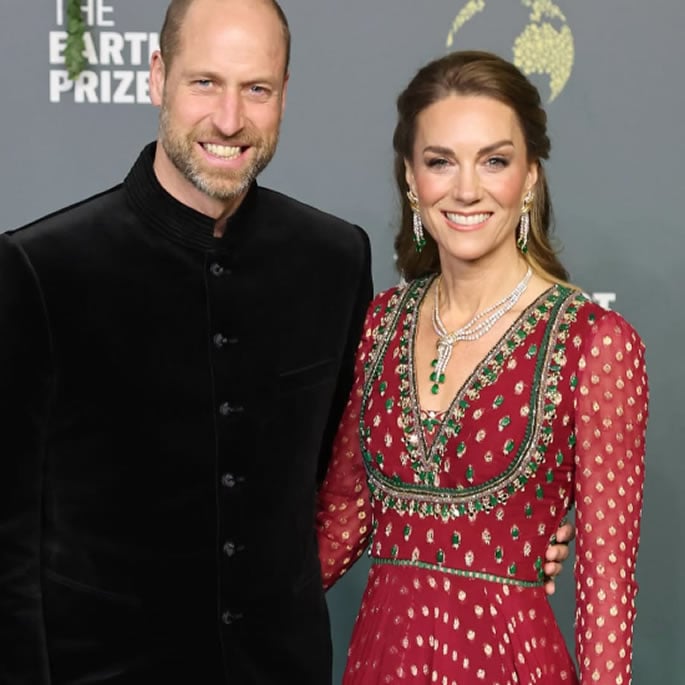
The Princess of Wales made a memorable entrance in the floor-length creation, which featured a flowing silhouette, intricate gold detailing and green emerald-inspired embellishments.
The rich red colour provided a striking contrast against the event’s green carpet, while the delicate detailing gave the outfit an elegant finish.
Her choice marked a departure from some of her more familiar royal eveningwear, embracing traditional Indian-inspired fashion while retaining the sophisticated style for which she is known.
Rather than opting for a British or international fashion house, the Princess chose a design by a homegrown Indian label, bringing the country’s fashion heritage into focus at an internationally recognised event.
Based in Delhi, Mahima Mahajan launched her eponymous fashion label in 2015.
Her designs combine traditional Indian influences with contemporary silhouettes, intricate embellishments and rich colours, and have been worn by several Bollywood actresses.
For the Earthshot Prize ceremony, Kate wore the Neelam Anarkali from Mahima’s Mehfil collection.
The design showcased the label’s approach to combining traditional craftsmanship with modern elegance, giving Indian fashion a prominent place on the evening’s red carpet.
Having one of her creations worn by the Princess of Wales represents a significant moment for the designer, whose work was introduced to a much wider international audience through the royal appearance.
Kate’s accessories added another layer of significance to the outfit.
She completed the look with an emerald and diamond necklace, accompanied by matching earrings, which previously belonged to the late Queen Elizabeth II.
The deep green stones complemented the emerald-inspired embellishments on her gown, creating a coordinated look.
The necklace also carried a connection to royal history, having previously been worn by the late Queen during her public engagements. By choosing the treasured pieces, Kate brought together two generations of the royal family through her jewellery.
There was also a connection between the gown and the environmental purpose of the evening.
The Earthshot Prize, founded by Prince William, recognises and supports solutions to some of the world’s most pressing environmental challenges.
Against that backdrop, the details behind Kate’s outfit offered an interesting example of how fashion can incorporate more considered design choices.
The gown featured glass bead embellishments instead of plastic alternatives, while vegetable-based dyes were used to achieve its distinctive red colour.
These elements brought an additional dimension to the design, demonstrating how traditional Indian craftsmanship can sit alongside more environmentally conscious approaches to fashion.
Kate’s decision to wear Mahima Mahajan’s creation also highlighted the international appeal of Indian design.
From intricate embellishments to traditional silhouettes, Indian fashion has a long history of craftsmanship that continues to influence contemporary designers.
The Anarkali, in particular, remains a distinctive part of South Asian fashion, with its flowing shape offering designers opportunities to reinterpret a traditional style for modern occasions.
By choosing an Indian designer while visiting the country, the Princess of Wales gave those influences a prominent platform.
Her appearance demonstrated how royal fashion can acknowledge the cultural identity of a host nation while introducing designers to audiences beyond their usual markets.