

















































The director removed the scene
Too many South Asian films ask audiences to admire how much a man feels while showing little interest in the people he hurts.
His girlfriend has to understand his jealousy. His wife has to accommodate his anger. By the time he admits he has behaved badly, everyone else is expected to be ready for a reconciliation.
The problem with the manchild hero is the assumption that his feelings deserve more consideration than anybody else’s.
The term needs some care. Crying, needing help or struggling with confidence does not make a man immature.
Expecting other people to take responsibility for his behaviour does. And when that behaviour becomes abusive, calling it childish should not make it sound harmless.
South Asian cinema is too varied to treat as one industry with one attitude towards men.
Some of its most thoughtful films already challenge this kind of entitlement. But the indulgence shown to certain leading men is difficult to ignore.
Kabir Singh expects too much forgiveness
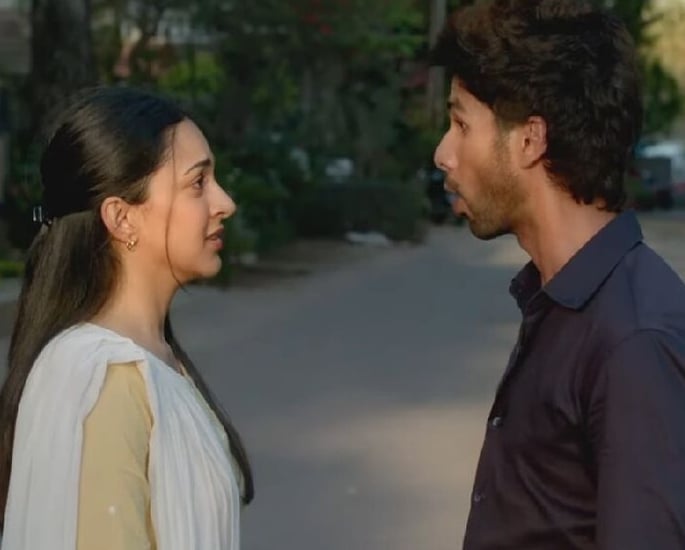
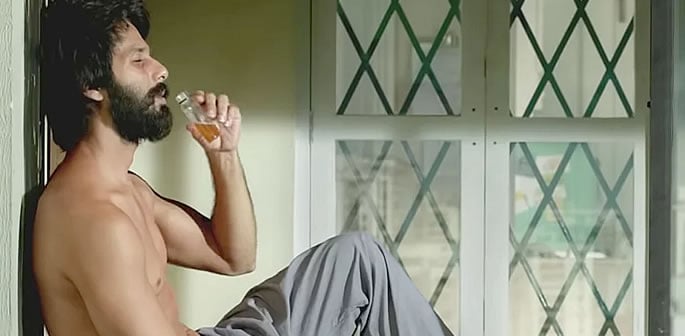
In Kabir Singh (2019), Shahid Kapoor plays a surgeon whose intelligence is repeatedly stressed, even as his behaviour gives viewers plenty of reasons to dislike him.
He takes an interest in Preeti, played by Kiara Advani, and begins deciding who she should sit with and how she should spend her time. The romance develops around his demands.
The film gives his heartbreak considerable attention. Preeti gets much less opportunity to explain herself.
The film emphasises how badly he wants her, without spending enough time considering what it means to be wanted by someone so controlling.
Kabir does suffer consequences. His life deteriorates, and it would be inaccurate to say the film shows him getting everything he wants without difficulty.
But suffering after behaving badly is not the same as understanding the harm you have caused.
His eventual reunion with Preeti is presented as a romantic resolution.
That ending is unconvincing because the film has done much more to establish his attachment to her than his ability to treat her differently.
The same director, Sandeep Reddy Vanga, first told this story in the Telugu film Arjun Reddy (2017).
The remake repeats the central problem: the intensity of the man’s feelings receives more attention than the woman’s freedom to respond.
Animal gives its hero too many excuses

In Animal (2023), Ranbir Kapoor’s Ranvijay is preoccupied with winning his father’s approval.
The neglect he experienced helps explain his adult behaviour, and there is a worthwhile story to tell about a son who never feels loved enough.
But the film keeps returning to that explanation while Ranvijay’s wife, Geetanjali, deals with his aggression and infidelity.
Rashmika Mandanna gives her anger force, and Geetanjali does challenge him. Even so, her objections remain secondary to the father-son relationship.
The film would have been more interesting if it had spent longer with her. She has married a man whose priorities leave her with very little say in their life together. That deserves as much attention as his need for paternal affection.
Instead, Ranvijay’s violence dominates. Its scale makes him imposing, but does little to make him complicated. A character can behave outrageously for three hours and still reveal surprisingly little about himself.
Of course these are both Vanga films. They cannot stand as evidence against every Hindi or Telugu filmmaker, let alone an entire region.
They do, however, make a familiar habit particularly obvious: explaining a man’s unhappiness at length while expecting the people he hurts to understand.
Women are expected to be understanding

The expectation of female patience is what connects this kind of film to an ordinary relationship argument.
A man has a difficult relationship with his father, so his partner must be careful around his moods. He is insecure, so she should avoid doing anything that might upset him. Eventually, her ability to tolerate him becomes the measure of how much she loves him.
Those are expectations worth criticising, whether a film presents them through a violent protagonist or an otherwise charming boyfriend.
If you grew up in a British Asian household where a son’s temper had to be accommodated while a daughter’s anger was treated as disrespect, the double standard may be familiar.
You may already have been asked to be patient with someone who was never expected to show you the same consideration.
That will not describe every household or every viewer’s response. Nor does enjoying an actor’s performance mean endorsing the character.
But audiences are entitled to question why a film makes one person’s unhappiness so important and another’s so easy to dismiss.
Saim Sadiq’s Pakistani film Joyland (2022) takes greater care with that imbalance.
Haider initially does domestic work while his wife, Mumtaz, enjoys her job. When he finds employment, she is expected to give hers up.
Haider’s uncertainty receives serious attention, but so does Mumtaz’s loss of independence. Sadiq has said that, if he had to identify one central character, it would be Mumtaz. The film examines Haider’s choices without treating his wife’s life as less important.
The Girlfriend takes Bhooma seriously

There is a particularly revealing detail about the writing of Rahul Ravindran’s Telugu film The Girlfriend (2025).
An early draft included a brief scene offering redemption to Vikram, the controlling boyfriend of Rashmika Mandanna’s Bhooma.
Ravindran told media that women who read the script questioned it. They wanted to see how he had changed and faced the consequences of his behaviour. The director removed the scene.
More filmmakers should take that objection seriously. A story that has shown a woman suffering because of her boyfriend should be careful about declaring him a changed man. If his change matters enough to include, it needs to be convincing.
The Girlfriend makes Bhooma’s experience the central concern. Her discomfort influences how the audience judges the relationship.
That sounds like a basic writing decision, but it changes what the audience is being asked to care about.
Better male characters already exist
It would be unfair to discuss this problem without acknowledging the films that have done something more interesting with it.
In the Malayalam film Kumbalangi Nights (2019), Saji seeks counselling.
The film gives his distress time and attention without suggesting that a woman should resolve it for him.
Shammi, meanwhile, becomes increasingly frightening in his insistence on male authority.
The contrast works because seeking help is treated as something a man can do, rather than a humiliation he must avoid. Saji does not have to be impressive to deserve sympathy.
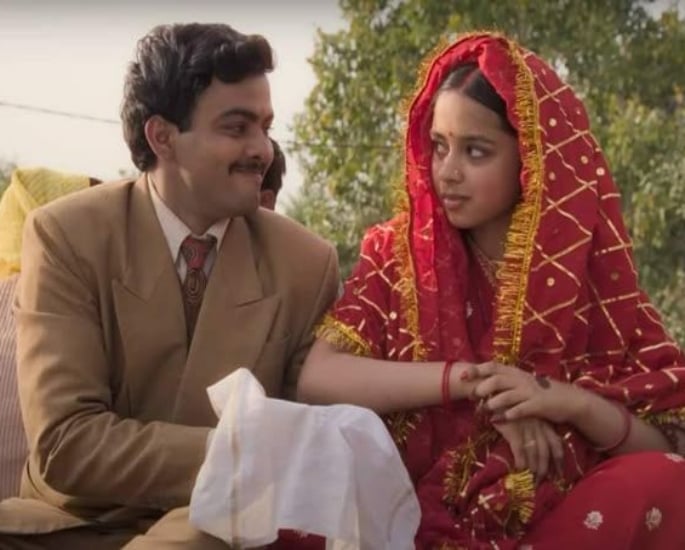
Deepak in Kiran Rao’s Laapataa Ladies (2024) offers another possibility.
He loves Phool and supports Jaya’s ambitions. Co-writer Sneha Desai has described deliberately writing him as a compassionate man who supports the women in his life, despite having limited influence within his family.
His kindness belongs in the story as naturally as another character’s selfishness. He can be uncertain and inexperienced without making those qualities somebody else’s problem.
These films make the continued fascination with the entitled hero more frustrating. The alternatives are already there.
Male protagonists do not have to become good people by the final scene. The writing should still take their behaviour seriously, including what it means for people who cannot simply walk away from them.
A woman leaving an unhappy relationship can be a satisfying ending. A man recognising his mistakes can be worth watching, particularly if the film shows the awkward work of changing rather than assuming an apology is enough.
If a leading man is meant to have grown up, his behaviour should show it.