

















































Azaadi and Arrivals were not simply opportunities for South Asian festivalgoers
Glastonbury Festival has revealed its first line-up for 2027, with Harry Styles, Billie Eilish and Sam Fender confirmed as headliners.
British Asian DJ Sammy Virji is also among the announced performers, bringing South Asian representation into a dance programme featuring some of electronic music’s biggest names.
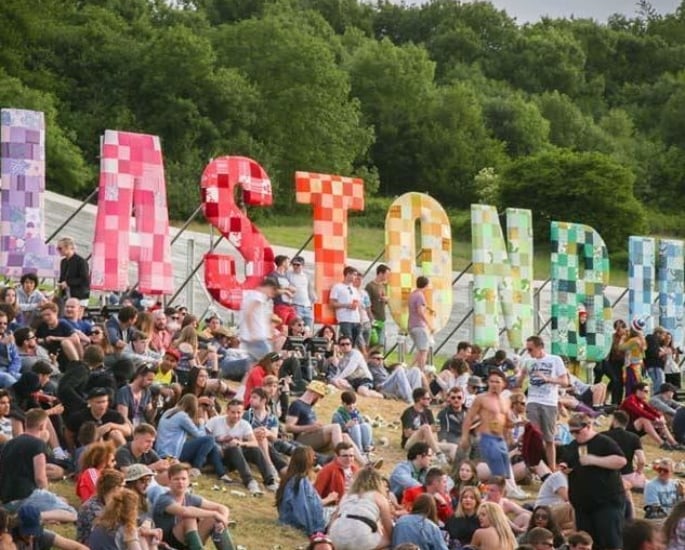
The festival returns to Worthy Farm in Somerset from June 23 to 27, 2027, following a fallow year in 2026.
For British Asian dance music fans, the announcement raises questions about whether Glastonbury will build on its recent commitment to South Asian artists.
The festival’s dedicated South Asian spaces, Arrivals in 2024 and Azaadi in 2025 helped bring artists and audiences into an environment where they had previously received limited visibility.
Both projects demonstrated the range of music being produced by South Asian DJs, from garage and jungle to house, techno and Punjabi electronic music.
With more performers still to be announced, Glastonbury 2027 offers another opportunity to examine how that progress translates into bookings and stages.
What Has Glastonbury 2027 Announced?
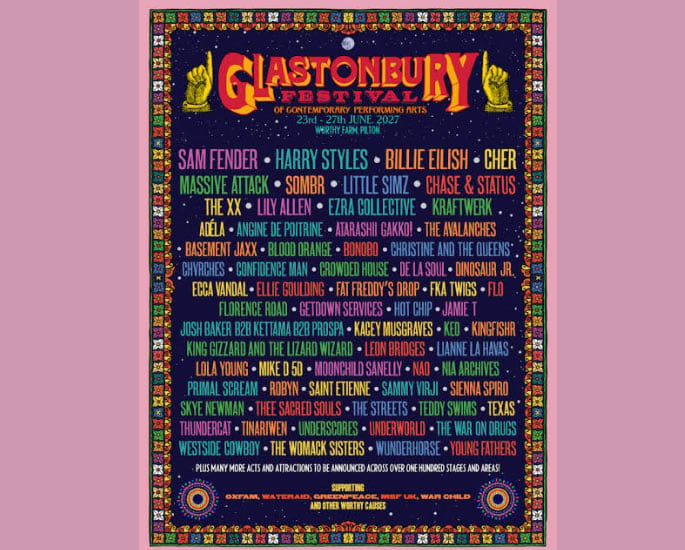
The official Glastonbury announcement, published on November 18, 2026, confirms more than 60 artists, including Cher in the Sunday Legends slot.
The wider bill features Little Simz, Massive Attack, FKA Twigs, Ezra Collective, Robyn and Lily Allen.
Dance music features prominently, with Kraftwerk, Chase & Status, Underworld, Basement Jaxx, Bonobo and The Avalanches among the announced acts.
Nia Archives, Hot Chip, Confidence Man and Sammy Virji also appear on the first poster.
These bookings reflect Glastonbury’s continued investment in electronic music, extending beyond its traditional rock and pop headliners.
The festival has yet to publish complete stage allocations and performance schedules.
That leaves several questions unanswered, particularly around the smaller venues and late-night programming that have supported South Asian artists.
There has also been no confirmed announcement about whether Azaadi will return in 2027 yet.
Sammy Virji Brings Indian Heritage to Glastonbury
View this post on Instagram
Sammy Virji is one of the most recognisable names in Britain’s contemporary garage scene, known for combining energetic basslines with melodic production.
His inclusion on the 2027 bill places an artist with Indian family roots among the festival’s confirmed electronic performers.
In a January 2026 interview with Rolling Stone India, Virji discussed visiting India for the first time while performing at Lollapalooza.
He explained that his family traces its ancestry to Gujarat, although his father, musician Fayyaz Virji, was born in Africa.
His father, a trombonist and composer, has also influenced his musical development and contributed to his recordings. Virji’s career demonstrates how British dance music can reflect different musical and family histories without being confined to a particular cultural category.
His second album, Same Day Cleaning, arrived in September 2025 and featured collaborations with established figures including Skepta and MJ Cole.
The record built on his reputation for upbeat UK garage and bass-driven club tracks.
However, Virji’s Glastonbury booking does not automatically indicate a broader South Asian programme.
His music belongs to the wider British electronic scene, and his presence should not be treated as a substitute for opportunities across the diaspora.
That distinction matters when discussing representation at major festivals, where individual success and sustained access are different measures of progress.
How Arrivals Changed Glastonbury in 2024
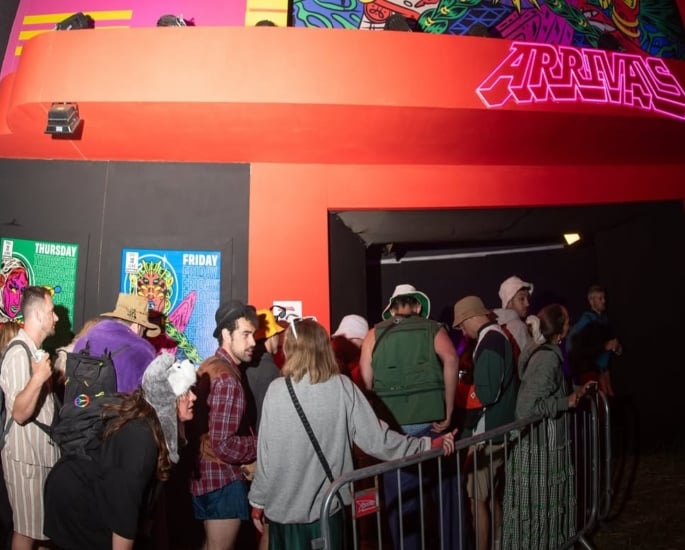
Glastonbury’s first dedicated South Asian space opened in Shangri-La in 2024 under the name Arrivals.
The project was developed through South Asian creative collaboration and featured artists working across numerous electronic genres.
The line-up brought together established figures such as Bobby Friction and DJ Ritu alongside contemporary DJs and producers.
Its music moved between jungle, techno, house and hip-hop, challenging narrow expectations of what South Asian dance music should sound like.
Reporting for The Guardian, journalist Nikhita Chulani described significant demand for the venue, including lengthy queues throughout the weekend. The article also documented how South Asian performers were increasingly appearing across the wider festival rather than remaining in one dedicated space.
Artists including Ahadadream, Jyoty, Anish Kumar and Rohan Rakhit contributed to that wider presence.
Their sets demonstrated that South Asian musical identities could exist alongside different club genres without relying exclusively on Bollywood or bhangra.
Arrivals also placed South Asian designers and organisers behind the project, rather than limiting representation to performers. Its visual identity incorporated futuristic imagery and artwork that reflected different aspects of the diaspora.
For a generation of British Asian creatives, those opportunities were significant because festival programming extends beyond the DJs audiences see. Production, stage design, promotion and artistic direction all influence who gains a foothold in the industry.
Azaadi Continued the Momentum in 2025
View this post on Instagram
The following year, Glastonbury introduced Azaadi as another South Asian-focused venue within Shangri-La.
British Asian broadcaster Bobby Friction served as its executive and creative director, overseeing programming designed to reflect the diversity of South Asian music.
The 2025 official festival line-up included Bally Sagoo, Anish Kumar, NAINA, Panjabi Hit Squad, Manara, Sukh Knight and Rohan Rakhit.
Indian hip-hop duo Seedhe Maut and electronic act Baalti also appeared, demonstrating the range of styles represented.
Bally Sagoo’s appearance connected contemporary electronic music with an earlier generation of British Asian DJs who popularised remixes of South Asian recordings.
Meanwhile, younger performers brought different approaches to bass music, house and electronic production.
In a Mixmag Asia interview published in July 2025, Bobby Friction explained that the objective was broader than simply presenting South Asian artists.
He said the project aimed at “smashing ceilings, breaking down artificial divides” and introducing audiences to music they might not otherwise encounter.
The venue also invested in opportunities for South Asian creatives working behind the scenes, with mentorship forming part of its approach.
Friction discussed the importance of helping younger professionals gain experience in an industry where established networks can be difficult to enter.
That work offered a different model of festival representation, combining live entertainment with professional development. A dedicated stage could therefore contribute to careers beyond a single weekend.
Why South Asian Representation Still Matters
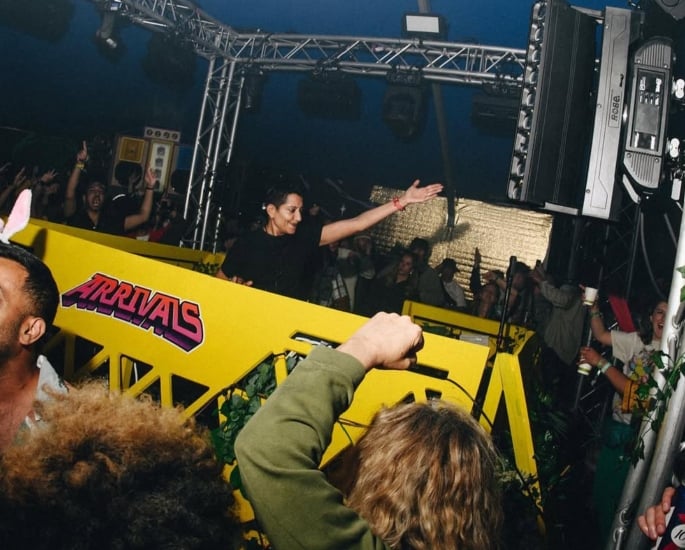
South Asian dance music has a history in Britain that stretches well beyond its recent appearances at Glastonbury.
The Asian underground movement of the 1990s helped establish artists and DJs who combined electronic production with influences from across the subcontinent.
Artists such as Bally Sagoo and Talvin Singh helped bring these combinations to wider audiences, while subsequent generations developed their own approaches.
Contemporary collectives including Daytimers and Dialled In have created spaces for DJs and producers who might otherwise struggle to secure prominent bookings.
These organisations have also challenged the assumption that British Asian dance music must follow a recognisable ethnic formula. Their programmes include artists working in house, drum and bass, experimental electronic music and other genres.
The distinction is particularly important for younger British Asians whose listening habits reflect several cultures at once.
Their music may include South Asian languages and samples, but it can also draw heavily from the wider British club scene.
Glastonbury’s recent programming has acknowledged those connections through spaces that appeal to audiences from different backgrounds.
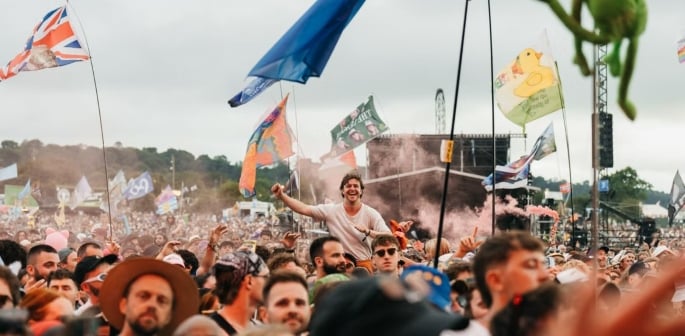
Azaadi and Arrivals were not simply opportunities for South Asian festivalgoers to hear familiar music, but introductions for people encountering these artists for the first time.
Representation also concerns who makes programming decisions and whether performers are given opportunities that reflect their audience appeal. A dedicated South Asian stage can be valuable, although bookings across the festival’s wider venues remain equally important.
What Should Glastonbury 2027 Deliver?
The strongest indication of Glastonbury’s approach in 2027 will come when organisers reveal the remaining performers and stage programmes. The first announcement confirms several major electronic acts, but does not establish the full extent of South Asian participation.
A return for Azaadi would continue the work undertaken in 2025, although organisers have not announced such a plan.
Another approach would involve booking more South Asian DJs throughout existing dance venues, allowing their music to reach audiences across the site.
Both options offer different benefits, and neither needs to exclude the other. Dedicated spaces can develop communities and provide creative control, while wider bookings help ensure artists are not confined to culturally labelled programmes.
The festival could also build on the behind-the-scenes opportunities developed through previous collaborations. Supporting South Asian promoters, designers and technicians would extend representation beyond the names displayed on a poster.
Equally, the range of artists matters as much as the number booked. South Asian dance music includes several distinct regional and diasporic traditions, and a programme dominated by one style would not necessarily reflect that diversity.
The next announcements will show whether the festival intends to continue its recent approach. Until then, claims about which South Asian acts might appear, or which dedicated spaces will return, remain speculative.
Glastonbury 2027 will run from Wednesday, June 23, until Sunday, June 27, at Worthy Farm in Pilton, Somerset. The event follows a planned break in 2026, allowing the festival site time to recover.
According to official ticket information, general admission costs £408, including the £5 booking fee, with postage charged separately. Tickets went on sale in October 2026 and have already sold out.
Organisers have confirmed that cancelled or returned tickets will be offered in a resale during spring 2027. No specific resale date has been announced, and tickets remain personalised and non-transferable.
For fans interested in South Asian performers, the complete programme will be more revealing than the initial poster.
Smaller venues and late-night stages have previously hosted some of the festival’s most distinctive British Asian dance performances.