


































"Mother actually knew just that single song."
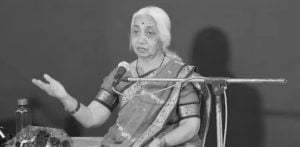
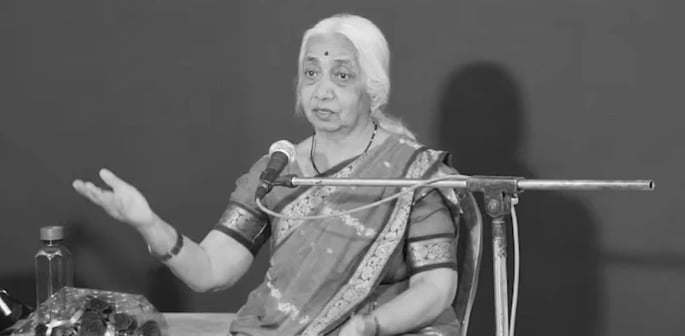
Vocalist Sakuntala Narasimhan, who was proficient in both Hindustani and Carnatic music, has died at the age of 86.
She passed away at a care home due to age-related ailments.
The singer was known for switching between the two classical forms in the middle of a performance.
This rare feat created a self-jugalbandi that few artistes in India have ever managed.
Her daughter Shobhana Narasimhan said that she was the only vocalist in India to perform in both styles on All India Radio.
Shobhana is a professor at Bengaluru’s Jawaharlal Nehru Centre for Advanced Scientific Research.
Music was only one facet of Sakuntala’s life, as she was also a journalist, prolific author, consumer rights activist and feminist.
She had previously battled cancer and performed publicly for the last time only five years ago.
The artist held a double PhD in Women’s Studies and Musicology and was the mother of two.
She frequently contributed to newspapers and magazines and spoke fiercely about consumer rights.
Her mother, who was herself a musician, introduced her to Carnatic music at a very young age.
Her move to Hindustani music began with just one song.
She was a certified Carnatic artist on All India Radio and entered a singing competition meant only for non-professionals.
Shobhana said: “Her mother then taught her a single Hindustani song, which she performed and won first prize.”
Her command over her craft led everyone to believe that she knew far more Hindustani music than she did.
Shobhana recalled: “When the winners were asked to perform again, my mother sang the same song, leading an artist to quip if she knew just one song.
“Little did he know that my mother actually knew just that single song.”
Narasimhan then began learning Hindustani classical music under Ustad Hafeez Ahmed Khan of the Rampur Sahaswan gharana.
Her life took a turn after the birth of Shobhana. She was forced to drop her PhD in Economics midway to take care of the newborn.
Before she could resume her life in music, she lost her voice to an unidentified cause.
Shobhana said: “I was about two when she lost her voice. I have a faint memory of her whispering to me.
“She could not sing anymore; doctors said the problem was perhaps psychosomatic.”
She regained her voice a few years later, according to her daughter.
Stuck at home without a voice, Narasimhan found an outlet in writing.
She wrote passionately into the early hours of the morning and submitted her pieces to different newspapers and magazines.
Shobhana said: “There was a short story competition in Femina.
“She sent her entry and won the first prize in the national-level competition.”
She remembered her mother as a full-time homemaker who wore the hats of musician, scholar and writer.
After her son was born, she took up a job with the Times of India as a journalist.
She later worked with the Deccan Herald for 27 years.
Sakuntala Narasimhan also authored 11 books on music, consumer rights and feminist issues.
These included Born Unfree, Sati: Widow Burning in India, Kamaladevi Chattopadhyay: The Romantic Rebel and Empowering Women: An Alternative Strategy from Rural India.