

















































intense cultural pressure to “succeed” on the wedding night.
Weddings are a huge life moment for those in India but a rarely discussed issue that some face is unconsummated marriages.
Unconsummated Marriage (UCM) refers to a couple being unable to achieve successful sexual intercourse after a significant time period being married.
In a society where fertility is often treated as the defining marker of marital success, this becomes a source of deep shame and silence, leaving many couples feeling isolated and unaware that others are experiencing the same struggle.
Research and clinical observations from sexual medicine specialists, including Dr Jaison Philip, suggest that around 2% to 5% of marriages in India remain unconsummated for significant periods.
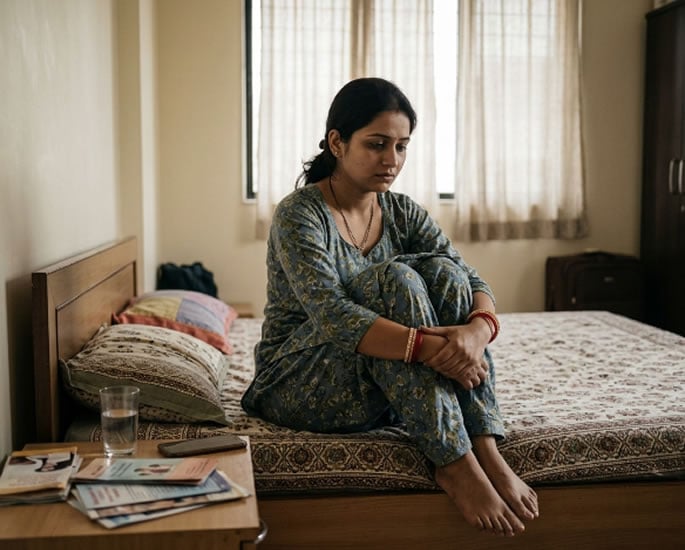
Outwardly, these couples may appear stable and “normal” in public, yet behind closed doors many are living in emotional and physical isolation.
What is most concerning is the delay in seeking help, with couples often waiting between one and seven years before consulting a doctor.
This silence reflects a wider culture that celebrates the wedding itself while avoiding open discussion of sex.
The Anatomy of Involuntary Resistance

A major reason for unconsummated marriages in India is rarely a lack of desire or affection, but a physiological shutdown rooted in psychological distress.
Vaginismus, an involuntary tightening of the pelvic floor muscles around the vagina, accounts for around 60% of cases in clinical settings.
It makes penetration painful or entirely impossible.
In a culture where female sexuality is often framed through “purity” until marriage, the body can respond to sudden expectations of intimacy with a defensive reflex, effectively shutting down sexual contact.
Male factors also play a significant role, though they carry a different social stigma.
Erectile Dysfunction (ED) accounts for roughly 10% of cases, while Premature Ejaculation (PE) contributes around 8%.
In these marriages, ED is less often linked to physical causes and more commonly to psychogenic factors.
Performance anxiety is a key driver, fuelled by intense cultural pressure to “succeed” on the wedding night.
When expectations are not met, it can trigger a cycle of fear and avoidance that gradually erodes physical intimacy altogether.
Beyond these core factors, a smaller proportion of cases involve sexual arousal disorders (5%), hormonal imbalances, or the effects of prescription medication (5%).
Around 5% to 6% are linked to deeper marital discord, where sexual difficulty reflects broader relational breakdown.
In a further 2% to 3% of cases, individuals identify as homosexual or lesbian but have entered heterosexual marriages due to societal pressure.
Here, an unconsummated marriage is the outcome of identity being suppressed within rigid social expectations.
Shame and Misinformation
The persistence of unconsummated marriages in India is closely tied to a widespread lack of basic sexual education.
Despite the historical presence of texts like the Kama Sutra, discussions of sex remain largely absent from both formal education and most households.
As a result, many couples enter marriage with limited understanding of anatomy, arousal, or even basic sexual function, often shaped instead by peer myths or misleading online content.
This knowledge gap creates a damaging vacuum.
Many women, for example, grow up believing the hymen is a thick barrier that must be “broken” through pain, which fuels fear and anticipation of harm.
When reality does not align with these expectations, anxiety can trigger the very muscle responses that make intercourse difficult or impossible.
Arranged marriage structures can further intensify these challenges, particularly when two people who barely know each other are placed in a high-pressure environment.
Unlike couples who have developed physical familiarity through dating, many arranged marriages begin without a “sexual bridge” to ease early attempts at intimacy.
When difficulties arise, there is often no existing foundation of comfort or communication to rely on.
This is compounded by the Log Kya Kahenge (What will people say?) mindset. Many couples avoid seeking medical help due to fear of shame or judgment, choosing instead to endure ongoing distress.
In many cases, they only approach a doctor when pressure to conceive becomes unavoidable, turning a private issue into a delayed medical emergency.
The problem is sometimes further complicated by gaps within the medical system itself.
Misdiagnosis remains an issue, particularly the assumption that the hymen is the primary cause of unconsummated marriage.
In some cases, this leads to recommendations for procedures such as hymenectomy, often framed as a quick solution.
However, clinical evidence shows this is rarely effective for the majority of patients. For most, the underlying issue is muscular and psychological.
Without addressing fear and anxiety, surgical intervention can deepen distress, reinforcing the idea that the body is something to be “fixed” rather than understood.
Science over Stigma

The most important message for Indian couples experiencing UCM is that the condition is highly treatable.
Clinical data suggests that over 90% of cases can be resolved, provided couples engage with the therapeutic process.
Treatment today is multidisciplinary and non-judgmental.
It typically begins with a full assessment, including a gynaecological examination for the female partner, psychological evaluation for both partners, and in some cases, diagnostic tools such as a Colour Duplex Doppler Ultrasound of the penis to rule out physical causes of erectile dysfunction.
Treatment is then tailored to the underlying issue.
For vaginismus, the gold standard approach combines sex therapy with pelvic floor physiotherapy. A key element is graduated vaginal dilator therapy, where the patient uses medical-grade dilators of increasing size in a controlled, guided process.
The aim is to gradually retrain the body’s response and reduce the fear reaction associated with penetration.
For male partners, treatment focuses on managing performance anxiety alongside targeted interventions for erectile dysfunction or premature ejaculation.
Throughout this process, sexual counselling plays a crucial role in addressing misinformation, fear, and long-held stigma.
It is also important to distinguish cases where the issue is not medical, but rooted in identity.
Where individuals are in heterosexual marriages despite a homosexual orientation, therapy is not about changing sexual identity, but supporting honest reflection and dignified decision-making.
For most other couples, recovery from UCM is entirely achievable.
In the Indian context, the greatest barrier is rarely medical; it is the stigma that delays seeking help in the first place.
The “bedroom silence” surrounding unconsummated marriages is a heavy burden for millions in India, yet it remains one of the most solvable problems.
Behind clinical terms like vaginismus and erectile dysfunction are real people navigating fear, confusion, and unmet emotional needs.
The challenge now is to shift attitudes so sexual health is treated with the same practicality as any other health concern.
Moving towards a fully realised and intimate union demands a broader cultural shift that replaces shame with knowledge and secrecy with understanding.
When couples are given clear, factual information about anatomy and intimacy, many of the barriers that once felt overwhelming begin to dissolve.
Ultimately, resolving unconsumated marriage is both a medical and social process.
Science and therapy can offer solutions, but progress depends on openness and education at every level.
For many couples, the first step towards intimacy is not physical at all, but the willingness to speak openly and break the silence.