


















































"Hollywood has undoubtedly enjoyed one of the strongest years"
Hollywood has enjoyed one of its strongest years ever at the Indian box office in 2026, but it is not replacing Indian cinema.
Instead, the success of films such as The Odyssey, Spider-Man: Brand New Day, Project Hail Mary and Obsession shows that Indian audiences are increasingly choosing films based on experience, scale and emotional connection rather than geography.
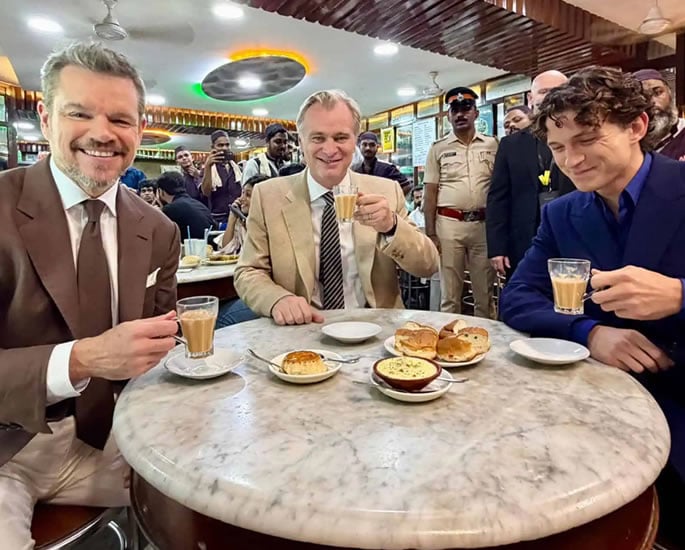
The conversation around Hollywood’s influence in India intensified after Academy Award-winning filmmaker Christopher Nolan selected Mumbai as one of six global cities for the promotional tour of his epic The Odyssey.
The visit highlighted the growing relationship between Hollywood filmmakers and Indian audiences, who have become some of the world’s most enthusiastic supporters of international cinema.
However, Hollywood’s success in India in 2026 does not mean Indian cinema is declining.
While major Hollywood releases have delivered record-breaking numbers, homegrown films including Dhurandhar: The Revenge, Border 2, Bhooth Bangla, Welcome to the Jungle and Dhamaal 4 have also attracted huge theatrical audiences.
The bigger shift is that Indian moviegoers are becoming more selective.
Films that create anticipation, offer a unique theatrical experience or develop strong audience communities are gaining an advantage, regardless of whether they come from Hollywood or India.
Why are Hollywood Films performing So Well?
Hollywood’s success in India during 2026 has been driven by several factors, including established franchises, global stars, premium cinema formats and strong audience anticipation.
One of the clearest examples is Spider-Man: Brand New Day, which became the highest-opening Hollywood film in India, earning more than Rs. 72 crore.
The film benefited from the global popularity of the Spider-Man franchise, as well as the strong fan following of actor Tom Holland.
The excitement surrounding Holland was evident during the Mumbai promotional event for The Odyssey, which he also stars in.
Although Nolan’s film was the reason for the visit, much of the attention from fans focused on Holland, whose superhero film was approaching release.
Fans placed signs outside the screening venue, including “No mask, no Tom Holland”, while one supporter dressed as Spider-Man appeared at the Taj Mahal Hotel, where the cast and crew were staying.
Denzil Dias, Vice President and Managing Director, India Theatrical, Warner Bros. Discovery, said:
“When he stood in front of us in Mumbai this July, he told the audience they were among the most enthusiastic and knowledgeable cinema audiences in the world, and that every time he comes here, it feels very special.
“It reflects a filmmaker who has seen how Indian audiences respond to his work and decided this market had earned a proper visit, not just a release date.”
Beyond franchises, premium formats have also played a major role in Hollywood’s 2026 success.
Christopher Nolan’s commitment to IMAX helped The Odyssey become the highest-grossing IMAX release in Indian history, generating more than Rs. 60 crore.
This surpassed the performance of his previous film, Oppenheimer, within just 17 days.
The achievement is particularly significant because India has only 34 IMAX cinemas.
Despite limited availability and high ticket prices, some costing more than Rs. 3,000, audiences still chose to experience the film in its intended format.
Sanjeev Kumar Bijli, Executive Director of PVR INOX Ltd, explained that Hollywood’s successes have come from different audience motivations:
“Hollywood has undoubtedly enjoyed one of the strongest years in India, but what’s particularly interesting is that each success has been driven by a different factor.”
He added that Spider-Man: Brand New Day “demonstrated the enduring strength of a global franchise backed by exceptional fan engagement and advance bookings”, while The Odyssey showed that audiences will “actively seek out premium formats for filmmakers they deeply admire”.
The trend was visible earlier in the year with Project Hail Mary.
The Ryan Gosling-led science-fiction film earned more than Rs. 75 crore in India.
The film’s fans even campaigned for an IMAX release after scheduling conflicts initially affected its premium format availability. This showed that audiences are increasingly interested in how films are experienced, not just what stories they tell.
Hollywood’s success was not limited to major blockbusters either.
Curry Barker’s psychological horror film Obsession, reportedly made on a budget of £560,000, earned Rs. 99 crore in India despite cuts by the Central Board of Film Certification.
Unlike The Odyssey, Spider-Man: Brand New Day and Project Hail Mary, the film did not rely on a major franchise or international superstar.
Its performance highlighted the importance of audience recommendations and word-of-mouth.
Is Hollywood bigger than Indian Cinema in 2026?

Although Hollywood films have dominated headlines in India during 2026, the idea that Hollywood is overtaking Indian cinema does not reflect the full picture.
Indian films continue to deliver major box-office successes.
Dhurandhar: The Revenge earned Rs. 1,852 crore, while Border 2 collected Rs. 464 crore.
The difference is that Hollywood’s biggest releases have created a sense of global event cinema.
Films connected to internationally recognised franchises or directors such as Nolan can generate anticipation months before release.
However, this does not mean audiences are choosing Hollywood over Indian films. Instead, they are responding to films that provide a strong reason to visit cinemas.
Bijli believes the discussion should not focus on competition between the two industries.
He said: “I don’t think the defining story of 2026 is Hollywood versus Indian cinema. It’s that audiences have become far more discerning about what they choose to experience in theatres.
“The films that have succeeded are the ones that gave audiences a compelling reason to step into cinemas.”
This shift reflects wider changes in cinema consumption.
Streaming platforms have given audiences access to thousands of films at home, meaning theatrical releases increasingly need to offer something beyond convenience.
For Hollywood, that has often meant spectacle, franchises and premium formats.
For Indian cinema, it has meant creating films that connect strongly with audiences and encourage communal viewing experiences.
What can Indian Cinema learn from Hollywood?

Hollywood’s biggest advantage has not simply been larger budgets. It has been the ability to build anticipation, develop global franchises and create long-term relationships with audiences.
Film exhibitor Akshaye Rathi believes Indian cinema can learn from Hollywood’s approach to scale and marketing, while also recognising India’s own strengths.
He said: “It’s actually the scale, technology, and budgets that global monetisation ability allows Hollywood that gives them that franchise value and the ability to cultivate markets.
“Indian cinema, of course, given the domestic monetisation size, is still at a relatively nascent stage when it comes to the kind of money spent on it.
“While there is a long way to go, I think we have the market and the ability to actually produce a certain quality at the fraction of the Hollywood budgets.
“I’m sure we’ll get there in the time to come.”
One major lesson from Hollywood is the importance of building excitement well before a film’s release. Major franchises often create global conversations through trailers, fan events, merchandise and promotional campaigns.
Bijli believes Indian cinema can adopt this approach without copying Hollywood’s films.
He said: “If there’s one lesson from Hollywood, it’s not about making different films, but about building anticipation with greater consistency.
“The most successful campaigns create a clear proposition months before release, giving audiences a compelling reason to watch a film in theatres from the very first trailer.”
This strategy could become increasingly important as cinemas compete with streaming services and audiences become more selective about which films deserve a theatrical visit.
The future of Indian cinema is unlikely to be defined by Hollywood’s success alone. Instead, the industries may increasingly coexist, with audiences embracing films from both markets when they deliver something memorable.
Hollywood’s strong performance in India during 2026 represents a major moment for international cinema, but it does not signal the decline of Indian films.
The success of The Odyssey, Spider-Man: Brand New Day, Project Hail Mary and Obsession highlights a changing theatrical landscape where audiences prioritise anticipation, quality and experience.
It is only expected to grow, with the releases of Dune: Part Three and Avengers: Doomsday coming at the end of the year.
Indian cinema remains a powerful force, with homegrown blockbusters continuing to attract millions of viewers.
However, Hollywood’s approach to franchises, marketing and premium formats offers valuable lessons for the industry.
Ultimately, 2026 is not a story of Hollywood defeating Indian cinema. It is a sign that Indian audiences are more open than ever to films that create excitement, regardless of where they originate.